








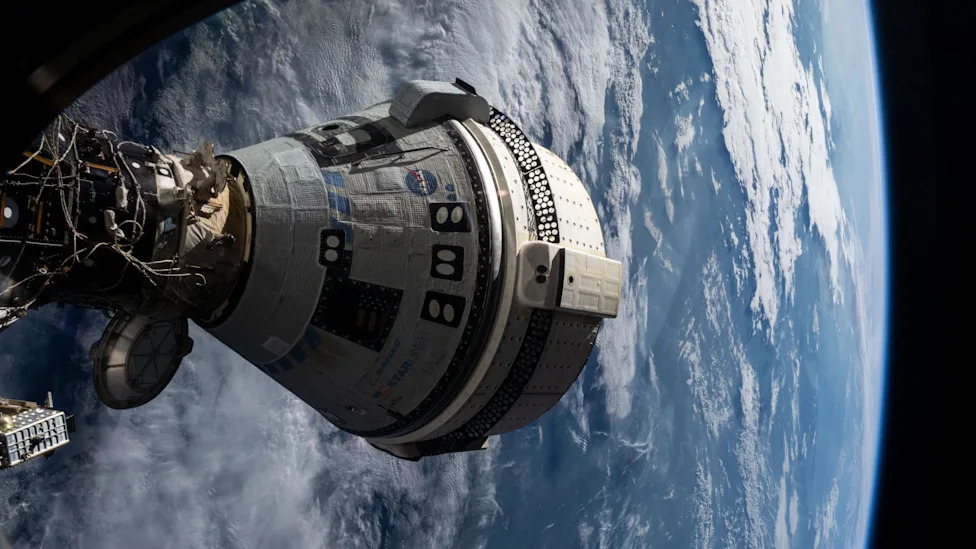
After its high-profile failure last summer, much of the space world wrote off Boeing's Starliner capsule—and the skepticism was well-founded. But the capsule that left two astronauts aboard the ISS 93 days , Boeing may be closer to resuming flight than obituaries suggest. Boeing CEO Kelly Ortberg recently described the propulsion system upgrade as "quite successful," adding that the company is "very pleased with it." Officials say the real problem isn't hardware failure, but finding an available docking port on the space station. This distinction is significant, and not just for Boeing's tarnished reputation.
The capsule in which its own astronauts were abandoned.
Starliner's first crewed flight received NASA's most severe failure classification and cost Boeing billions of dollars.
Test flight of the crew The Starliner launched on June 5, 2024, carrying astronauts Butch Wilmore and Suni Williams aboard the spacecraft for what was intended to be an eight- to fourteen-day test flight. However, multiple engine failures and helium leaks in the service module drastically altered those plans. NASA deemed the capsule too risky to return the crew. The Starliner returned home empty in September. A few months later, Wilmore and Williams launched on SpaceX's Crew Drive.
NASA classified the mission as a Type A failure—the agency's most serious category—citing propulsion system failures that resulted in loss of maneuverability and significant financial losses. Boeing now incurred a loss of approximately $2 billion under the fixed-price contract, which has since been reduced from six planned crewed flights to four, with two optional.
-
Next mission (Starliner-1): An uncrewed but crewable cargo test flight to verify the propulsion system's functionality.
-
NASA's official timeline: no earlier than early 2026.
-
According to the NASA Office of Inspector General report, unresolved technical issues remain under active review, as do ISS docking planning issues.
-
The Starliner service module is a consumable item—significant equipment costs are incurred with each reentry.
-
The fixed-price contract currently includes four planned crew rotation missions, up from six.
The rigging has probably already taken place.
In the past, Boeing's optimism has shown itself even before actual results were achieved, but it's worth noting that the factors holding back the next launch have changed.
Ortberg's confidence comes with a caveat the size of a rocket fairing. Starliner's track record includes: software glitch in 2019 , which prevented the first unmanned test from reaching the station, a successful repeat attempt in 2022, and then a manned failure in 2024. Three attempts, two serious failures.
NASA's Inspector General's report continues to raise questions about certification readiness, so viewing the delay solely as a schedule issue would be overstating the current state of affairs. The conversation has shifted direction. NASA stated that it "will continue to work closely with Boeing to fully understand and resolve technical issues related to the Starliner vehicle"—a cautious statement, but not a condemnation. The agency hasn't abandoned the program; it's slated for another test flight, not a shutdown.
Image: NASA
The dragon problem no one wants to talk about.
SpaceX reportedly plans to retire its Crew Dragon spacecraft by around 2030, and the backup version has not yet been certified.
SpaceX has reportedly informed its partners that Crew Dragon will be phased out as the Falcon 9 rocket is retired and replaced by Starship. This creates a relay race-like situation, with the leader about to drop out and the replacement just lacing up their boots. NASA and private space station operators need reliable crew transportation until the early 2030s. Starship has not yet gained widespread acceptance for routine human missions.
Future Starliner flights will require a transition from a decommissioned rocket. Atlas V ULA's Vulcan rocket, which still needs certification for human spaceflight, increases both costs and schedule risks. Starliner's expendable service module already makes it more expensive per flight than the reusable Crew Dragon design. But when the alternative is sending crews on Starship before the space community is fully comfortable with it, the "more expensive and certified" option begins to look like a reasonable compromise.
«The Starliner doesn't have to be elegant. It must be functional and certified before the Dragon leaves the project. A successful cargo bay test won't prove the Starliner is repairable. It will prove something perhaps more important: that it can be repaired.
From the coolest cars to must-have gadgets, GadgetReview's daily newsletter keeps you in the know. Subscribe - it's fun, fast and free .