








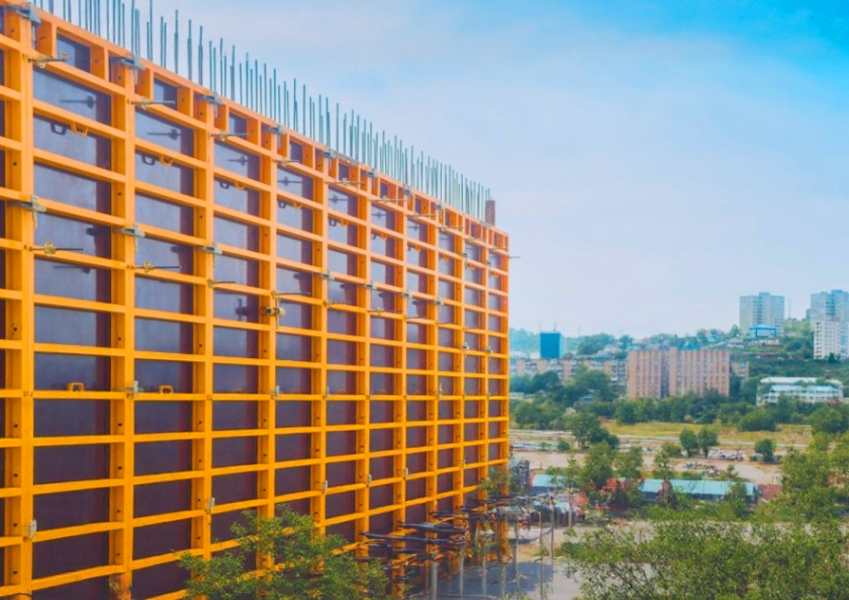
When constructing monolithic structures, formwork is essential. This temporary framework holds the concrete in place until it hardens. Developers have two options: renting a ready-made metal system or constructing their own formwork from plywood and timber. Let's explore which option is better in terms of cost, speed, and durability.
What is the difference between metal and plywood formwork?
When choosing formwork for monolithic construction, it's important to consider strength, ease of installation, service life, and cost effectiveness. Let's look at the features of metal and plywood structures, as well as their pros and cons.
Metal formwork
Metal systems are rigid panels made of steel or aluminum with a smooth finish. They are connected to each other using special locks, providing a durable and watertight structure.
Advantages:
- Durability – withstands tens, and sometimes hundreds of fills without loss of quality.
- High strength – capable of withstanding heavy loads and preventing concrete deformation.
- Smooth surface – after dismantling, the concrete surface remains smooth and does not require additional processing.
- Ease of use – the modular system allows for quick assembly and disassembly of structures.
- Long-term savings – when renting or using multiple times, the cost per filling cycle becomes minimal.
Flaws:
- More weight – metal panels are heavier than plywood, which requires the use of lifting equipment or the involvement of additional labor.
- High initial cost – buying metal formwork is more expensive than plywood, but renting it makes this option affordable.
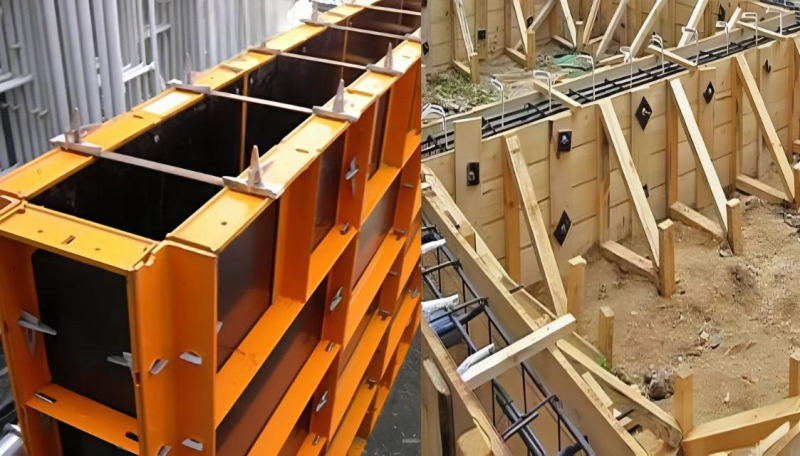
Plywood formwork
Plywood structures are made from laminated, moisture-resistant plywood, which is fixed to wooden beams or metal profiles. This option is often used for one-off or small construction projects.
Advantages:
- Low initial cost – buying plywood is cheaper than purchasing metal panels.
- Ease of processing – can be cut to non-standard shapes, which is important for complex architectural elements.
- Easy to assemble – standard tools such as a screwdriver and a nail puller are sufficient for installation.
Flaws:
- Limited service life – plywood wears out quickly, especially with repeated use.
- Sensitivity to moisture – despite the laminated coating, after several pouring cycles the material swells and loses strength.
- Unevenness of the concrete surface – plywood formwork may leave uneven surfaces that will require additional sanding or plastering.
- Large waste – after several pours the material becomes unusable and requires disposal.
If a project requires high precision, speed, and repeated use, metal formwork is the best choice. For small, one-off projects, plywood construction may be feasible, but it may not be the most cost-effective in the long run.
Why is renting metal formwork more profitable?
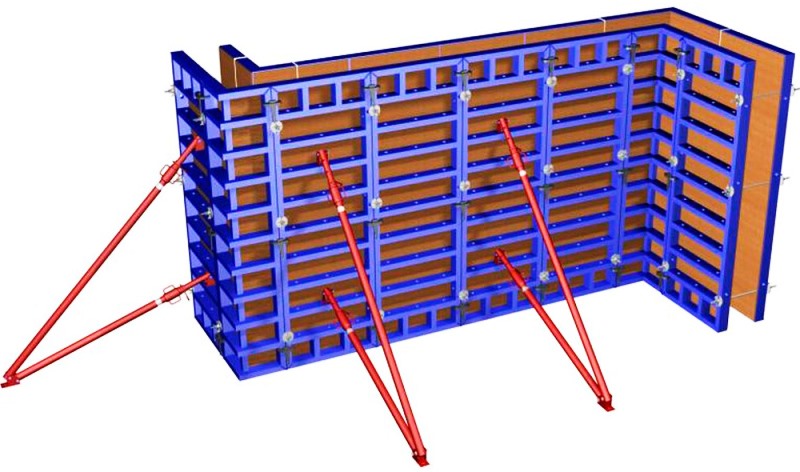
1. Reduction of material and labor costs
Plywood formwork requires purchasing planks, plywood, and fasteners. It also needs to be assembled, which increases labor costs. By renting a high-quality system, you only pay for the period of use, without worrying about purchasing and storing it.
2. Acceleration of the construction process
Metal structures are designed for quick and easy assembly. Special fasteners ensure strength, eliminating the need for time-consuming inspections and adjustments.
3. Quality and safety
The smooth surface of metal formwork reduces the risk of blisters and burrs in the concrete. Moreover, it can withstand high loads and does not warp, which is more difficult to say about plywood.
4. No problems with disposal
Once the work is completed, the plywood will need to be disposed of. Wet or damaged sheets cannot be reused. Metal modules are simply returned to the rental company.
Comparison of options: renting metal formwork versus making plywood
| Criterion | Metal formwork rental | Plywood manufacturing |
|---|---|---|
| Price | Cheaper for large volumes | Expensive due to the consumption of materials |
| Installation speed | High, assembly according to instructions | Long, requires adjustment and fixation |
| Strength | High, can withstand dozens of cycles | Low, wears out quickly |
| Concrete quality | Smooth surface, no defects | Roughness and unevenness may occur |
| Eco-friendliness | No waste, reusable system | There are scraps and broken elements left. |
| Flexibility of application | Suitable for complex shapes | Limited to standard sizes |