






A Slice of Life: The American Dream. In former Pizza Hut stores. Documentary by Matthew Salleh and Rose Tucker, Urtext Films, 2024.
It's funny. You can take ordinary footage, overlay it with a melancholy soundtrack, and somehow it feels like it means something. Maybe sometimes it does.
That's what I was thinking about when I watched the third feature-length documentary by Matthew Salleh and Rose Tucker, the small team behind «A Slice of Life» : Can a true "slice of life" ultimately evolve into something more? The documentary follows the owners of six businesses, each located in a relatively unchanged former Pizza Hut. Both the owners and customers recognize, even respect, the old building and its distinctive features. A theme runs through the eclectic conversations: nostalgia, continuity, transformation—how the faceless, brand-focused architecture of one generation can inadvertently become the raw material for the next generation of entrepreneurs.
But these themes barely surface on the film's surface, and don't constitute its core message—at least not to the extent that an architecture enthusiast like me, fascinated by urban environments and suburbs, would hope. Unlike many documentaries, the filmmakers here impose virtually nothing in terms of plot, narrative, or even an ultimate message. But on the other hand, it «"A Slice of Life"» , and it certainly lives up to its name.
Salleh and Tucker promoted the documentary on Reddit—I found a couple of threads they were involved in just by googling the film—and, as you might expect, it was more or less intentional. One of them wrote:
All of our films are tapestries of sorts, showing a diverse group of people united by one thing (in this case, the need to vacate old Pizza Hut buildings). We thought it would be a great way to look at America. People from all over the country doing their own thing, but they're all doing it in the same building!
What might seem like a naive approach to technique or editing is actually an impressionistic intent. Even with this goal in mind, it's striking how often the interviews with owners and customers extend far beyond anything related to Pizza Hut or even the business they run.
A karaoke bar owner barely holds back tears as he admits to being a former racist. (Awkwardly, after this touching moment of reflection on racism and respect, the film cuts to a marijuana dispensary, accompanied by a typical reggae soundtrack.)
A transgender woman who opens oysters notes that oysters change gender, so maybe we're not so different after all. (If that hasn't already made me forget Pizza Hut, the oyster storyline continues with a visit to an oyster farmer!)
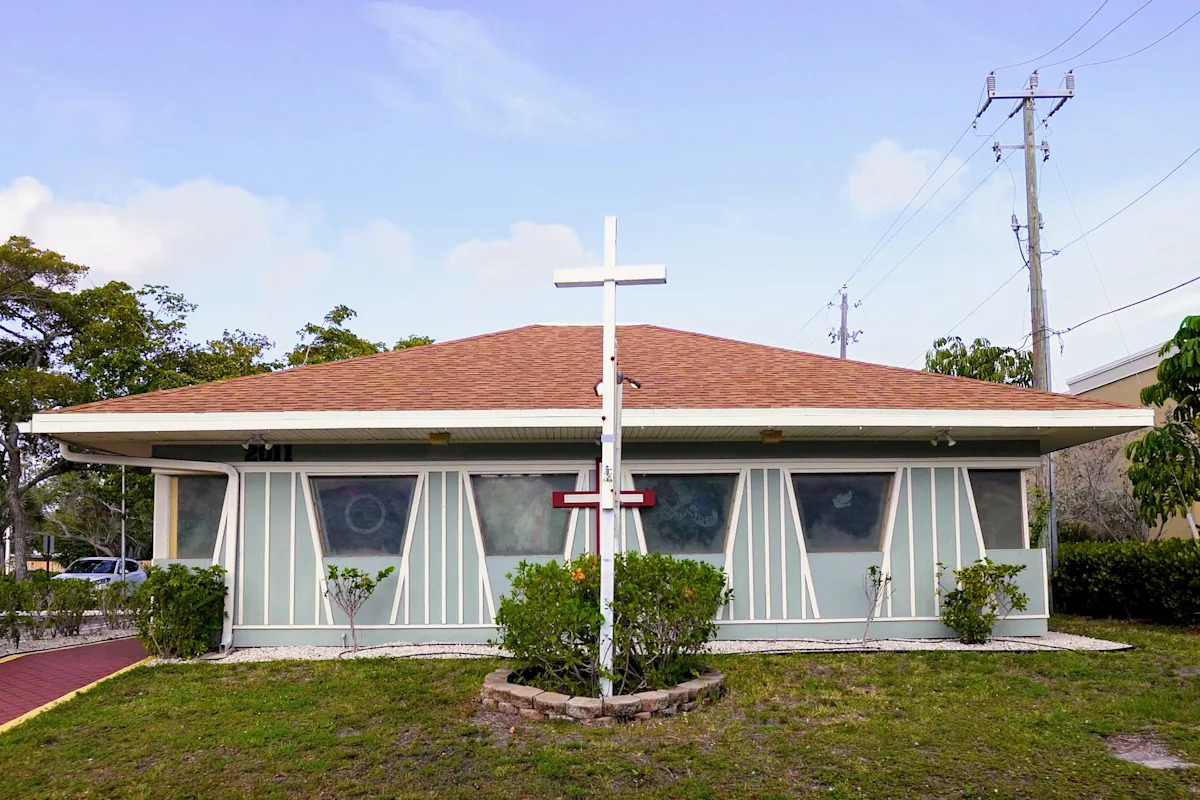
A lesbian pastor at an LGBT-affirming church housed in a former Pizza Hut building adorned with custom trapezoid stained-glass windows recounts an experience with her college roommate that helped her better understand her sexuality.
A Colorado hippie talks about empathy and community, suggesting that humans are "just a bunch of hairless monkeys with anxiety" and should help each other more.
Join our community of democracy advocates to work together to support each other.
While the human element may be the focus here, the interviews at times feel too casual and unedited. However, individual segments work beautifully. (And these segments help to understand how much effort must have gone into the film to ensure such considerations remain invisible to the viewer.)
For example, interviews with the curator of the Pizza Hut Museum (located in the same building that housed the very first Pizza Hut restaurant), the blogger behind the popular online blog "Used to be a Pizza Hut," and Pizza Hut co-founder Dan Carney are excellent and provide wonderful complements and contextualization to other comments we hear.
And some of the comments from residents of former Pizza Hut locations are also delightful. A marijuana dispensary owner recounts how he painted his building's distinctive roof green, joking, "We have our own salad bar with our own lettuce." A bartender at a karaoke bar remarks, "I think it's great when architecture is preserved, even if it's a Pizza Hut." The general manager of a French restaurant and oyster bar notes that the building, standing after many decades, has stood the test of time: "You have a great framework. Why change it? The ability to create something fresh and new from something that people were nostalgic for is really cool.".
The owner of a small building restoration company—one of whose projects is a taco bar in (you guessed it!) an old Pizza Hut—explains, "We need anything that smells like cat pee. It smells like opportunity." While these old buildings may look like junk, they are actually resources. Against the alternatives of larger-scale renovations or suburban sprawl, breathing new life into old, sometimes kitschy buildings like this one is truly a way to create something meaningful.
В «A piece of life »"There are magical moments: when the principle of "show, don't tell" works perfectly, and when the daily routine suddenly crystallizes, and meaning becomes clear. The nostalgic confrontation between things changing yet remaining the same; growth, innovation, and simply change that nevertheless acknowledges its roots? You feel it. The curious process by which a faded corporate giant like Pizza Hut—itself started as a daring entrepreneurial venture—seedes the American landscape with a kind of architectural commons: an architectural karmic cycle of death and rebirth? You get it.
Painting the roof green isn't just a cheeky way of saying "we sell weed"; it contrasts with and builds on the iconic red roof. The church's stained-glass windows, commissioned by the restaurant chain, exist in continuity with its original purpose (as well as its church-like function). In this sense, the very name "Pizza Hut" was partly determined by this spatial dependency: the sign that came with the first Pizza Hut building had a limited number of letters. After deciding to use the word "pizza," only three letters remained. (Oh, and even Pizza Hut's first oven was a holdover, plagiarized from an Italian restaurant.) From these humble beginnings emerged this corporate, brand-focused building that, perhaps despite everything, still holds a shared set of references and memories. You might be thinking: How we Americans miss it this for our common culture . But that doesn't make it any less real.
The best way to understand the free, unhurried nature of "« Slice of Life »" is to see it as a reflection of the very process it describes: how people do what they can with what they have; how the same basic phenomenon occurs in endless variations.
In one scene in the film, Jesús Ochoa, the owner of a taco stand, is asked what the American Dream means to him. Part of it, he cautiously answers, is having opportunities. But part of it is the decision to pursue them. For him, that opportunity came from working grueling hours at the restaurant, and then—thanks to the old Pizza Hut building—starting his own business and becoming self-employed. That's the whole story. That's the whole point of the film.
There's a call for humility here, albeit a crude one. What most observers would consider corporate trash turns out to be, as usual, a cheap place for entrepreneurs to gain a foothold in the market. (One Reddit user noted that they always look for restaurants in old Pizza Hut locations because they're almost always small, independent establishments.) The buildings are adaptable and fairly generic—after all, they're just boxes with a roof and some exterior decor.
The key here is that for one person, urban trash is architectural treasure, while for another, business waste is opportunity. Like the original Pizza Hut oven, vacant Pizza Hut buildings across the country, historic cities demolished for redevelopment, or aging suburbs littered with America's corporate detritus, these may well be vastly undervalued places. These are places central enough to attract interest and investment, yet cheap and neglected enough to be accessible to people with ideas and determination, but without the big bucks. The challenge is that the transformation of space—its rebirth—must first occur before the landscape's former value becomes apparent in retrospect.
In other words, «A Slice of Life» Reminiscent of conservatism in the narrow sense: trust in people, distrust of grand plans imposed from above, and the ability to allow slow, organic, gradual change to work its subtle magic. It never ends, but always begins, with what already exists. There are echoes of Hayek's spontaneous order and economic individualism, mixed with Burke's concept of society as a partnership "between those who live, those who have died, and those yet to be born.".
But frankly, if you're interested in human destinies, you'll probably enjoy the film despite its technical shortcomings. The philosophical and political musings are just the icing on the cake, or perhaps we should say, the pepperoni on the pizza.
Share