








Today's auto parts and accessories market offers a wide range of so-called replica wheels—products that visually imitate original or well-known designer models. These wheels are not official brand products, but they do replicate their visual features. This article is for informational purposes only and describes the key aspects associated with such products.
What is a disk replica?
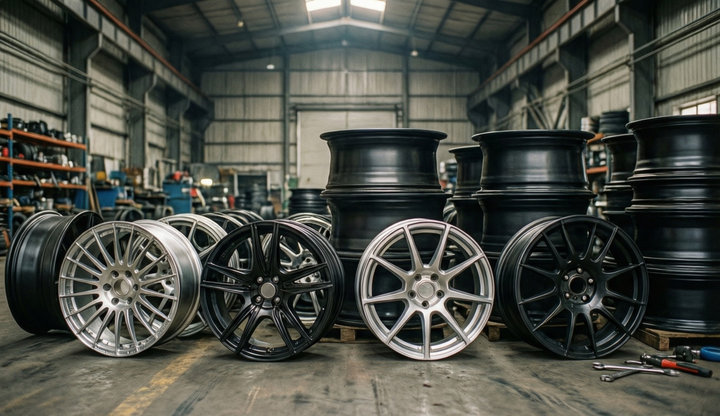
A replica car wheel is a product created based on an original or popular design, but manufactured without the copyright holder's involvement. Typically, such wheels are produced by independent manufacturers and are not authorized by the companies whose models they copy. The main distinguishing feature of replicas is the absence of brand markings, logos, and registered trademarks.
Production methods
Replicas can be made in various ways:
- Die casting — the most common method, in which molten aluminum alloy is poured into a mold. It allows for the creation of complex geometric shapes at a relatively low cost.
- Stamping — used primarily for steel wheels. The metal sheet is formed in a press and then welded.
- Forging — used less frequently due to the high cost of equipment and the complexity of the process. Forged replicas are found in specialized markets focused on tuning or sports use.
The choice of technology affects the weight, strength and cost of the final product.
Marking and identification
All legally sold wheels, including replicas, must contain certain markings applied to the inside of the rim.

Standard markings include:
- disk size (for example, 7.5J×17),
- departure (ET),
- PCD (Package Diameter),
- center hole diameter (DIA),
- safety standard designation (e.g. ECE R124, SAE J306).
The absence of this data may indicate that the product does not comply with current technical requirements.
Certification and compliance
In the countries of the Eurasian Economic Union (EAEU), car wheels are subject to mandatory conformity assessment under Technical Regulation CU TR 018/2011 "On the Safety of Wheeled Vehicles." This means that any product imported or manufactured within the union must have documents confirming its compliance with the established requirements.
The presence of a certificate or declaration of conformity does not depend on whether the disc is original or a replica—the design and characteristics of the product itself are subject to verification.
Visual and design features
Replicas often reproduce the appearance of famous models with a high degree of accuracy. However, a close comparison may reveal differences:
- simplified geometry of spokes,
- changed wall thickness,
- absence of internal stiffening ribs,
- differences in polish or coating.
Such changes may be related to both technological limitations of production and the need to circumvent patent rights.
Use of replicas in operation
Replicas are used in various scenarios:
- as a temporary solution if the original disk is damaged,
- for vehicles operated in conditions where maintaining appearance is not a priority,
- in tuning, when aesthetics are what matters, not the origin of the product.
In this case, the compatibility of a wheel with a car is determined solely by its technical parameters – offset, PCD, width and diameter – and not by its status as an original or a replica.
Conclusion
Replica car wheels represent a distinct market segment, targeting consumers who value visual similarity to established models and affordability. Knowledge of production methods, labeling requirements, and regulatory standards allows for informed decisions when choosing products, regardless of their origin.