






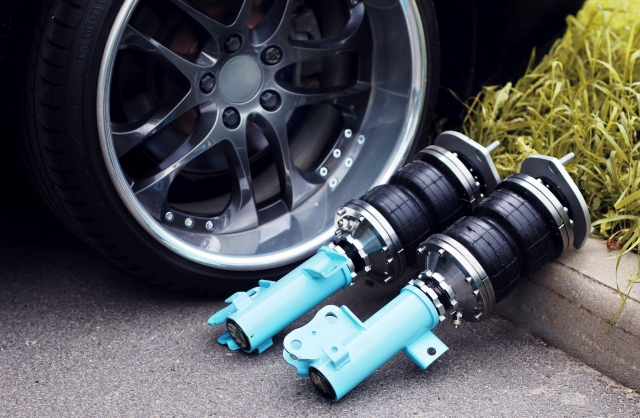
When creating a comfortable ride, renowned automaker Hyundai hasn't overlooked the use of air suspension. While it's as reliable as its competitors, its design has its own unique features. In this article, we'll discuss these in more detail, as well as learn about repairability.
Device

The primary purpose of air suspension is to adjust ground clearance, smooth out road imperfections, and provide excellent handling. Hyundai vehicles are extremely well-equipped and thoughtfully designed.
Hyundai air suspension has the following design features:
- A closed-loop pneumatic system that doesn't require constant atmospheric air intake. The undeniable advantages of this system are the absence of unnecessary impurities and, most importantly, the rapid pumping of pneumatic components. There's no need to wait for the compressor to draw in air, compress it, and pump it into the system. Everything happens much faster;
- High pressure level promotes efficient operation of all components;
- Nitrogen is used to fill the system. It can be added to the system or fresh nitrogen can be pumped in.
The suspension parameters can be adjusted during operation, which is why it's called active. Self-leveling occurs automatically. The four-circuit air suspension adjusts each wheel individually and consists of the following components:
- Air springs consist of a resilient element made of high-strength rubber. They support the body according to specified parameters using nitrogen pressure;
- Dampers dampen vibrations caused by uneven road surfaces;
- High pressure tank for nitrogen reserves;
- A compressor with a dryer, which serves for additional air pumping and drying;
- The solenoid valve block is responsible for pressure by pumping or releasing gas;
- The control unit operates on the basis of sensors and carries out intelligent control of the entire system.
The process works as follows: High-pressure nitrogen is supplied to the air springs that support the body. The control unit commands the actuator valves, which either add pressure or release it.
Signs of possible malfunctions

Overall, the air suspension on a Hyundai has a fairly good service life. However, nothing lasts forever, and rubber components are the first to wear out and fail. Dust, dirt, sand, and chemicals act as abrasives on them, causing microcracks and eventually surface tears. This, in turn, leads to a loss of seal, which can be noticed by the following signs:
- A compressor that is constantly running, trying to pump air, but does not turn off;
- The car begins to change its altitude on its own, since it cannot provide the pressure level according to the specified parameters;
- A hissing sound indicates gas is escaping from the system. This means the pneumatic element has a leak;
- A roll of the body to one side will indicate where the air spring has failed;
- Indicator lights will helpfully alert their owner to potential problems. Their signals should never be ignored, and you should never assume that the lights will go away on their own. With pneumatic systems, this clearly won't happen; continue driving only to the nearest specialized service center.
Modern computer diagnostics can pinpoint the problem with high accuracy. Specialists will help select the right part and perform repairs.
Weaknesses
Since the system operates under constant high pressure, the air lines bear a significant load, as do seals and connections. These can also cause leaks. Replacing them isn't difficult, but if not done promptly, costly repairs will follow.
Body position sensors are responsible for the efficient operation of the entire system. They are installed in a location where they are susceptible to low temperatures, condensation, and other adverse factors. This highly accurate device could be damaged.
The control unit contains a large amount of electronics and is delicately organized. Short circuits and wiring faults can disable it. Without control, the air suspension will lock up.