








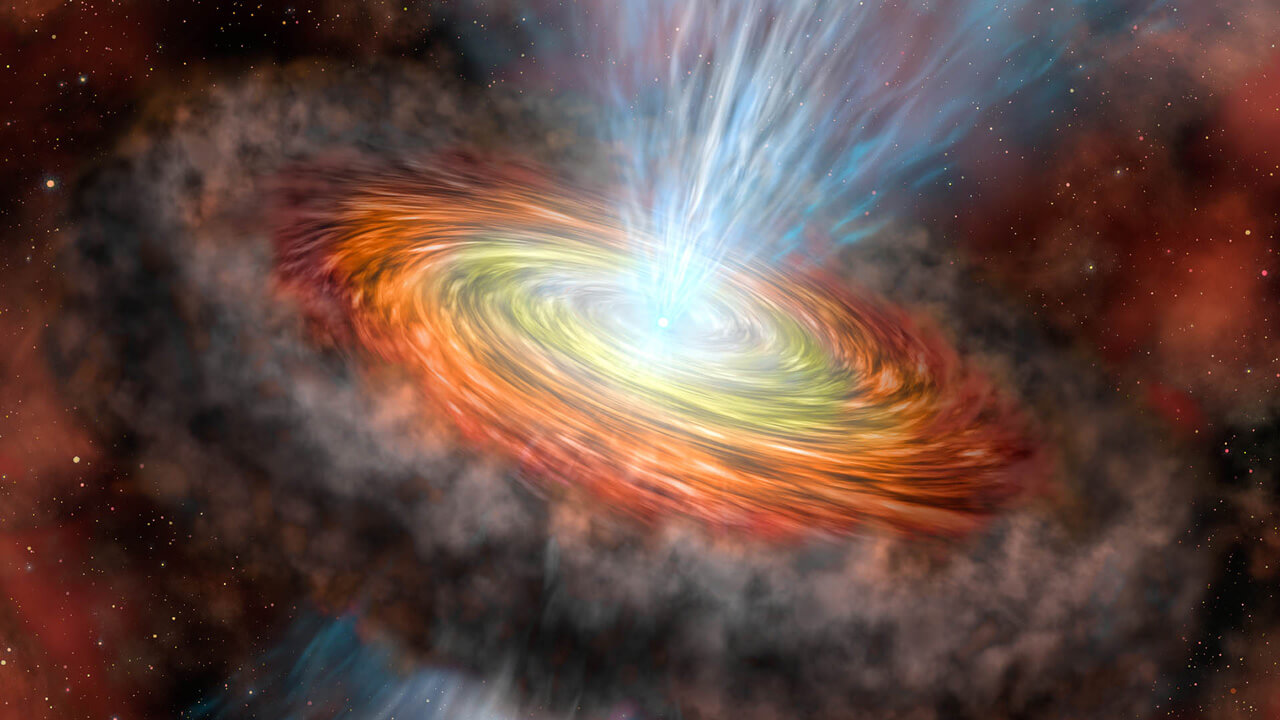
It is not easy to pinpoint the largest body in the Universe—we are not sure that we have yet explored everything that exists in it.
However, in this article I will rely on existing data and tell you about the largest object in the Universe known to modern science.
The largest superstructure in the Universe
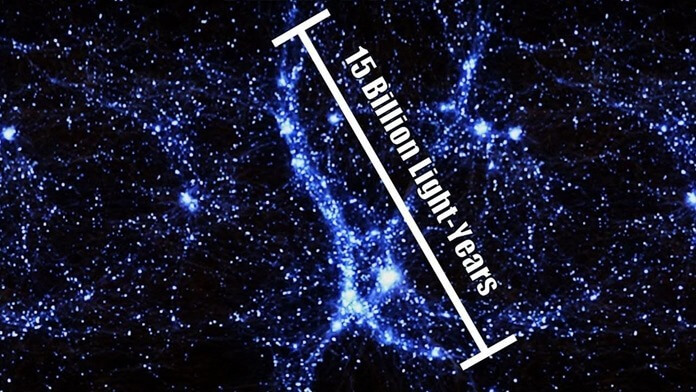
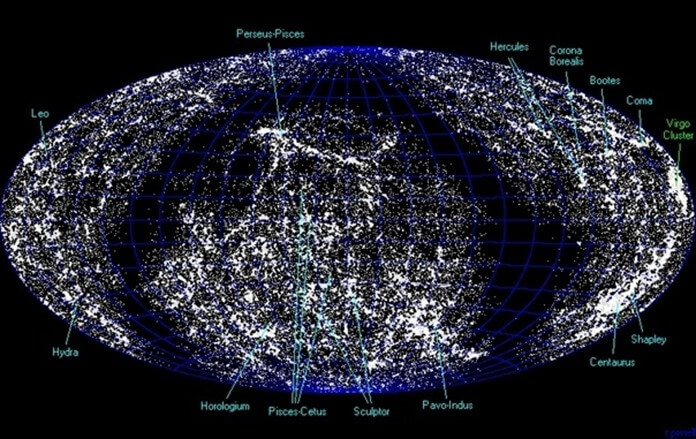
This is the Hercules–Corona Borealis Great Wall, or simply the Great Wall. Located approximately 10.5 billion light-years away, it is a group of an uncounted number of galaxies bound together by gravity.
The length of this galactic filament is estimated at 10-15 billion light-years. Astronomers determined this by mapping gamma-ray bursts emanating from this galaxy cluster.
The Great Wall is 7.2 billion light-years wide. For comparison, the Milky Way galaxy is about 100,000 light-years wide.
«"Why does the author call a group of galaxies an object?" the reader might ask. But planets are also considered individual objects, despite the fact that they contain countless different components. On Earth, the individual objects we use in everyday life are composed of countless atoms, yet we still consider them singular objects.
Simply put, we often ignore the individual components of an object and simply view the entire structure as a single entity. The same is true for galaxy clusters, which, although containing numerous galaxies, can be viewed as single objects on extremely large scales.
How did scientists find the Great Wall?
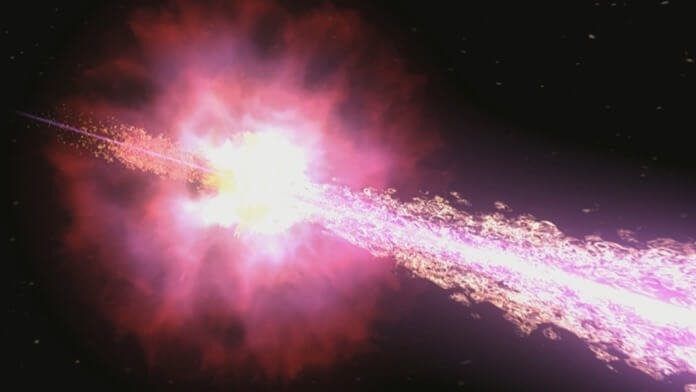
In 2013, a team of scientists studied an anomalously large volume of gamma-ray bursts that were concentrated at a distance of about 10 billion light-years, in the direction of the constellations Hercules and Corona Borealis.
- Gamma-ray bursts are the most powerful and intense form of radiation in the electromagnetic spectrum. This type of radiation is quite rare, observed only in a few cases. One such event is a supernova explosion, which releases more energy than the Sun can produce in its entire lifetime.
- The purpose of studying these bursts is to detect enormous structures in the Universe. Studying them allows astronomers to learn a great deal about star formation.
- In addition, supernova explosions can lead to the formation of planetary systems such as our Solar System.
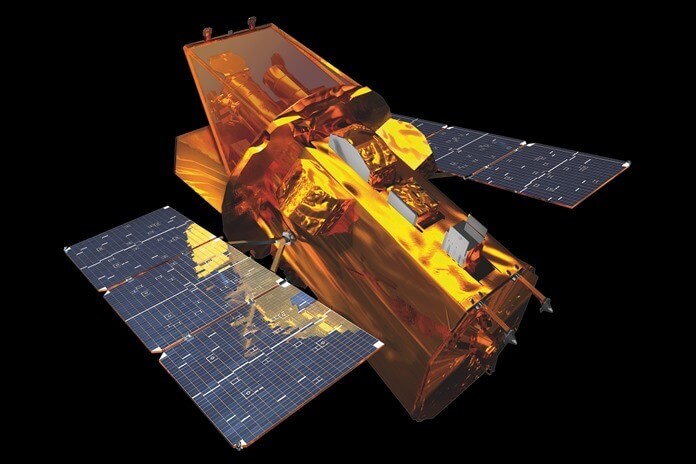
Based on data obtained from the SWIFT observatory, the researchers divided the sky into nine regions. In each region, 31 gamma-ray bursts were studied. In one region, 14 bursts were concentrated in an area with an angular radius of 45° and a redshift of 1.5 to 2.0. This indicates the presence of numerous (possibly millions) galaxies in this region. This is how the incredibly large object—the Great Wall—was discovered.
At first, researchers could hardly believe what they had discovered. However, the probability of this gamma-ray burst occurring at this location by chance was less than 1/10 ...
How does the largest object in the Universe defy the cosmological principle?
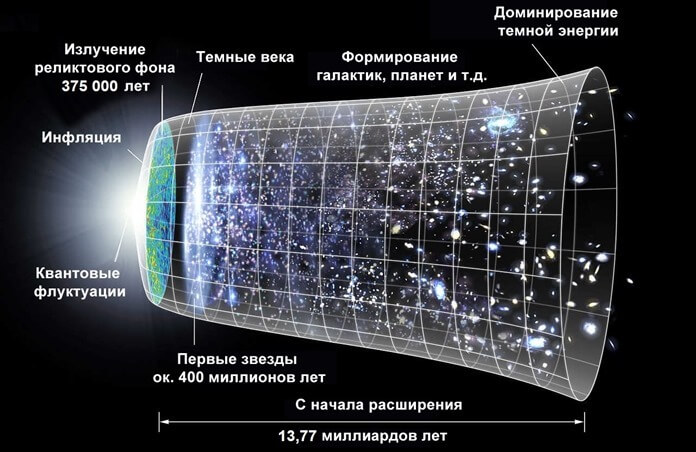
According to the fundamental tenet of modern cosmology, the universe is highly homogeneous. For example, the residual heat from the Big Bang appears to be extremely uniform in all directions. Matter in the universe follows the same rule.
- Of course, some local heterogeneity exists in the Universe. For example, there are clusters of stars, galaxies, and other matter localized in specific regions.
- But the basic cosmological principle remains: matter in the Universe as a whole is distributed very evenly.
- Otherwise, clumps of matter would begin to attract one another, causing the Universe to collapse under its own gravity.
But the cluster of galaxies in the Great Wall is not uniform.
Moreover, this gigantic structure is located 10 billion light-years away, meaning scientists are observing the object as it was 10 billion years ago, or approximately 3.8 billion years after the Big Bang. According to modern models of the evolution of the Universe, such large and complex structures could not have arisen at this stage.
What other large objects are there in the Universe?
- A huge group of quasars – held the record for the largest object ever identified in the Universe until it was broken in 2013. It is a cluster of 73 quasars (massive celestial objects emitting enormous amounts of energy). This structure, located in the constellation Leo, is approximately 4 billion light-years across.
- There is also a giant ring of 9 gamma-ray bursts, discovered in 2015. This structure is approximately 5.6 billion light-years in diameter and is believed to be spheroidal or ring-shaped. The distance from this ring to Earth is approximately 9.1 billion light-years.
- In 2021, an object named "Maggie" was discovered in the Milky Way galaxy.« — named after the Magdalena River, the longest river in Colombia. This massive hydrogen filament is 39,000 light-years long and lies over 55,000 light-years from Earth. "Maggie" is five times larger than the largest known gas clouds recorded in recent history.
- South Pole Wall — is a colossus of a vast galaxy cluster, stretching for a massive 1.37 billion light-years between the constellations Cetus and Bird of Paradise. The South Polar Wall is special because it is very close to the Milky Way galaxy, just 500 million light-years away. And it was discovered relatively recently—in 2020.