








European and American scientists warn that the Trump administration's plan to dismantle an ocean observing system vital to understanding the climate crisis and marine ecosystems will "severely reduce" the accuracy of weather forecasts and El Niño, with economic consequences for the US.
The decommissioning of a U.S. system that plays a vital role in the global ocean observing network will significantly increase the uncertainty in annual estimates of the rate of ocean warming, according to a study published last month.
As a result, forecasts and early warning systems for storms, tropical cyclones, and El Niño will deteriorate, «sometimes to dangerous levels,» according to Sabrina Speich, an expert in global ocean monitoring at the École Normale Supérieure (ENS) in Paris and chair of the Global Climate Observing System’s ocean expert group.
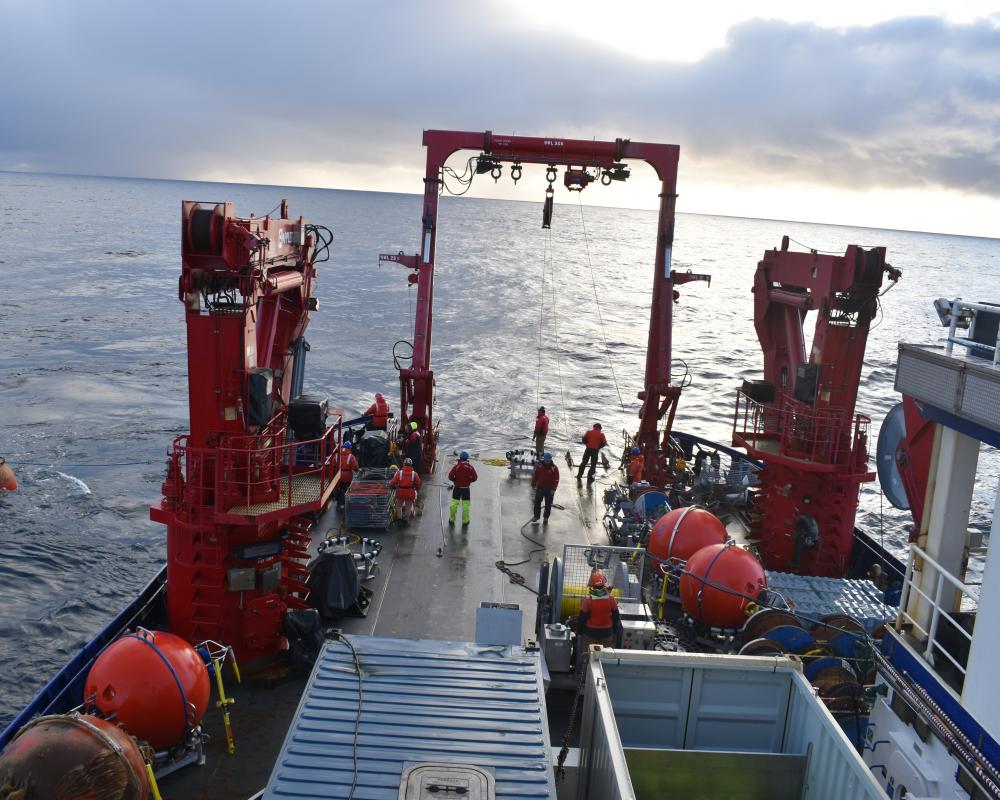
The Oceanographic Observatories Initiative (OOI), managed by the US National Science Foundation, is a vast network of seafloor systems, underwater gliders, and moored surface platforms that provides data to researchers, policymakers, educators, and mariners worldwide. Covering both coasts of the US and extending into the North Atlantic and Southern Oceans, the initiative has been used to study marine heat waves, harmful algal blooms, subduction zone earthquakes, ocean acidification, and fisheries variability.
Dismantling the system will deprive it of a vital component of the Global Ocean Observing System (GOOS), a network of robotic floating devices, moored buoys, and research vessels that experts call the "eyes and ears" of the ocean. Warning systems based on this data "save lives," experts say.
An insightful study published last month in the journal Nature Climate Change showed how data loss in GOOS, a UN-coordinated system for collecting oceanographic weather and climate data across multiple countries, could degrade ocean temperature estimates that underpin weather forecasting, El Niño prediction, and fisheries management. The study found that the loss of observational data from the United States would be worse than the random loss of all oceanographic data worldwide. US-funded platforms cover all oceanographic basins, filling critical gaps that no other country currently fills.
Speich, a co-author of the study, said, "Ocean heat content is the most reliable indicator of climate change we have—not just what's happening in the ocean, but the entire climate system." Vertical temperature profiles, which allow us to determine ocean heat content, are "some of the simplest measurements we can make," she said.
«"If you lose them, you lose the ability to track not just ocean warming, but the climate system as a whole—they're a proxy for variables that become unavailable the moment observations stop.".
«"Forecasts will remain relevant, but their accuracy will decline, sometimes to dangerous levels. Atmospheric observations alone are not enough," Speich said. "Ocean data is fundamental to early warning systems for tropical storms, cyclones, and El Niño. And the impacts won't be limited to science: the economic costs will be felt throughout the United States, from agriculture to insurance to disaster response.".
The loss of observational data in the U.S. in a year when El Niño, with its "extreme" weather events, is predicted could also mean "we lose the ability to clearly anticipate its approach and take action in a timely manner," she said.
«"The stakes are high: Farmers in the US and across South America use El Niño forecasts to decide what and when to plant—the question of whether to expect drought or flooding shapes every farming decision months in advance.".
The most recent El Niño event, in 2023-2024, was one of the five strongest on record and contributed to a record global temperature rise in 2024.
A study by Speich and her co-authors found that excluding only US observations would increase the uncertainty in the annual ocean warming rate estimate for 163%.
On Thursday, the European Union announced it would strengthen its own monitoring of the global ocean by investing €92 million ($107 million) in the OceanEye initiative, more than half of which will go to the GOOS fund. This announcement by the European Commission was long planned and is not a direct response to the US actions.
John P. Abraham, a professor in the engineering department at the University of St. Thomas in Minnesota and a co-author of the research paper, called the U.S. administration's decision to eliminate the $368 OOI system "cutting corners and squandering the essentials.".
«"The US government wants to save less than a billion dollars on sensors that are the eyes and ears of the ocean," Abrahams said. "We incur hundreds of billions of dollars in climate costs annually. The cost of the observing system is a fraction of the climate costs from hurricanes and storms that hit the US.".
Between 1980 and 2024, the United States experienced more than 400 climate and weather disasters, with damages exceeding or reaching $1 billion. In 2024 alone, the costs of such disasters totaled $177 billion. According to a post on the National Oceanic and Atmospheric Administration (NOAA) website, this "billion-dollar climate and weather product" administered by NOAA will no longer be updated due to "changing priorities.".
Abraham said the system is "a fairly inexpensive way to reduce the costs of climate change.".
«"This is not about saving money, it's about stopping climate science," Abrahams said.
Samantha Burgess, head of climate strategy at the Copernicus Climate Change Service (C3S), the European Earth observation system that combines European space data with in-situ measurements to monitor change and provide forecasts, said ocean observations are "essential" because "we can't see the deep ocean from space." They "save lives," she added, by warning us of severe storms.
Burgess said, "We need international collaboration to obtain the best available observational data and mitigate risks in our changing world. Without oceanographic observations, we are flying blind.".
A statement released earlier this week by the National Science Foundation, which funds and oversees the OOI program, said the program was not being canceled entirely, and described plans as "downsizing," or reducing the number of elements, though it was not clear what data-collection capabilities would remain.