








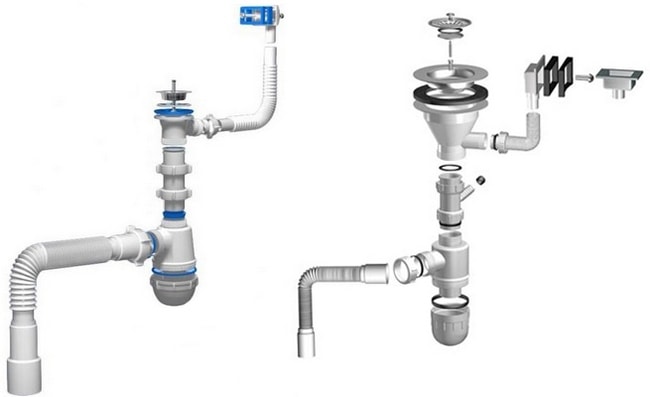
Every plumbing fixture, whether a bathroom sink or a kitchen sink, cannot function without a vital connecting element—the trap. This is more than just a drain pipe; it's an engineering device that serves several purposes. Its curved shape creates a permanent water seal, an impenetrable barrier to unpleasant sewer odors that attempt to penetrate the living space. The trap also serves as a settling basin: small objects accidentally dropped into the drain (jewelry, plugs), as well as grease, sand, and other debris, settle in its lower section, preventing clogging of the main sewer pipe. Choosing the right trap not only improves comfort but also the longevity of the entire system.
Materials of manufacture: from plastic to chrome-plated brass
The material determines the durability, aesthetics, and, of course, the price of a device. Today's market offers options to suit every taste and budget.
- Plastic (polypropylene, polyethylene). The most popular and affordable material. Modern plastic for traps is durable, chemically inert, rust-resistant, and resistant to hot water. Smooth interior walls prevent grease and dirt from adhering. The main advantages are low cost, ease of installation, and a wide range of shapes. The disadvantage is its unsightly appearance, although this isn't a concern for concealed installation under a sink.

- Brass, bronze, copper. A classic in plumbing, metal traps are durable, very strong, and have a solid appearance. However, they are susceptible to oxidation and the formation of a patina in humid environments. To prevent this, they are coated with protective decorative finishes: chrome, nickel, bronze- or gold-tone powder coating. These models are significantly more expensive than plastic ones and require careful handling during installation to avoid scratching the coating.

- Stainless steel siphons. Rare and expensive, their main advantage is their impeccable appearance in high-tech or industrial style. They are corrosion-resistant, but may show water marks, so they require regular maintenance.
- Combined models. A common option is for the siphon body itself to be made of plastic, while the visible decorative elements (inspection cover, outlet grate) are made of chrome-plated metal. This is a good compromise between price and aesthetics.
Design Variations: Which One is Best for Your Sink?
Corrugated (accordion) siphon
A flexible plastic corrugated tube, bent into a "U" or "S" shape, is the simplest and most affordable option. Its main advantage is its versatility and ease of installation. The corrugated tube can be bent at any angle, making it ideal for unusual sink drain placement relative to the sewer inlet. A minimal number of connections reduces the risk of leaks. However, it has significant drawbacks: the ribbed interior quickly becomes clogged with grease and dirt, is difficult to clean, and often requires complete disassembly. Corrugated tubes also don't tolerate very hot water (they can become deformed) and are unsightly.

Bottle (flask) siphon
The most common type. Named for its distinctive shape—a cylindrical or conical bowl (flask) covered by a removable lid at the bottom. Water flows through a complex path: from top to bottom, into the bowl, and then from the bowl through an internal tube to the drain outlet. Water always remains in the bowl, creating a water seal. The main advantages are excellent flow, ease of maintenance (cleaning is easy, just unscrew the bottom cap), and a "trap" for small valuables. A dropped ring will settle in the bowl. The disadvantages are more complex assembly and larger dimensions, which can be a problem in tight spaces under the sink.

Flat (incinerator) siphon
A specialized solution for situations where height is at a premium. For example, when a washing machine, dishwasher, water heater, or storage unit is located under the sink. This type of trap has a minimal height (sometimes less than 10 cm) due to the horizontal position of the water seal. It operates similarly to a bottle trap, but is flattened. Water flow is somewhat poorer and requires more frequent cleaning. Choose only models made of high-quality, thick plastic, as the water pressure in a flat design is higher.

Hidden and branched structures
For design solutions where all utilities are hidden within a wall or box, concealed traps are available. Their installation is more complex and is planned during the rough-in stage. Traps with additional outlets for connecting a washing machine or dishwasher are also popular. This is a neat alternative to separate drains and prevents dirty water from backing up from the sewer into appliances.

Siphon with overflow: protection against flooding
This is a mandatory feature for sinks and bathtubs with a special additional opening at the top of the bowl—an overflow. Its purpose is to prevent the sink from overflowing if the faucet is left unturned and the main drain hole is blocked. The overflow tube connects this upper opening to the trap body. When water rises above a certain level, it flows through the overflow directly into the trap and down the drain. When choosing this type of trap, ensure that the diameter and shape of the overflow tube fitting are compatible with your sink.

Key points for self-installation
Assembling and installing most modern traps out of the box takes 20-30 minutes. The main challenge is ensuring all connections are tight.
- Dry assembly. Before installing under the sink, assemble the main trap assembly without tightening the nuts. This will help you understand the design and check the components.
- Installing the exhaust grille. A long screw is inserted into the sink drain hole from below. A rubber gasket and a decorative metal or plastic grate are placed on top of the screw, and secured with a nut. Be careful not to overtighten, as this could crack the ceramic or tear the gasket.
- Connecting the siphon. The top of the siphon (outlet) is placed on the screw from below and secured with a plastic nut through a conical gasket. This gasket is responsible for the seal and must be installed evenly and without distortion.
- Connection to the sewerage system. The lower outlet of the trap is connected to the sewer pipe via a rubber adapter. If the diameters don't match (the trap is 40 mm and the pipe is 50 mm), use the appropriate adapter.
- Examination. After assembly, open the water tap and carefully inspect all connections for leaks. Pay particular attention to the joint under the outlet grate and the bottom cap of the bottle trap.
Bottom line: choosing a trap is a balance between functionality, available space, design, and budget. For a standard kitchen or bathroom, an inexpensive plastic bottle trap is ideal. For a loft-style open sink, a chrome-plated one might be a better choice. And for complex under-sink appliances, a flat trap or one with additional outlets is a better choice. A properly selected and installed trap will ensure years of trouble-free operation and protect your home from unpleasant surprises.