








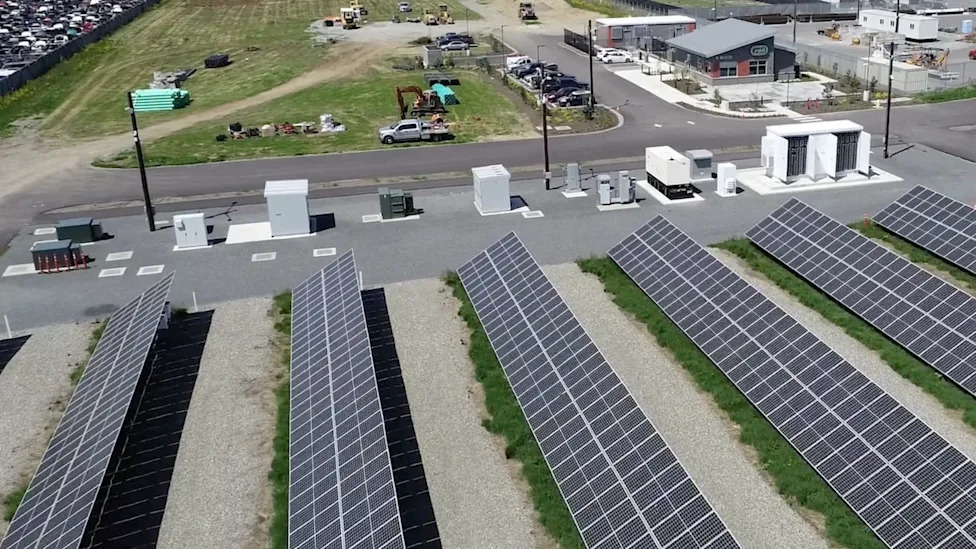
Washington's Snohomish County Public Utilities Authority is preparing to commission a large-scale battery energy storage system in Arlington in the fall of 2026, even as several King County communities have put similar projects on hold, highlighting growing disagreements over the future of energy storage.
Energy companies are eyeing large battery storage as a key way to store clean electricity and reduce costs when demand surges, while some residents remain concerned about safety risks.
What's happening?
In the fall of 2026, the Snohomish County Public Utilities Authority plans to commission a large-scale battery energy storage system, described by KNKX as the first and largest in Washington state. The project is expected to increase grid capacity enough to power thousands of homes for several hours.
While opposition is growing elsewhere, Arlington has policies in place that support permitting for such projects. This has allowed the energy company to move forward with the project at its Clean Energy Campus, where Tesla-manufactured batteries are housed in ventilated white enclosures set on a gravel pad.
Gabriel Duran, who is overseeing construction for design firm Ameresco, noted that one of the most notable features is the complexity of the battery management system.
«"In particular, the computer system that runs this process and all the data that we can interpret and react to is cutting-edge," Duran said.
Although at least eight communities in King County, including Snoqualmie, have temporarily blocked plans to deploy battery-based energy storage systems, even larger projects are already underway in other areas of Washington state. One project under construction in Sumner is expected to be approximately eight times larger, meaning the Arlington project may not hold the state's largest solar energy storage record for long.
Why is this important?
Large battery storage systems allow utilities to store electricity generated by renewable sources such as wind and solar, and then deliver it later when homes and businesses need it most.
This can be especially important during extreme weather conditions, when electricity demand and prices tend to rise sharply.
Program manager Jessica Spar said the benefits become particularly evident during major weather events.
«"When we have these significant weather events—whether it's a cold snap or a hot spell—and we have to buy power during peak periods, it will help smooth things out a little bit and keep costs down," she said.
Battery-based energy storage systems can reduce the need to purchase electricity on the open market during peak periods. This will help protect utility budgets and make services more affordable for consumers.
In Snoqualmie, opponents of the planned battery storage facility have repeatedly pointed to a fire at a similar facility in Moss Landing, California, which burned for several days and forced the evacuation of more than 1,000 people. Such incidents have heightened safety concerns in some communities.
What is being done?
To allay those concerns, Snohomish County PUD said it had selected what it believed to be the best option and placed the system on its clean energy property.
Spar said the Arlington facility is equipped with advanced fire detection and suppression systems.
This favorable approach to permitting in Arlington differs from the temporary bans adopted in some areas of King County.
Several battery storage projects are already underway in Washington, including a much larger installation in Sumner. If these systems work properly, they could provide utilities with more options for storing affordable renewable energy, mitigating price shocks, and ensuring more stable power supply during peak periods.
Subscribe to TCD's free newsletters to receive helpful tips, actionable advice, and a chance to win $5,000 toward your home improvement. To see more stories like this, change your Google preferences here.