








There are many harsh places to find yourself in the world. A desert can kill you just as surely as a stint in Hurricane Alley. Some parts of the world experience almost constant rain, while others are prone to earthquakes and landslides. But few places are as inhospitable as the Arctic. Simply a vast, frozen expanse of snow and ice at the top of the world, where only the bravest of people manage to overcome the challenges and survive.
10. Douglas Mawson's Deadly Journey
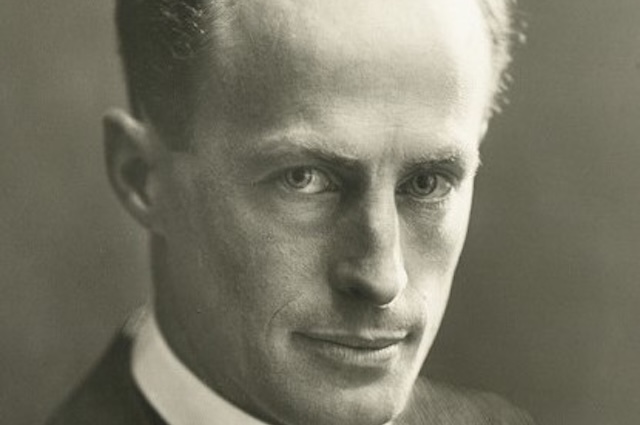
Douglas Mawson didn't survive the Arctic. He chose the opposite side of the world and conquered Antarctica. The problem was, he decided to do so in 1912, not knowing where he was going, lacking the technology or equipment to navigate the continent, and with only two companions. Only Mawson survived.
It's hard to describe how cold it is in Antarctica. For perspective, in May 1912, where Mawson was, winds averaged over 60 miles per hour every day, 24 hours a day, for the entire month. Sometimes they reached over 200 miles per hour. Temperatures dropped to -77 degrees Fahrenheit. A year before Mawson went there, in 1911, another explorer's teeth froze so hard they shattered. So that's as cold as it gets.
Mawson's companions were a dog handler and a lawyer, a champion skier. They covered 300 miles in just over a month, and things seemed to be going well. It wasn't long before the first of his companions fell into a hidden crack in the ice, taking the dog sled with him. The hole was so deep that the other men couldn't see the bottom.
Most of their food was on the lost sled, leaving the two survivors in a precarious situation. On the return journey, they were forced to eat the weakest of their sled dogs. At some point, Mawson went blind, and by January, he wrote in his diary that his partner's skin had peeled off his legs. The next day, the man became delirious, developed a fever, and died that night. Mawson was alone.
He had 100 miles left to go. His face was frostbitten and in agony, as were his feet. At one point, he took off his boots, and the soles of his feet had been torn off. He bandaged the loose skin again and kept going.
A few days later, in such severe pain that he could barely cover five miles a day, Mawson himself fell into a crevasse. He managed to cling to the edge of a sled hanging over a bottomless pit. But a rope was attached to the sled, and it held long enough for him to climb up. The same thing happened again the following day, but the night before, he had fashioned a rope ladder for himself as a safety measure, and it paid off.
By the end of January, he was only making four miles a day. He was in severe agony and had suffered numerous cold injuries. His hair had even started to fall out. Amazingly, he then found a cave near his base camp, where other members of the original landing party had left food, including oranges and a pineapple.
On February 8 he found a shore party waiting for him, and although their ship had already left, he remained with his party and supplies and survived another winter before returning home.
9. Gudlaugur Fridorsson
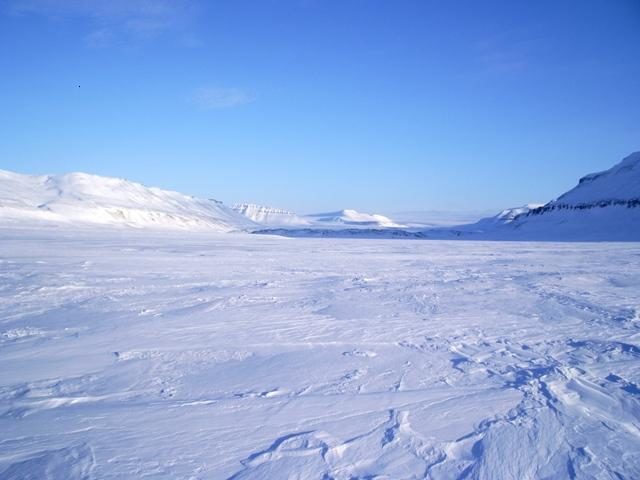
There's an Icelandic fisherman named Guðlaugur Fríðórsson who proved that Viking roots are stronger than you might think. Back in 1984, Fríðórsson and four friends were fishing near the Westman Islands. One evening, their boat crashed and capsized. It was -2 degrees Celsius outside, and the ocean water was a deadly 5-6 degrees Celsius. The average person can withstand 10 to 20 minutes in water at 5 degrees Celsius before their muscles begin to weaken and they lose coordination.
Two men drowned immediately, but Fridorsson and two others climbed onto the keel of the boat. Their respite was short-lived: the boat sank completely, and all three were lost in the stormy, dark sea. The other two men were never seen alive again, but Fridorsson swam alone in those waters for five hours. Apparently, he was accompanied on his journey by an Arctic fulmar, a type of bird.
When he finally reached shore after swimming nearly four miles, he realized he had come ashore in an impossible spot. Waves crashed against the rocky, inaccessible shore, so he was forced to return to the water and swim further around the island in search of a better spot.
Once he found a suitable spot, he had to walk another two miles in sub-zero temperatures in wet jeans, a sweater, and barefoot until he found a town. Despite the ordeal and a body temperature of 93°F, he survived without any signs of hypothermia, which doctors attributed to the fact that he weighed just under 300 pounds and was well insulated.
8. Paulusi Keyotak
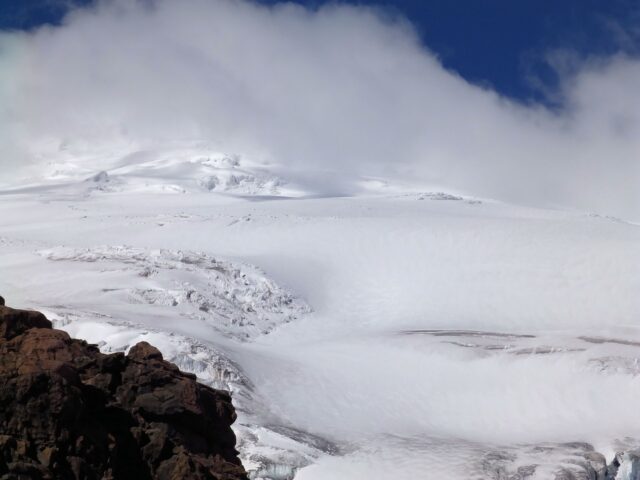
Paulusi Keiotak is a politician from Nunavut, one of Canada's least populated and coldest regions. A man raised on the land and an avid hunter and fisherman, he was acutely aware of the environment he was entering when he set out on a snowmobile trip in 2016. But even then, he knew his journey wouldn't end. This was easy, considering the plan was to travel approximately 500 kilometers, or about 310 miles.
The journey should have been easier than it seemed, as this was the established route Keyotak planned to take with his son and nephew. There were cabins along the way offering shelter, and the trio had supplies to survive the 15-hour journey. Everything likely would have gone smoothly if not for a brutal snowstorm that disoriented them and caused them to lose the trail.
All three went missing on March 22. By the time they realized they'd strayed far from the trail, they didn't have enough fuel to return or reach their destination, so they did what any reasonable person stranded on the snowy plains of Nunavut would do. Keiotak used his pocket knife to carve a snow shelter while the other two tracked caribou. And then they waited.
Canadian troops joined the rescue efforts, and despite having only a sleeping bag, some water, sugar, and tea, the men survived quite comfortably until they were rescued on March 31.
7. Pitovirus
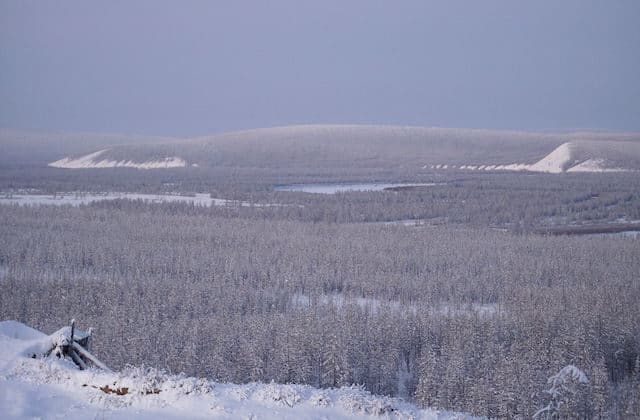
Not everything that survives in the frigid north is necessarily human. Or even intelligent. Perhaps the greatest Arctic survival story comes from the frozen wastes of Siberia, where scientists have resurrected a 30,000-year-old pituitary virus from the cold. Because, frankly, doesn't the world need more giant prehistoric viruses?
Frankly, the pithovirus poses no danger to humans or animals, although it's still somehow infectious after so many thousands of years on ice. It's also a giant, at least as viruses go. You can see it with a regular microscope. It's 1.5 micrometers in size. The average viral cell ranges from 20 to 400 nanometers in size. The pithovirus is 1,500 nanometers in size. It's a big guy.
The virus attacks amoebas, so we, multicellular life forms, are mostly safe for now. But that doesn't mean there aren't other, more dangerous viruses in the ice that won't emerge when the Arctic begins to melt.
6. Bob Goshi

In 1967, pilot Bob Gochey was making an unremarkable flight across Canada's Northwest Territories. The Northwest Territories are sparsely populated, and you can drive for hundreds of miles without seeing anything but forest and moose.
It was early February, a harsh time of year for such a far north, and a violent storm raged in Goshi. He lost his bearings and was nearly out of fuel when he decided to save his life by making an emergency landing. He hadn't brought anything for survival—the plane had emergency flares and a crate of frozen fish. The temperature dropped to -60°C, which is about -76°F.
The search began shortly after Bob went missing, but the problem is that the Northwest Territories cover an area of about 442,000 square miles. In all that space, only about 45,000 people live there, and almost half of them live in Yellowknife, where Bob was headed. The rest is forest. Goshi landed so far from civilization that he even lost radio contact.
Rescuers searched for three weeks without success. The bitter cold and strong winds made it seem impossible for the man to survive after such a long time. The search was called off. Friends even raised money to continue a private search, but it might not last long. The big problem? Bob had landed on a frozen lake in a white plane, invisible to search parties.
Wolves often circled his plane, and he talked to them to avoid loneliness. But after 58 days, the plane, on a routine flight, spotted something unusual on the ice and landed to investigate. Bob surprised the pilot and passenger by finding them both alive and approached them with his suitcase, asking if they had room for another passenger. He holds the record for the longest solo survival in the Arctic by a downed pilot.
5. Excrement knife

No proper account of Arctic survival stories can exist without reference to the most infamous Arctic survival story ever told. We are, of course, referring to the story of the poop knife.
According to a widely believed story, sometime in the 1950s, there was an isolated Inuit man living alone whose family wanted him to join them in town. To escape the fate they had in store for him, he escaped into the frozen tundra, resorting to the most astonishing improvisation imaginable. It's said that under cover of night and without tools, as his family had confiscated them, the man released feces into the icy world and then set about shaping it into a blade. Using nothing but his own saliva to sharpen the icy edge, he sacrificed a sled dog and then fashioned a sled from its ribcage before attaching it to a second dog and escaping into the night.
The story, allegedly told by the missing man's grandson, captivated people so much that several researchers and curious readers attempted to recreate the feet. So yes, scientists have tried to make knives out of frozen poop.
Their conclusion was that the knives were ineffective and melted again when used. However, another Arctic explorer reportedly made his own chisel to dig his way out of a snow-covered prison.
No poop knife has yet been successful in lab conditions, but they still need to test it in extreme cold to achieve an accurate replication. The ones they did make were able to cut away subcutaneous fat from a pig before melting, so there's always a chance.
4. Bob Bartlett
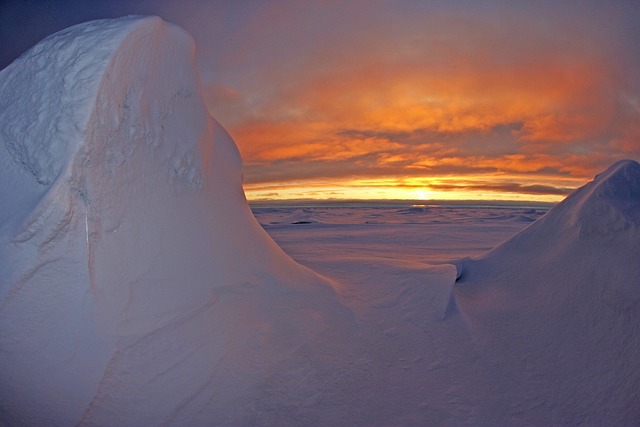
Bob Bartlett was arguably the greatest Arctic explorer of all time. He led over 40 missions to map and explore the region—more than anyone else ever. This despite being shipwrecked 12 times and nearly dying several more times.
His passion and obsession were Arctic exploration and the discovery of the North Pole. He participated in numerous unsuccessful missions, including one in which his fellow explorer Robert Peary lost eight toes to frostbite. In 1908, the Pole was spotted on his third attempt when Peary sent Bartlett home, claiming he wasn't as skilled at sledding as the other man on the expedition.
In 1913, while on a scientific expedition, Bartlett's ship became trapped in ice for a staggering five months. Anticipating the worst, he ordered the crew to build an igloo on the ice and transport supplies. When the ice finally breached the hull and sank the ship, they were at least prepared.
The crew abandoned camp and traveled hundreds of miles by sled. They left their team on Wrangel Island and then traveled the final 700 miles to Alaska with a single guide, reaching there by the end of May. A rescue vessel reached the island's crew by September, a full eight months after the sinking of their own ship, which, as you'll recall, had been aground for five months before sinking.
3. Marten Hartwell
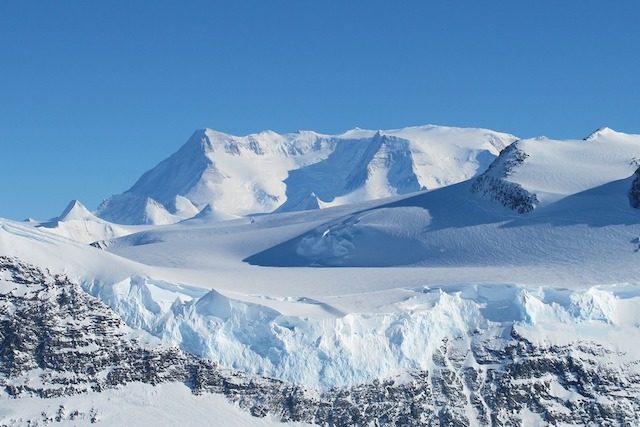
Marten Hartwell was a pilot who set out on the same journey as Bob Goshey several years earlier. Hartwell was flying three passengers—a pregnant Inuit woman, a nurse, and a boy named David Pisurayak Kutuk—to Yellowknife to get to the hospital. Kutuk had appendicitis and needed treatment.
A storm knocked the plane off course, it crashed into a hill, and it crashed near a lake. The woman and the nurse died, but Hartwell and the boy survived for 23 days.
Despite being only 14 years old and gravely ill, Kutuku managed to build a shelter for himself and the pilot to withstand the -40°C temperatures. He also built a fire and hunted for food, but it wasn't enough.
Hartwell was eventually forced to eat the flesh of the dead passengers. Kutuk, despite his condition and the fact that there was nothing else to eat, refused. He died of starvation 23 days later, while Marten survived for another week until rescuers arrived. Doctors later determined that Kutuk would have survived if he hadn't expended so much energy building a shelter and trying to keep him and Hartwell alive. He was posthumously awarded the Cross of Merit. .
2. Bruce Gordon

The harsh climate is one of the most terrifying aspects of surviving in the Arctic, but that's not all you must overcome. Polar bears call this land home, and they're not to be taken lightly. So what happens when you encounter North America's largest land predator? If you're Bruce Gordon, you make friends.
Gordon was on a whaling ship in 1757, and it's said the captain was too brave to set sail. The ship was between Greenland and Iceland when it was crushed by ice floes. Gordon was perched on a lookout perch on the mast and was thrown off the ship onto the ice as it sank.
The boat capsized, and Gordon was able to enter the upturned vessel and search the dry parts for food and supplies. That's when the bears arrived.
According to legend, a bear snuck onto the ship, and he managed to kill it using a torch and a knife. He skinned it and collected the meat, and then, some time later, a cub emerged. He killed its mother.
Taking pity on her, he fed the cub, and she became his companion. She grew up and followed him like a dog, even fighting off other polar bears that appeared later. They lived and hunted together for a long time, until Gordon finally found a small settlement of natives.
The bear escaped just in time and never returned, and Gordon managed to track down another ship that had rescued him. On board, he learned he had been missing for seven years.
Is this story true? Well, who can say? But that's how it was told.
1. Ada Blackjack
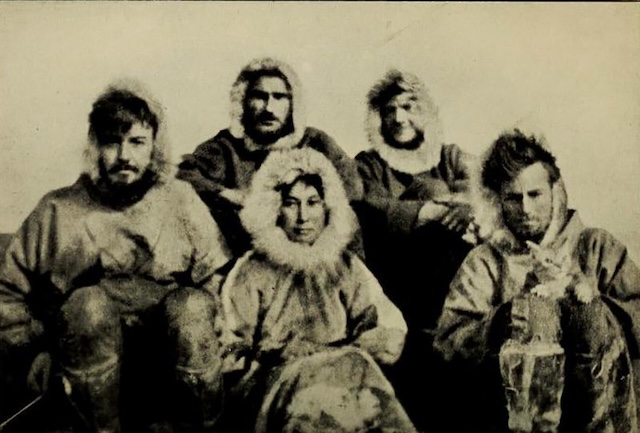
Wrangel Island is an Arctic island near the East Siberian Sea where Bob Bartlett left his crew. It is also the site of Ada Blackjack's remarkable survival story.
Blackjack was an Inupiat, an Alaskan native, and by no means a survivalist. In September 1921, she was hired on a year-long contract as a seamstress for an Arctic expedition, as her experience consisted of sewing fur clothing, nothing more. All food, shelter, and survival gear were guaranteed as part of her employment, so she accepted.
The plan was to claim Wrangel Island for the British Empire without any reason. The four men and Blackjack set out with no Arctic survival experience and a six-month supply of provisions. Remember, this was a year-long mission. The Arctic was expected to provide them with everything they needed for the next six months.
They managed to hold out for a year, but the ship sent to retrieve them was forced to turn back, unable to break through the ice. One man fell ill with scurvy, and three others decided to go for help, leaving Blackjack to care for the sick man. These men were never seen again.
Blackjack cared for the patient for six months. She had to learn to hunt and survive, facing constant criticism from the patient. Then he died.
Alone, Blackjack continued her efforts to survive. She learned to trap foxes and shoot birds. In August 1923, a boat finally arrived and discovered Blackjack as one of two survivors on the island. The expedition left with a cat named Vic, whom she also managed to keep alive.
When she returned, she hadn't received nearly what she was owed, and people criticized her for failing to save a dying man's life. Others profited from her story, but she didn't, but at least now her name and her remarkable tenacity can be better known.