









Carl Sagan once said, "Somewhere, something incredible is waiting to be discovered." It's this desire to know what's unknown that drives humanity beyond the stars. We reach beyond our own world into the cosmos to see what's out there. And what we've discovered is literally beyond comprehension. The telescope James Webb sent back images of the universe stretching back more than 13 billion years, almost to its very creation.
We've seen thousands of galaxies containing billions of stars and potentially hundreds of billions of worlds. All in space, just like us. And the question remains: are there others like us among them? Are there other people out there? Or things that breathe, live, and grow? The search continues, and it involves more methods than you might think.
10. Monitoring starlight

The vast space between here and literally anywhere else makes the search for alien life a little more challenging than finding a lost pair of socks. In many cases, it's easier to look not for aliens per se, but for signs that they exist. That's why we started monitoring starlight.
Light from distant stars is often one of the few things we can see from a distant galaxy. Even with the James Webb Telescope, we're not going to peer into the windows of alien homes. But a star can tell us a lot about a particular solar system simply by analyzing the light it sends our way.
Starlight also looks for signs of alien technology, not just their worlds. For example, if you have a massive space station, it will cast a shadow, and we'll also be able to see the blocking starlight. The idea is that a sufficiently advanced race would create amazing technological feats , such as star-sized power plants or computers that occupy entire solar systems.
Stars like the distant one Boyajian's star, are prone to periodic dimming, leading scientists to wonder if there are alien megastructures that could interfere with the transmission of light from there to here.
9. Tracking biosignatures in alien atmospheres

Planets pass in front of the stars. Using a technique called spectroscopy , We can analyze the spectrum of light emitted by a star when a planet passes in front of it. A color change will occur, allowing us to see the spectrum of the planet itself and the gases that must be present in the planet's atmosphere to filter out certain frequencies of light.
Methane is a gas produced by living things in our experience and is conducive to life. If a planet has methane in its atmosphere, it could be a potential carrier of life. Therefore, we can analyze the light spectrum, filter out the unaltered light from the star, and determine what gases are present in the planet's atmosphere and, potentially, whether it harbors life.
With thousands of exoplanets already discovered, and now, thanks to the Webb telescope, tens of thousands more on the horizon, there will be plenty of opportunities to search for life. Narrowing the search means looking for specific things, such as biosignatures , signs that there is, or at least could be, life on the planet.
We search the atmosphere for gases like oxygen and methane, things we know support life because they're present in our own atmosphere and living things require or produce them. While oxygen is an obvious choice, it's not an all-or-nothing proposition, especially since we know oxygen has only existed on Earth for part of its history. Instead, scientists have identified thousands of potential compounds that may indicate life , which we can look for. Things like carbon dioxide, but not carbon monoxide, are also potential indicators of life, or at least habitability.
8. Technosignatures in an alien atmosphere

So, we've seen how biosignatures and technologies are targets for searching for alien life. But with a slight modification to these search methods, we can also hone in on technosignatures.
What we've described so far is a search for markers of life or the potential for life. Hunting for technosignatures is a search for signs of industry. More precisely, pollution. A species capable of construction is capable of polluting. This means we can search the atmosphere. , For example, nitrogen dioxide . While it comes from natural sources, it also comes from burning fuels.
Solar panels are another potential technosignature we might detect. Since every planet must orbit a star for life to exist, it's reasonable to assume that intelligent species would harness the energy of their sun in the same way we do. Solar panels reflect a lot of light, and that light would have a specific spectral characteristic . If we find this, it may indicate life.
7. Radio signals

One of the oldest and still most popular ways to search for alien life is to look for radio signals. Researchers from the Massachusetts Institute of Technology have discovered in July 2023 repeating signal, A heartbeat-like signal emanating from billions of light-years away from Earth. Its exact location has not been determined, but it is among many signals, some mysterious and others natural, that we have discovered. over the years .
Shortly before this signal, Chinese scientists announced that they too had detected an alien signal, possibly from an extraterrestrial intelligence, using their massive Sky Eye telescope .
SETI, the Search for Extraterrestrial Intelligence, began searching for radio signals back in 1960 with its Ozma project . One of the major challenges with this method is the narrowing of the search area across the vastness of space and the fact that there are many natural sources of radio waves. Stars and many other celestial bodies emit radio frequencies, and they must be examined and excluded during the search. The hope is to one day find a signal that is more than just background noise and offers a clear indication of intelligent intent.
6. Telescopes

Perhaps the most obvious way to find planets is still at the forefront of efforts. Using a telescope isn't as simple as it seems, but it's how we get those amazing images returned to us by things like Hubble and then the Webb telescope. The hardest part is knowing where to look.
There are many telltale signs you can rely on to determine where to point your telescope. One method is oscillation method . You find a distant star and observe its light. If the star appears to be wobbling, it means something may be orbiting it, so you point your telescope at that area.
We have already filled the skynumerous satellites and probes that will aid in our search. Webb and Hubble are two, but there are also Spitzer, Kepler, Tess, and Cheops, with many more on the way. The European Space Agency plans launch PLATO in 2025 with the ability to observe 1 million stars and search for planets around them
5. Quantum communications

The average person isn't very familiar with the idea of quantum communication, but it's of interest to those searching for alien life. Signals can be sent across galaxies using photons without losing any information. Instead of standard bits, like those in our computers today, with their 1s and 0s, quantum communications use something called qubits. People are still exploring this idea to develop secure communication networks, which we believe will provide unprecedented security for potential life. quantum internet .
While we are just getting the hang of it, the idea is that more complex types We would have mastered it and could already use it. This could also explain why our search for signals is so fruitless. Searching for radio signals in the quantum universe would be like trying to track down dinosaurs in a zoo. You're simply late to the party, and what you're looking for no longer exists. But if we change what we're looking for, we might start finding better results.
4. Search robots-probes
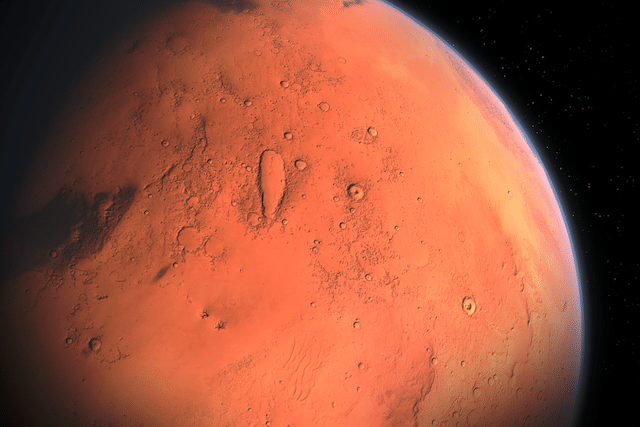
Closer to home, the moons of Saturn and Mars are still full of possibilities. While we haven't yet detected signs of life, that doesn't mean we haven't discovered anything yet. And more effective detection tools will increase our chances.
NASA has been exploring the idea of sending probes to moons like Europa and Enceladus, which could be sent beneath the ice as we know it, to search for signs of life. The team robots can be placed in liquid water under the ice and allowed to swim far and wide to see what they can see.
This will be just one type of future intelligent probe, capable of searching and then determining for itself whether it has found anything useful. Since signals from space take a long time to reach Earth, they can use AI to assist with searching and analysis, reporting only when they believe they have found something noteworthy.
3. Gravitational lensing

If you remember «Star Trek IV» (the one with the whales), then you might know there's a precedent for things orbiting the sun. And as fantastical as that movie may be, there's science behind the idea of using the sun's gravity to move things. It's called gravitational lensing, and it could help us intercept alien signals.
If something is large enough, its gravitational pull can even bend light. As a result, it also focuses and magnifies that light. Researchers argue that communication signals could be curved and focused in the same way. This means that stars like our Sun could be used as terrestrial satellite networks, transmitting and repeating signals throughout the galaxy. If another race of beings were using stars in this way, and we were to set up a satellite relay, we could eavesdrop.
However, communication is not everything. Also being studied influence sun to light . If we position a spacecraft or satellite so that its light is refracted and then focused by our Sun, we could gain a much clearer view of alien worlds. The Sun would effectively become a natural telescope, magnifying our view. At least one researcher believes the effect would be staggering—possibly achieving a resolution of 20 kilometers per pixel. Clear enough to discern continents and even weather patterns on other worlds.
2. Wet chemistry
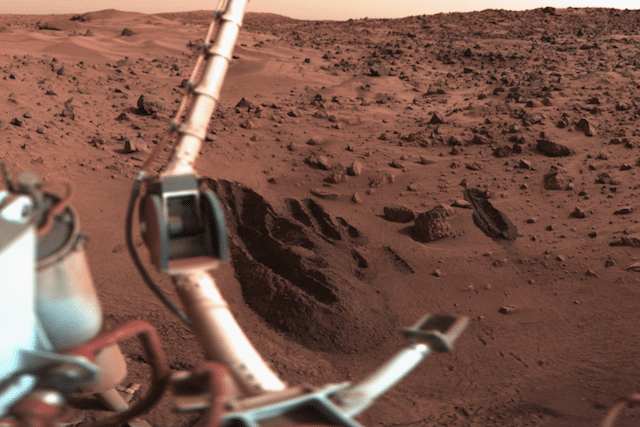
As repulsive as it may sound, wet chemistry offers the possibility of finding life on other worlds. This works on planets closer to home, like Mars, not in distant galaxies.
Using something called Sample Analysis at Mars , or SAM, the Curiosity rover examined Martian soil in search of the building blocks of life. This includes any organic compounds that may contain substances like oxygen and nitrogen. Soil samples are analyzed in three different chambers where they can be exposed to various solvents , as well as in other chambers where they could be dried. As a result, various organic molecules were discovered that would not have been missed during conventional sample analysis. We certainly didn't discover life, but it gave us a much clearer picture of what was there and could certainly be helpful in the future.
This technique could be applied again elsewhere, such as on Saturn's moons, such as Titan.
1. Auroral radio waves

Have you ever heard of the radio waves emitted by the aurora borealis? It's not something that often comes up in casual conversation, but it's of particular interest in the search for alien life.
Here on Earth, the aurora borealis occurs when charged solar particles collide with gases in our atmosphere. This occurs at both poles, not just the north. Most often, the aurora borealis is green, but different gases produce different colors. And Earth isn't the only planet where this occurs.
The aurora borealis produces radio waves, and these radio signals can give us information about the planet they're coming from, including its magnetic field. This is important because magnetic field Essential for life on our planet as we know it. Our magnetic field keeps our atmosphere stable, preventing harmful particles from reaching us and destroying all life on the surface.
If an exoplanet is discovered and displays auroras, we'll be able to analyze these radio waves. If they indicate a strong magnetic field, this could be a strong indication that the planet is suitable for life. Similarly, the signals themselves may lead us back to planets we might otherwise miss.