









The modern sniper emerged around the end of the nineteenth century, particularly during the American Civil War. Although still not known as "sharpshooters," snipers were used by both Union and Confederate forces throughout the conflict, albeit in limited numbers. Their role would expand significantly at the turn of the century, when improvements in firepower and tactics allowed these well-trained soldiers to accomplish much more than they had previously been able to.
Over time, the sniper has evolved into a lethal force on the modern battlefield, with kill rates comparable to those of much heavier units, such as artillery or tanks. History's most lethal snipers typically target high-value targets, and they have had a profound impact on nearly every major conflict of the last century—from the brutal war on the Eastern Front in World War II to the recent large-scale battles against ISIS.
10. Charles Mawhinney, 103 murders

Charles Mawhinney is credited with 103 kills during the Vietnam War—the highest total in the history of the U.S. Marine Corps. However, according to his colleagues, this number could have exceeded 300, making him one of the finest snipers in military history.
Mawhinney was born in 1949 in Lakeview, Oregon, and completed sniper training at the Scout Sniper School at Camp Pendleton, California. He was sent to the Vietnam War during its most intense phase in 1968, where he spent three months as a scout sniper in various units before enlisting in Delta Company. It was here that Charles Mawhinney committed most of his kills—in one instance, he killed 16 North Vietnamese soldiers with precise headshots in 30 seconds.
9. Billy Sing, 200+ kills

When Willian "Billy" Sing enlisted in World War I, he had no idea he would become one of the finest snipers of the entire conflict—perhaps even of all time. He was part of the Australian Imperial Force and deployed in May 1915 to the infamous Gallipoli front, where Turkish snipers wreaked havoc on Allied New Zealand and Australian troops, given their extensive knowledge of the terrain.
Billy was one of the snipers selected and trained to counter them. Born in 1886 in rural Queensland, Australia, he grew up surrounded by guns and horses, and by the time he enlisted in the army, he had mastered both. By October 1915, Billy had killed at least 201 Ottoman soldiers, and the number may have been much higher. He was so effective that the ANZAC soldiers gave him several nicknames, such as "the killer" and "the assassin.".
8. Vasily Zaitsev, 225+ murders

The Battle of Stalingrad on the Eastern Front of World War II was one of the largest and bloodiest battles ever fought. Its dense urban environment proved a testing ground for highly trained and experienced snipers from Nazi Germany and Soviet Russia, as both sides sent millions of reinforcements into the city during the five-month battle. However, it was Russian snipers who truly dominated the battlefield, and some of the USSR's best snipers played a role in Germany's final defeat at Stalingrad.
Vasily Grigoryevich Zaytsev was one of them. With more than 225 kills in less than five weeks in Stalingrad, including 11 elite German snipers, Zaytsev was one of the most prolific Nazi assassins of the entire war. Some sources place his total kill count at around 400, for which he was awarded the Hero of the Soviet Union medal. Zaytsev remained a respected figure in Soviet Russia after the war, and many of the techniques he developed are still studied and used by sniper units in combat.
7. Josef Allerberger, 257 murders
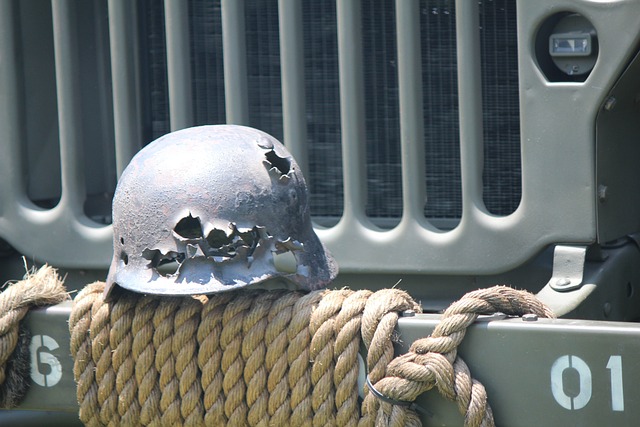
Josef Allerberger was first sent to the Eastern Front as a German machine gunner in September 1943, though he quickly realized he was much more skilled with sniper rifles. The war in the east hadn't been going well for the Germans since their defeat at Stalingrad in January, and Soviet snipers had inflicted heavy losses on the retreating German army. Although Allerberger couldn't turn the tide—we all know how the war ended—he did manage to slow the Red Army's advance in that particular sector.
With at least 257 confirmed kills, Josef Allerberger was one of the Wehrmacht's most lethal soldiers at the front. He devised a variety of tactics to maximize his impact on the battlefield, such as shooting at soldiers in the rear to create confusion and slow down Soviet advances. He was known for camouflaging himself with an umbrella made from local foliage—an effective, easily deployable technique that allowed him to operate deep behind enemy lines.
6. Lyudmila Pavlichenko, 309 murders
When Germany invaded the Soviet Union in June 1941, Lyudmila Pavlichenko was one of many Soviet citizens who volunteered to defend their country. While studying to become a scientist and teacher at Kiev University, Pavlichenko was proficient with a rifle thanks to her training at a local sniper school. She continued to hone her skills on the battlefield, eventually achieving such success that the Germans nicknamed her "Lady Death.".
Throughout the war, Lyudmila Pavlichenko killed at least 309 Axis soldiers, 36 of them snipers. She was initially stationed in the Odessa area, though the rapidly shifting front soon brought her to Sevastopol on the Crimean Peninsula, where the invading German army vastly outnumbered the besieged defenders. Despite this, Pavlichenko would claim the majority of her kills during this battle. While the city fell after 250 days of fierce fighting—albeit within a relatively short time—the efforts of Pavlichenko and other prominent Soviet fighters in Sevastopol seriously weakened the German war effort in the east.
5. Matthäus Hetzenauer, 345 murders
Matthäus Hetzenauer was stationed in Central Europe in 1944 as part of the Wehrmacht's 3rd Mountain Division. At the time, Germany's efforts were focused on slowing the rapid advance of Soviet troops toward Berlin, as Hitler mobilized some of his best units to stabilize the front in the east.
Although Hetzenauer initially trained as a mountain infantryman, his commanders soon recognized his talent as a sniper and began training him as one. He proved to be the most lethal of all German snipers on the Eastern Front, killing at least 345 Red Army soldiers in just a few months before being retired due to a head injury. He was even awarded the Iron Cross for his contribution to the German war effort, though since the cross is now considered a hated neo-Nazi symbol in most places, this would have meant little in the grand scheme of things. Regardless, Matthäus Hetzenauer did his job as best he could until he was captured by Soviet forces in May 1945.
4. Francis Pegamagabow, 378 murders

While snipers existed before World War I, modern snipers truly distinguished themselves in the brutal combat of the Great War. Armed with new, improved weapons, such as the bolt-action rifle with telescopic sights, these early snipers were extremely effective in the trenches, especially in the early stages of the war, when no one knew how to counter them.
By far the most deadly of these was a native Canadian soldier named Francis Pegahmagabow. Born into an Ojibwa First Nation clan on Parry Island, Ontario, Pegahmagabow entered the war as part of the Canadian Expeditionary Force. He fought as a scout and sniper, often operating in the dangerous no-man's-land between the two sides. Despite enduring a severe chlorine attack at the Second Battle of Ypres, which permanently damaged his lungs, Pegahmagabow killed 378 enemy soldiers in the war before being hospitalized with pneumonia in 1917.
3. Ivan Sidorenko, 500 murders

Ivan Sidorenko's combat career began in 1939, when he, like many others across Russia, enlisted in the Red Army to defend against the German invasion. In 1941, he was sent to the decisive battle as part of a mortar unit, loading and reloading long-range artillery shells.
However, in his spare time, Sidorenko practiced his sniper skills, picking off unsuspecting German soldiers wherever he could find them—all with a standard-issue Mosin-Nagant rifle. Within three years, his kill tally had risen to 500, making him one of the most deadly snipers in history. He was so proficient at this that he was soon relieved of his mortar team and assigned to train new snipers at the front. Before being seriously wounded in 1944, Ivan Sidorenko trained over 250 Red Army snipers on the Eastern Front.
2. Vasily Shalvovich, 534 murders

Before Germany invaded Soviet Russia, Vasily Shalvovich worked on a collective farm in the Georgian SSR. Although he served in the Red Army for a short period between 1932 and 1933, it was only during World War II that he truly found his way with a sniper rifle. By June 1942, Shalvovich's skills allowed him to become a sniper in the 138th Rifle Division, fighting at Stalingrad.
By the end of the war, Shalvovich had killed at least 534 Nazis, making him the most successful Soviet sniper of the war. About 215 of these were made between June and December 1944, when he fought in places such as Kerch, Stalingrad, Belarus, Lithuania, Latvia, Poland, and Germany.
1. Simo Hayha, 542 kills
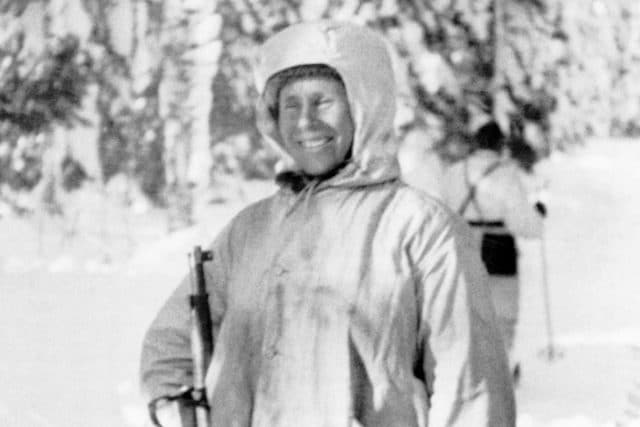
The Soviet Union invaded Finland in November 1939, beginning the bloody Winter War that claimed hundreds of thousands of lives. Although the USSR had made some territorial gains by the end of March 1940, the conflict is remembered for the fierce resistance shown by the Finns, which resulted in the deaths of over 126,000 Soviet soldiers and approximately 26,000 of their own.
One of the faces of this resistance was Simo Häyhä, a farmer-turned-soldier credited with the most sniper kills in the history of modern warfare. In 98 days, Häyhä killed 542 Soviet soldiers, earning him the nickname "White Death." Unlike others on this list, Häyhä used a standard M/28-30 rifle without a scope. Although it was a simple weapon—even for the time—Häyhä had mastered it over years of hunting in the Finnish wilderness.