









The Olympic Games – for over 120 years, they have served as a showcase of the highest sporting excellence and athleticism. They have also witnessed their fair share of controversies, mostly in the form of doping scandals and even tragedies. The 1972 Games in Munich come to mind. At the same time, they have also been home to many strange and unexpected incidents. Today, we'll look at ten of them.
10. Unusual shoes
The early Olympics featured all sorts of events that no longer exist, including tug-of-war. At the 1908 Games in London, three teams were from Great Britain, and all three were made up entirely of police officers—one from Liverpool, one from the Metropolitan Police, and one from the City of London. Add to that two national teams from the United States and Sweden, and you have a full field for tug of war .
The Americans faced Liverpool in the quarterfinals and lost almost immediately. They subsequently complained to the authorities that their opponents were using prohibited footwear, which was described as "« the size of a ferry on the North River , with steel heels and steel spikes on the front of the sole, and inch-long spikes protruding from the sole.
It definitely sounded like it was against the rules, since "prepared boots or shoes with any protruding nails »" were banned, but Liverpool police insisted the boots were standard work attire. Because of this, the Americans' protest was dismissed, and the silver medal went to the Liverpool team.
9. The Motorist and the Marathon

Unfortunately, cheating has always been a persistent problem at the Olympic Games. But while modern cheaters typically try to find new drugs to thwart testing, at least in the past, athletes were more inventive in their rigging.
Take for example American long-distance runner Fred Lorz, who competed in 1904 Olympic marathon in St. Louis. About halfway through the race, Lorz started cramping, so his manager picked him up in his car and drove him the next 11 miles. At the very least, you have to give Lorz credit for his sheer courage. He didn't even try to hide his deception, as he continued wave to the fans , while driving to the finish line.
Lorz, of course, won the race, and Alice Roosevelt, Teddy Roosevelt's daughter, was just about to place the gold medal around his neck when rumors of his cheating reached her. Lorz confessed to the crime and claimed it was all just a joke and he had no intention of accepting the honor. Whether this was true or not, we'll never know, but Lorz actually enjoyed the redemption story the following year when he competed in Boston Marathon . This time he won fair and square.
8. Double Magic

When it comes to creative ways to get around the rules, we have to take our hats off to Madeleine de Jesus , who found a unique way to cheat the system when representing Puerto Rico at the 1984 Summer Olympics in Los Angeles. But, to be fair, Madeline had an unfair advantage: she had a twin sister.
Now we know what you're all thinking... and you're absolutely right. Madeline and Margaret switched places and hoped no one would notice the difference. Here's what happened: Madeline pulled her hamstring during the long jump, and less than a week later, she had to compete in the 4x400 relay to reach the final. Normally, that would have meant the team's downfall, but what if Margaret competed in her place? After all, she was a track and field athlete, too.
Madeleine granted her full powers, and for several days Margaret lived and trained in the Olympic Village, successfully posing as her sister. Then, when the big day arrived, the Puerto Rican team reached the final. At first, it seemed the sisters had managed to fool the world, and perhaps they would have gotten away with it, if not for one eagle-eyed Puerto Rican journalist who exposed the whole plot. He was able to distinguish Madeleine from Margaret by birthmark on the cheek.
7. Duck dishwasher

Bobby Pierce was an Australian rower who won the gold medal in the single scull consecutively at the 1928 and 1932 Summer Olympics, becoming the first person to do so did it . However, it was not his incredible athletic feat that defined his Olympic career, but rather an act of kindness and compassion.
During the 1928 Amsterdam Games, Pearce was leading significantly in the quarterfinal race. Alone in a boat, he couldn't see what was happening in front of him. At one point, he began to hear shouts and screams from people on the shore. When he turned to see what was happening, he saw a mother duck and a procession of tiny, fluffy ducklings crossing the canal directly in his path.
Many other athletes would have pierced them, not wanting a few birds to prevent them from achieving sporting glory. However, Bobby Pierce stopped his boat and waited for the ducks They safely crossed the channel before resuming the race. His compassion cost him the lead: French rower Vincent Sorin beat him by five lengths. But karma was on his side that day, and in a remarkable display of skill and athleticism, Pearce not only caught the Frenchman but left him in the dust, winning the race by almost 30 seconds.
6. Cuba's first Olympic champion
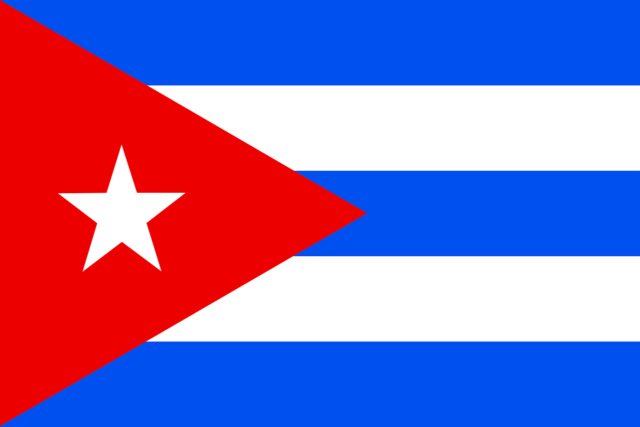
We're returning to the 1904 Olympic Marathon in St. Louis to tell you the incredible story of Félix "Andarín" Carvajal, Cuba's first Olympian. A postman in his native Havana, Carvajal allegedly convinced the mayor to send him to the Olympics by running laps around City Hall all day. En route to America, the athlete ran out of money in New Orleans. Some say Carvajal may have been robbed, but most sources believe the postman lost the money he had for the trip.
Now penniless and 670 miles from the marathon site, Carvajal had no other options, so he walked and hitchhiked to St. Louis. He arrived on time, but he was dirty, sweaty, hungry, and tired from the hike… and he still had to run the marathon.
He, of course, had no racing gear. Carvajal showed up in a dirty white shirt, long trousers, and work boots. Someone helped him by cutting up his trousers and turning them into shorts, which only made his appearance even more bizarre and comical.
During the race, Carvajal quickly became a fan favorite, as he loved to stop and chat with those present. At one point, he ran past an apple orchard and, remembering he hadn't eaten in two days, popped inside for a quick mid-race snack. Unfortunately, the apples were rotten , and this caused him severe stomach pain, so Carvajal also stopped for a mid-race nap. He still finished fourth.
5. Where is Ali's medal?
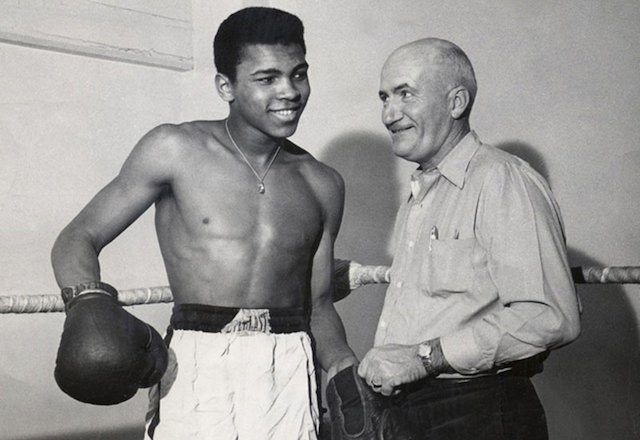
At the 1960 Summer Olympics in Rome, 18-year-old Muhammad Ali won the gold medal in light heavyweight boxing. Thirty-six years later, at the Atlanta Games, he received a new medal , because he lost the first one. What happened to Ali's original gold medal during this time remains a mystery to this day.
According to Ali's autobiography, published in 1975, he threw it in Ohio River in Louisville as an act of anger and defiance after he got into a fight over being denied service at a "whites only" restaurant. The story has proven apocryphal, according to several of the boxer's friends, but no one has yet offered an alternative explanation, so it's possible someone, somewhere, has Muhammad Ali's gold medal.
4. The most boring race in history

If something is boring, it's obviously not a good story. But if something is incredibly boring, it automatically becomes interesting. That's what we're dealing with today—it must be the most disappointing race in Olympic history: the 18-foot sailing event at the 1920 Summer Games.
What made this case so lackluster? It's simple: there was only one team involved – Team Francis Richards and Thomas Hedberg from Great Britain. And if that weren't enough, they didn't even finish the first race. They didn't compete in the other three races, but since they were the only ones in the competition, they still earned points.
It remains somewhat of an Olympic mystery whether the pair were actually declared winners and awarded medals at the end of the event, or whether the whole thing was cancelled. Some official reports make no mention of the 18-foot race. was even organized , while others mention two sailors as gold medal winners .
3. Theft of the first flag
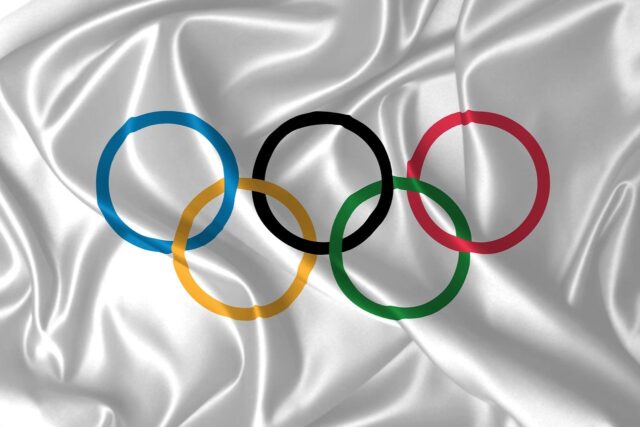
The Olympic flag, with its five intertwined rings of different colors, has become one of the most recognizable symbols in the world. It was designed by the father of the modern Olympic Games, Pierre de Coubertin, and officially adopted at the 1920 Summer Games in Antwerp. However, this didn't last long. After the Games, the original flag disappeared, and the Olympic Committee was forced to create a replacement for the next Games in Paris.
The fate of the original flag became a mystery that lasted nearly eight decades. Fast forward to 1997, at a U.S. Olympic Committee dinner, a journalist mentioned the fact that the original flag had never been found. This prompted a former Olympian named Hal Haig Priest walk up to a journalist and casually mention that he had a missing flag and that he had kept it in a suitcase for the last 80 years.
At the time of the dinner, Priest, who was 100 years old, had competed in the 1920 Games as a diver and taken home bronze. After a night of ecstatic celebrations, his teammate dared climb the flagpole and steal the flag… which is exactly what he did, and he fled Belgium with the flag safely tucked away in his suitcase. It wasn't until a dinner 80 years later that he realized the importance of his souvenir, so in 2000, a ceremony was organized to return the flag to the Olympic Committee.
2. The Case of the Mysterious Cox

You might be wondering who the youngest gold medalist in Olympic history is. It's a perfectly valid question and certainly a great claim to fame. The answer, however, isn't entirely straightforward. Officially recognized as the youngest diver Marjorie Gestring , she is 13 years and 267 days old. However, we do know that there was someone younger than her. We just have no idea who it was.
This goes back to Summer 1900 Games in Paris , in a coxswain competition. Each team consisted of three people—two oarsmen and a coxswain who accompanied them. Since the coxswain didn't perform any physical work, it was advantageous for the team to keep them as light as possible. Consequently, one of the French teams decided to use a boy as a coxswain, and the Dutch team decided to emulate them. Before the race, they replaced their regular coxswain., Hermanus Brockmann , somehow a random boy they chose from the crowd, aged between 7 and 10. And the Dutch team took first place, making this boy the youngest gold medalist in history. He posed for a photo with the winning team before disappearing into the crowd, never to be seen again, and no one even knows his name.
1. Olympic Torch Relay
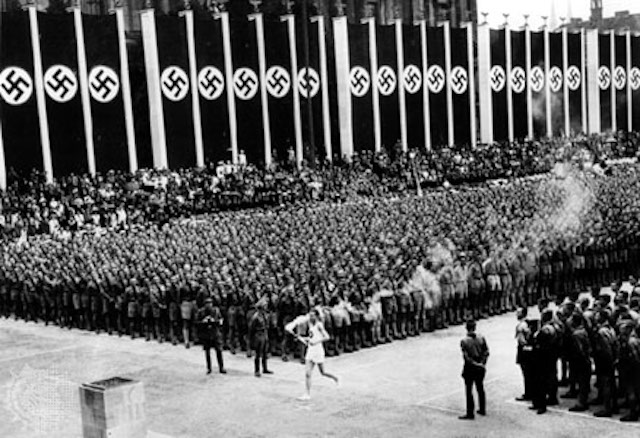
The Olympic Games are associated with many symbols and traditions—rings, flags, talismans. And, of course, who could forget the torch relay? Every year, starting with Olympia, the torch is carried from city to city in Greece until it reaches the host city, where it is used to light the Olympic flame and officially begin the games. It's a great tradition, embodying the spectacle and universal appeal of the Olympic Games. It's just a shame it was created by Nazi Germany .
Yes, that's right. The Olympic torch relay. was first used At the 1936 Berlin Games, you might think it sounds like something from ancient times, but that's exactly what Germany was looking for—something that would create a symbolic link between modern Nazis and the ancient Greeks.
The invention of the torch relay is usually attributed to Karl Dim , one of the main organizers of the 1936 Games. He himself was not a Nazi, but once Hitler and Goebbels realized the propaganda potential of the Olympic Games, they co-opted the entire event and ensured that every detail was used to demonstrate the superiority of the Third Reich.