








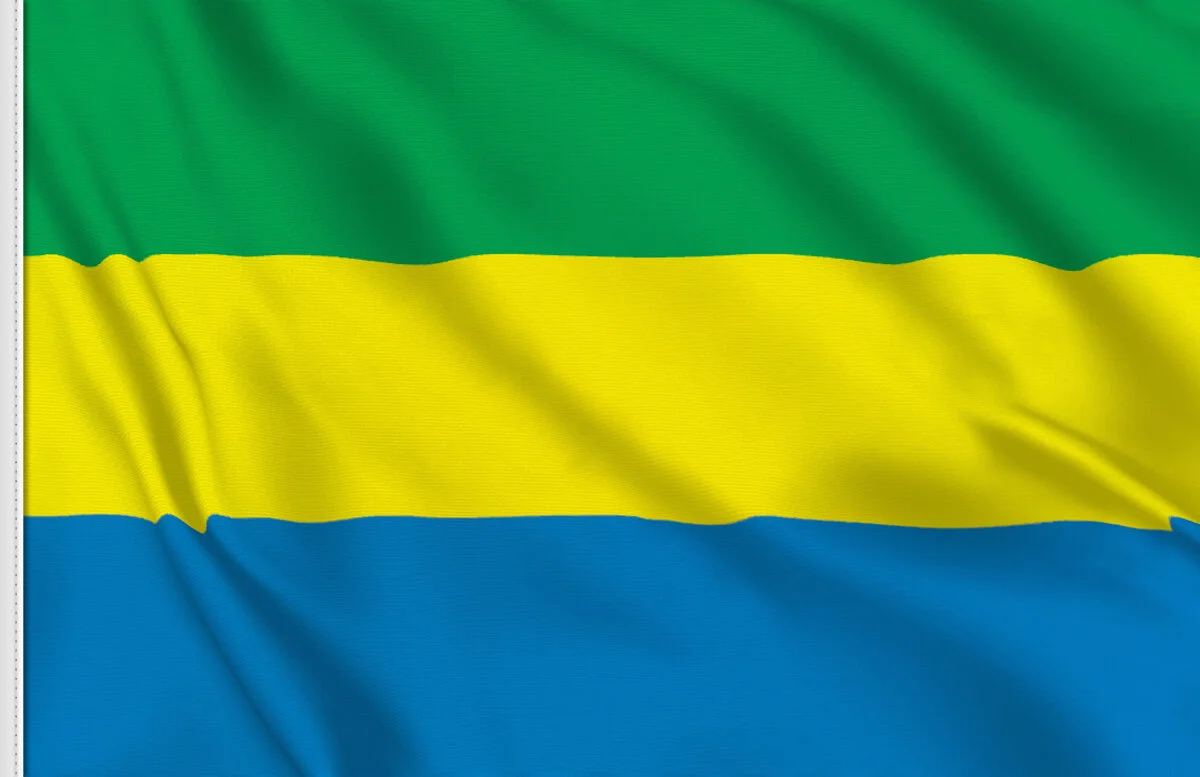
Gabon, a picturesque and verdant country on the Atlantic coast of Central Africa, is renowned for its rich biodiversity and vast natural resources. It's a place where dense tropical forests meet the ocean, creating stunning landscapes and supporting a diverse wildlife. Despite being one of the most stable countries in the region, Gabon remains relatively unknown outside its borders. Its commitment to preserving natural landscapes and developing ecotourism makes it an intriguing destination for those passionate about nature and environmental conservation.
- Gabon gained independence from France on August 17, 1960.
- According to the latest estimates, more than 800,000 people live here.
- Libreville, the capital, is the largest city and serves as the political and administrative center.
- Gabon is a republic with a presidential form of government.
- The official language of the country is French.
- Gabon is rich in natural resources, and oil is its main export commodity.
- It covers an area of almost 270,000 square kilometers.
- Approximately 85% of Gabon's territory is covered by tropical forests.
- The country is part of the Congo Basin, the world's second largest region by tropical forest area.
- Gabon has 13 national parks created to protect the country's diverse flora and fauna.
- At Loango National Park, visitors can see whales, elephants and gorillas in one trip.
- The country's economy relies heavily on the oil and manganese industries.
- Gabon was the host nation of the 2012 Africa Cup of Nations, a major international football tournament.
- It is a member of the United Nations, the African Union and the Organization of Islamic Cooperation.
- Since 1967, Gabon has been ruled by the Bongo family.
- Gabonese music includes many folk styles and pop genres, one of which is called tandima.
- In 2009, the country introduced a new environmental initiative that requires 10% of the country's territory to be designated as protected park areas.
- Gabon has one of the largest elephant populations per capita in Africa.
- The Crystal Mountains form a natural border with Cameroon.
- The Albert Schweitzer Hospital in Lambaréné has received worldwide recognition for its humanitarian work.
- Gabonese traditional religion centers around the worship of ancestors and nature spirits.
- The literacy rate here is one of the highest in the region.
- Gabonese cuisine offers a wide variety of fish, meat and tropical fruits.
- The Fang tribe is the largest ethnic group in Gabon.
- Fernand Vaz Lagoon is a popular ecotourism destination.
- The Gabonese government is working to diversify the economy to reduce dependence on oil.
- More than half of Gabon's population lives in cities.
- Hundreds of species of orchids grow in Gabon.
- It has one of the lowest population densities in Africa.
- The government officially advocates bilingualism in French and English.
- Gabon was once part of the French Equatorial African Federation.
- Football is the most popular sport in Gabon.
- The country's motto: "Union, labor, justice.".
Overall, Gabon stands out for its dense forests, rich biodiversity, and active conservation efforts. Despite its oil wealth, the country faces challenges related to economic diversification and political stability. Conservation of natural resources and wildlife remains a priority, reflecting a desire to maintain ecological balance while simultaneously developing tourism and reducing economic dependence. The blend of traditional cultures and modern aspirations makes Gabon a unique example of resilience and beauty in Central Africa.