








PinRedditShareTweetEmailWhatsApp0 Shares
People have been dreaming of traveling to the center of the Earth since at least 1864, when Jules Verne published «Journey to the Center of the Earth» . It was probably just curiosity a few years earlier. But the practical implementation of the idea of digging our way to the center of the planet is not as simple as it might seem. We've been to the Moon, but we haven't yet reached the Earth's core, and that's quite impressive.
The distance to the center of the Earth is 3,959 miles, although it obviously varies slightly depending on the starting point. At the equator, it's 3,963 miles, and at the North Pole, 3,949 miles. These differences are due to the Earth's rotation, which prevents it from being a perfect sphere.
The idea of digging a hole to the center of the Earth is simple to understand. Today, you might imagine that this would require a gigantic drilling machine. But mining is a remarkably ancient human invention. The ancient Egyptians were mining for gold as far back as 4,000 years ago.
The Egyptians were the first to master shaft-sinking technology. Later, cultures such as the Greeks, Persians, and Romans adopted these techniques from the Egyptians for their own mining industries. It was a terribly dangerous job, and it was mostly hired by criminals, as no one cared about their deaths. Only years later, when forced labor became harder to find, did safety conditions improve.
Simple shafts are much, much older than those built by the Egyptians. The oldest known shaft dates back to 43,000 BC and is located in Africa. Suffice it to say, people have been digging holes in search of something for a very long time.
Despite all the time we've spent digging holes, digging exceptionally deep holes is a different matter entirely. The deeper you dig, the more dangerous it becomes. There are many reasons why getting to the center of the Earth isn't as simple as a shovel in your backyard. But modern technology is simply astounding. So if someone wanted to get to the center of the Earth right now, could they? And how close are we already? Let's take a look.
What is in the Center?

The center of the Earth is a sphere composed primarily of iron, with a radius of 758 miles. Its temperature exceeds 5,000 degrees Celsius and it is under enormous pressure, which we'll discuss later. Despite its incredible heat, the core is not liquid. Although iron melts at around 1,500 degrees Celsius, the pressure at the center of the Earth keeps it solid.
The core is under such enormous pressure and compressed so tightly that iron atoms cannot move freely in a liquid state, regardless of temperature. Instead, they simply swap places with neighboring atoms in very tight interactions.
Some studies suggest that the core is not a solid or even a plasma, but a superionic substance existing in a state between liquid and solid.
The various layers of the Earth, from the inner core to the outer core, mantle, and crust, were determined not by drilling, but by seismology. Studying earthquakes has allowed scientists to determine what lies beneath us. We can analyze seismic waves and determine how they propagate, similar to observing light waves or listening to sound waves. This can be compared to using X-rays to study the internal structures of a body. This study allows us to determine how much of the Earth's interior is solid, how much is liquid, what its density should be, and so on.
As technology has improved, we've learned that the Earth's internal structure is far more complex than the four basic layers we've all been taught about. The mantle, for example, has numerous transitions. It even contains mountain ranges with peaks that nearly dwarf Everest.
The deepest we've ever gone
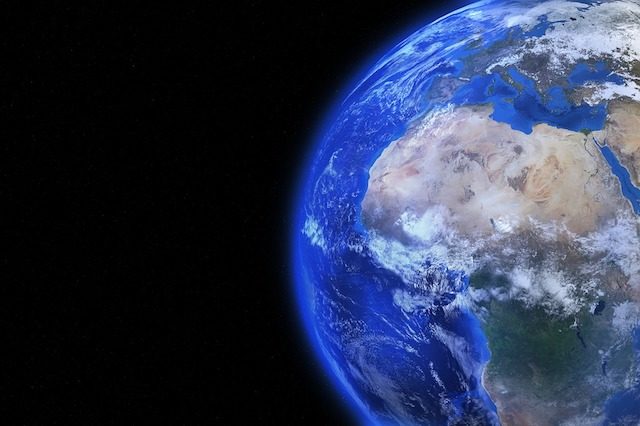
As of 2024, the deepest human-drilled hole in the Earth's interior is the Kola Superdeep Borehole. Drilled on the Kola Peninsula in the Russian Arctic, this borehole surpassed all previous attempts. The project was begun by the Soviet Union in 1970 and continued until 1992.
The Kola Superdeep Borehole reaches an astonishing 40,230 feet into the Earth. This is approximately 7.6 miles, or 0.191 TP3T, from the borehole's center. This is our best ever result.
You may have read that the Al Shaheen oil platform is deeper, but that's not actually true. The platform's well extends 40,318 feet, but not downwards, so the Kola well is actually deeper. Significantly so. The well on Sakhalin Island in Russia is similar: it's 40,604 feet long, but it doesn't extend downwards like the Kola well.
One of the reasons the Kola borehole was abandoned in 1992 was because the drilling crew was working in temperatures of about 180 degrees Celsius (356 degrees Fahrenheit). They expected the temperature to be about 100 degrees lower. At another borehole in Germany, only 30,000 feet deep, temperatures reached 500 degrees Fahrenheit.
Other projects were underway around the world. In the United States, a gas well was drilled in Oklahoma that reached six miles in length before encountering molten sulfur and having to be shut down. In the 1960s, the Mohole Project attempted to drill from beneath the ocean, but ran out of money.
Is it possible?

Sorry to get ahead of myself, but the answer is essentially no. We can't reach the center of the Earth. Deep drilling poses a host of challenges. One of them, which we've already discussed, is heat. The deeper you go, the hotter the temperature gets.
Drilling equipment is designed to handle frictional heat, but when frictional heat is added to this, and the temperature of the material being drilled already reaches 350 degrees Fahrenheit or higher, the problem becomes even worse. Drilling equipment begins to break or melt, especially when the temperature rises more than expected. Furthermore, the rock itself is also affected by heat. If friction and pressure begin to melt the rock, it becomes viscous and difficult to drill. And that doesn't even take into account the Earth's outer core, which is essentially molten iron and nickel.
The temperature at the center of the Earth is believed to be approximately 5,200°C or 9,300°F. If drilling rigs can't reach even a fraction of that depth without being destroyed by the extreme heat, then nothing we've built so far can withstand drilling to such depths and temperatures.
Just as alarming as the temperature, comparable to the surface of the sun, is the pressure. The pressure at the center of the Earth is 3.5 million times greater than the pressure at the surface. Again, no functional tool we've ever developed can withstand drilling in such conditions. The buildup of this pressure also contributes to the spontaneous collapse of boreholes and requires constant maintenance of equilibrium through fluid injection and temperature regulation.
Instability was a problem for both the German KTB well and the Kola borehole. Ideally, a drilling rig should be perfectly vertical to reduce torque, but this is incredibly difficult to achieve. The deeper the rig, the more unstable it becomes and the higher the risk of failure. The Kola borehole became stuck in rock and was unable to advance, halting further drilling.
By the time drilling of the KTB well was completed, the team had to retreat and restart several times due to difficulties servicing the well, which resulted in failures. Equipment would break and become irretrievable, requiring the drilling rig to be moved back far enough to attempt drilling again. Eventually, when drilling became impossible, they had to resort to using a 6.5-inch drill bit.
Both the KTB and the Kola NPP also suffered financial losses. These were multimillion-dollar projects. Unfortunately, the Kola NPP had to contend with the fact that it was a Soviet project, meaning the collapse of the Soviet Union significantly complicated the situation. But the KTB was also unable to secure funding to continue operations; it proved too expensive.
By the time the project was completed, the German government had spent $338 million. It's estimated that the construction of Kola cost approximately $100 million. Adjusted for inflation, that's about $253 million in today's dollars.
The final concern is time. It took 15 years to drill the KTB well. It took 22 years to drill the Kola borehole. If the Kola borehole continued to drill at the same rate all the way to the center, it would take almost 11,000 years.
What would happen theoretically?
Okay, so we just trashed the idea of getting to the center of the Earth. But we're not drilling there, we're just discussing it, right? So what would happen if it were theoretically possible to get there?
Obviously, you'll have to face the same problems we've already discussed, which have so far impeded progress—incredible heat and incredible pressure. But let's imagine we have a wide, stable hole right down to the center. Jump in!
At about one kilometer (0.6 miles) down, the temperature in this pit will rise above 45°C (113°F), causing you to suffer heatstroke. It only gets worse from there, and you've only traveled 0.02%. The temperature will reach boiling point before you reach two miles down, so you'll need a fan or bottled water to keep cool.
At 30 miles deep, you'll encounter the magma problem. Yes, you're already dead from the heat, but now you'll be completely turned to soot. But let's ignore that and continue.
On a more fun note, if you can travel in a vacuum, after some freefall, you'll reach a speed of almost 17,400 miles per hour. So it'll be a short trip! If you're not in a vacuum, you'll be stuck at terminal velocity, and by the time you reach the center, gravity will equalize, trapping you inside this sphere of iron heated to 5,000 degrees.
At 3.6 million atmospheres, you can no longer exist. Freedivers can learn to withstand pressures of 10 atmospheres, but they risk permanent injury or death. Some people have managed to withstand pressures of 30 atmospheres.
The Titan submersible, infamous for its tragic disaster and explosion en route to the Titanic wreck, experienced pressures of up to 400 atmospheres. Needless to say, 3.6 million is almost unimaginable.
If you're in a hole or tube filled with air, all the air above you is pushing down, creating a pressure unmatched by anything on the surface. At 50 kilometers or 30 miles, you'll reach air pressure equal to that at the bottom of the ocean.
Another problem is that you're moving faster than the hole you're falling into. The Earth is spinning, which means the walls of your tunnel will keep slamming into you until you're ground to dust. That hole can't stop killing you, can it?
So, essentially, no matter how much you delve into the theory, there's no easy way to avoid the many horribly painful things that would happen to you if you tried to reach the center of the Earth. Perhaps it's a good thing we can't get there. Unless, of course, laser drilling someday becomes feasible.
Other articles that may interest you