








The ancient Egyptians had very complex burial rites. They firmly believed in immortality after death and an afterlife. Therefore, they buried objects with the deceased to ensure their well-being in the afterlife. Boats played a significant role in their beliefs. The ancient Egyptians believed that the gods traveled through the heavens and beyond by boat. Therefore, when a person was buried, they were placed in a funerary boat and sent across the Nile River, as this was believed to be the route to the afterlife. Animals such as dogs were also placed on the boats, as the Egyptians believed in the power of animals to lead the deceased to the afterlife. While ordinary funerary boats were small, Pharaoh Khufu's boat was 144 feet long.
The burial boat of Cheops, dating back to 2500 BC, was discovered by archaeologists in 1954. It consisted of 1,224 intact fragments of wood.

The discovery was made within the Giza pyramid complex, at the foot of the famous pyramid. It was one of two similar boats rediscovered by archaeologist Kamal el-Mallah in 1954. Judging by its appearance, the archaeologist was certain the boat was intended for Pharaoh Khufu. The boat was found sealed in a pit carved into the Giza bedrock. This may be why the boat fragments remain remarkably well-preserved, even after nearly 6,500 years.
All the fragments were methodically laid out in the pit. Judging by their placement, the archaeologist believed that the fragments had been carefully prepared for placement in the pit.
It then took the restorer 14 years to understand how the pieces fit together and assemble the boat. Ahmed Youssef Mustafa had to undergo painstaking research to understand ancient Egyptian boatbuilding methods.
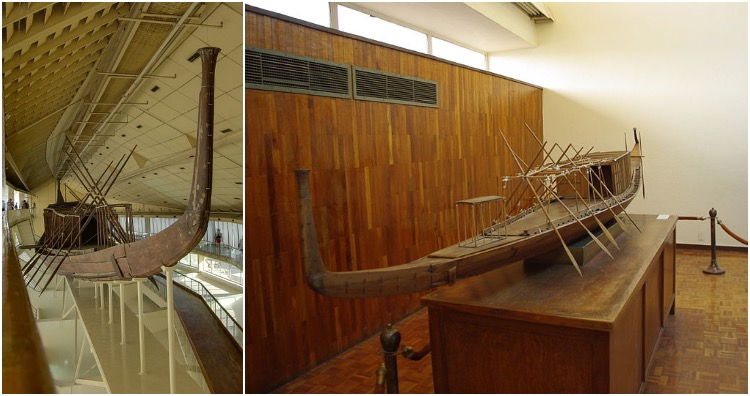
The discovery of the boat fragments was a milestone in the history of Egyptian archaeology, primarily because such a large burial boat had never been discovered before. Once all the fragments were found, the boat had to be reassembled. Ahmed Youssef Mustafa (now known as Haj Ahmed Youssef), chief conservator of the Egyptian Department of Antiquities, was primarily responsible for the reassembly.
To begin his work, he had to conduct meticulous research. He studied drawings carved on the walls and in the tombs of ancient Egyptians. He needed to examine various models of small boats and ships previously discovered in other tombs. Hajj Ahmed visited the Nile shipyards in Old Cairo, Maadi, and Alexandria, where such elegant boats are still built today. He needed to determine whether modern craftsmen still use ancient technologies. He even studied the shipbuilding methods of various Egyptian communities.
Based on his research, it took Hadji Ahmed nearly 14 years to solve this mystery. He put every piece in place to recreate the original ship of Cheops. The result is a massive boat, 44 meters long and 6 meters wide, which is kept in the Cheops Boat Museum.
This ship is a remarkable feat of engineering. It was built using the "shell-first" method, with adjacent planks joined using tenon joints, a kind of "pin-and-hole" technique.
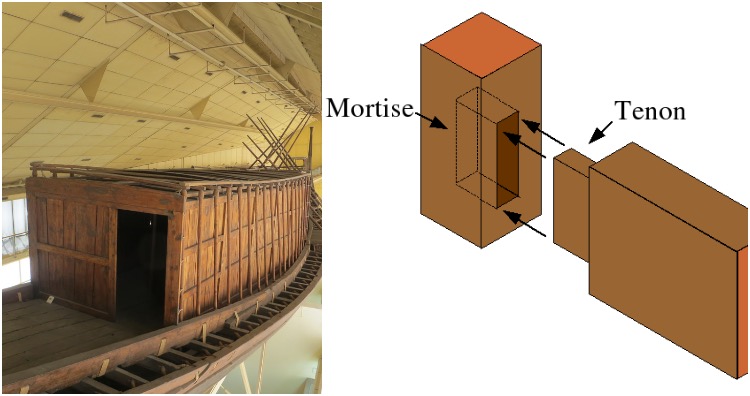
Lebanon cedar was primarily used for boat construction, especially the planks. High-quality wood was rare in ancient Egypt. Small items were made from the scraps found there. But for larger objects, such as boats, wood had to be imported. At that time, large pieces of cedar were imported from Lebanon. Therefore, it seems logical that the boat of Cheops was built from fine imported cedar.
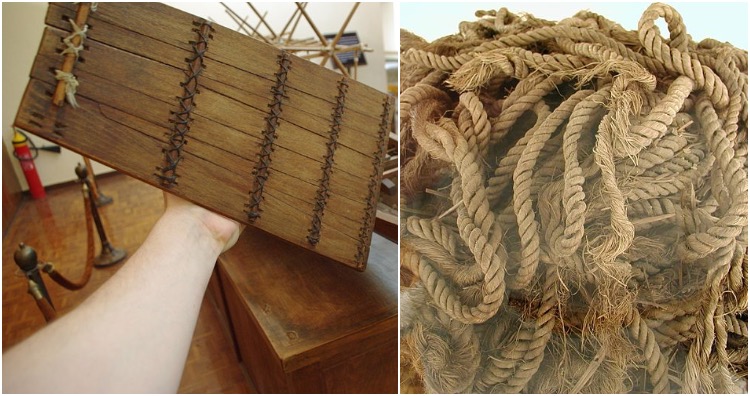
The ship had a flat bottom, composed of many planks. Adjacent planks were joined using a method commonly known as "planking first." This method involved joining wooden parts with tenons. This technique was most common among Mediterranean and Egyptian shipbuilders. Even today, furniture makers use this method. In the case of the Khufu ship, the tenons were made from the wood of the blackthorn, a plant native to the Mediterranean and Asia. Furthermore, the hull planks were bound together with rope made from a grass called "« halfa »"The rope didn't pass through the hull planks, as this could cause leaks. It was carefully cut from the inside of the planks. The design looked as if the builders had sewn the ship together! One of the finest examples of ancient, reliable engineering.
The ship is equipped with 12 oars made from valuable Lebanese cedar wood.
The ship's exact purpose is unknown, but there's a strong possibility that it was the funeral boat of Pharaoh Khufu. It may have been intended to transport the resurrected king across the heavenly waters.
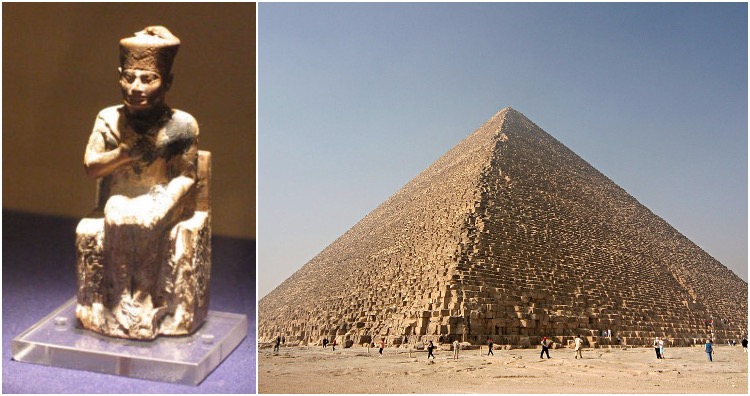
As mentioned previously, burying a person in a funerary boat was an ancient Egyptian custom. Experts believe that Khufu's boat may have been the funerary vessel of the great pharaoh Khufu. However, there are several indications that this particular boat may have also been used in real waters. It's possible that this boat was used to transport the embalmed body of Pharaoh Khufu from Memphis to Giza. In this case, the boat would have been used in waters. Alternatively, the boat may have belonged to the pharaoh himself, who used it to visit holy sites. Since this boat was frequently used by the king, it may have been buried with him for his afterlife. The function of Khufu's boat remains a matter of debate.
The discovery of the Khufu ship is considered one of the greatest discoveries of Ancient Egypt. Since 1982, the reconstructed ship has been on display in a specially constructed museum within the Giza pyramid complex.

The Cheops Boat Museum is a tourist attraction located next to the Great Pyramid of Giza. The museum is built directly on the site where the boat was discovered. The shaft from which the boat was recovered is incorporated into the design of the museum's first floor. On the second floor, visitors are taken on a journey through Ancient Egypt's past through visual materials, photographs, and historical documents. They then ascend the stairs to see the restored boat, located on the second floor.
[sources: 1, 2, 3]