









The African continent The Earth has always fascinated explorers, treasure hunters, educational TV show producers, and other like-minded individuals. As the cradle of humanity, much of it has been thoroughly explored and studied over the past few centuries, though we still haven't been able to solve some of its most enduring mysteries.
10. Lydenburg Heads
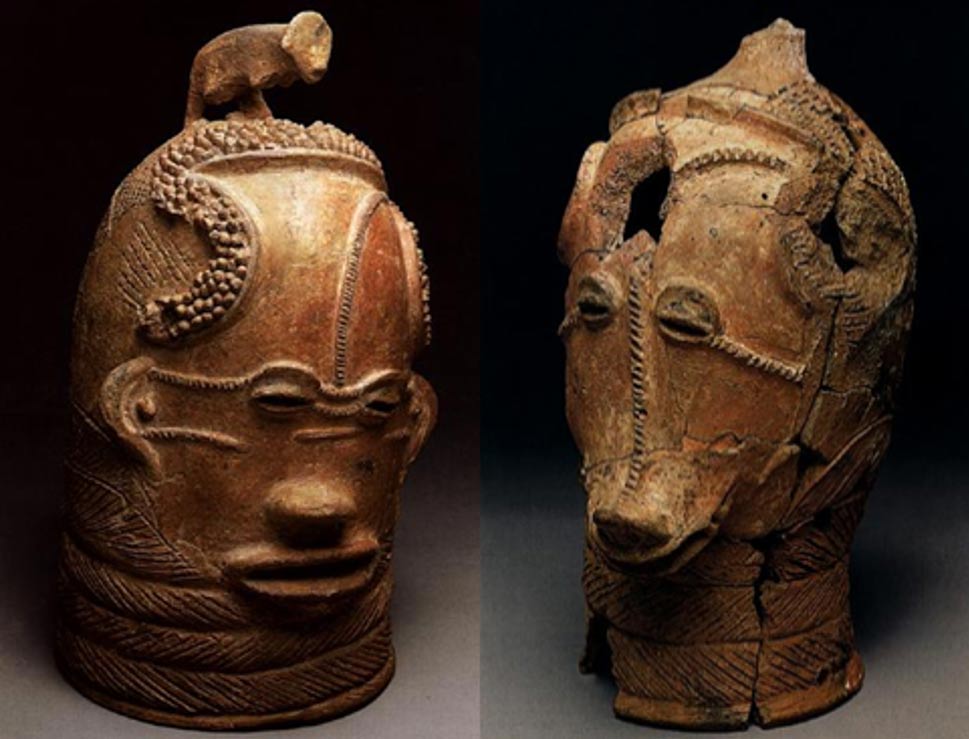
The Lydenburg Heads are a set of seven terracotta heads discovered by chance by ten-year-old Ludwig von Besing in the South African town of Lydenburg. Beginning in 1957, he found remnants of sculptures and other artifacts at the same site, including iron and copper beads, pottery, and even bone fragments. The find would have gone completely unnoticed had he not brought it to the University of Cape Town's archaeology department, prompting even greater excavation efforts by local archaeologists.
Although the structures are complex and rich in archaeological detail, we still don't know exactly who built them. Some believe they were originally used as religious sites by the Iron Age Bantu-speaking people—a vast group of pastoral tribes that spread across Africa. This may be true, although we know surprisingly little about them. Even today, the Bantu comprise a multitude of different groups and tribes with distinct cultural characteristics.
9. Ruins of Great Zimbabwe
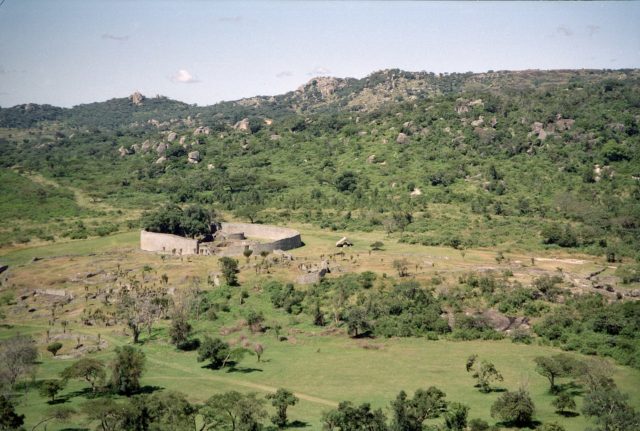
Spread over 1,800 acres in modern-day Zimbabwe, the Great Zimbabwe Ruins represent the remains of an ancient city that existed between the 11th and 15th centuries. The ruins include a complex of stone walls, towers, and enclosures, which may have been part of a palace, as well as several other buildings. Over the years, archaeologists have uncovered evidence of a sophisticated and advanced civilization that traded with distant lands, including the Arab world and China.
Beyond this, however, we know little about these remains. They were first described by European travelers in the late 19th century, and some even claimed they were the work of an ancient, lost white civilization. This idea has since been debunked, and the question of who built Great Zimbabwe and where they came from remains a subject of debate. Some scholars argue that the builders were indigenous people, such as the Bantu-speaking Shona tribe, while others suggest they were migrants from the coast or North Africa.
8. Dabu giraffes
The Dabu Giraffes and the surrounding rock art were first documented by French archaeologist Christian Dupuy in 1987. They comprise a collection of over 800 petroglyphs, named after the two largest and most impressive giraffe engravings. They are believed to be between 6,000 and 8,000 years old, making them among the oldest works of rock art in the world. The larger giraffe stands at least 18 feet tall, making it the largest petroglyph ever discovered.
While it's clear that a great deal of effort went into their creation, we still don't know exactly who made them. Besides giraffes, the Dabus site is home to numerous other types of engravings, including various animal forms, humans, and human-animal hybrids. Although they are now located in a remote part of the Sahara Desert, the region was likely a vast savannah when these petroglyphs were first made.
7. Lost City of the Kalahari
In 1885, a Canadian explorer named William Leonard Hunt claimed to have discovered the remains of a mythical lost city in the deserts of southern Africa, now known as the Lost City of the Kalahari. Under his pseudonym, Guillermo Farinion, he wrote about the elaborate stone ruins, including a section resembling the Great Wall of China, and supported his claims with sketches and photographs taken by his son.
While we don't yet know whether Hunt actually found anything, his reports have since inspired at least 30 expeditions. In 1964, an explorer named A.J. Clement attempted to retrace his route and encountered strange rock formations. While it's entirely possible that Hunt mistook them for the ruins of an ancient civilization, it's also possible that this was an entirely different region of the Kalahari than the one he described, as his account didn't specify any specific location.
6. Where is Cleopatra's tomb located?
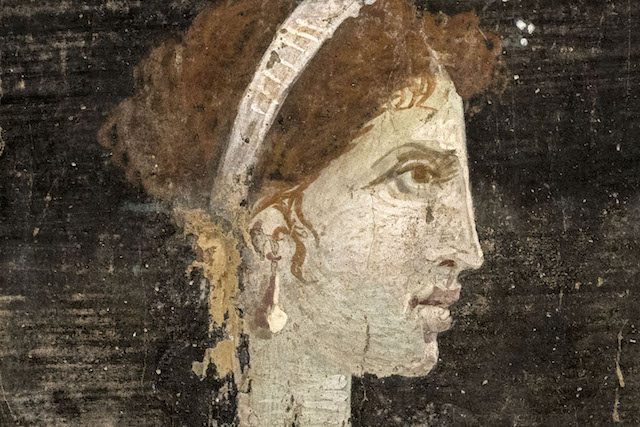
Cleopatra, the famous last ruler of the Ptolemaic Empire in Egypt, was a powerful queen who ruled the country for over 20 years. She is still remembered for her beauty and intellect, as well as for her infamous relationships with Julius Caesar and Mark Antony, which had a profound impact on Egypt and Rome.
Although we know quite a few details about her life, we don't know what happened to her after her death. Cleopatra's tomb is one of the most enduring mysteries of ancient Egypt, largely due to the mysterious circumstances of her death. According to legend, Cleopatra was buried next to Mark Antony after their defeat by Octavian, although it's also possible that she fled Rome before her death. Theories suggest it could have been deep in the seas around her palace, in the temple of Taposiris Magna, or in the port city of Alexandria.
5. Mount Liko
In 2012, conservation biologist Julian Bayliss discovered something strange atop an isolated mountain in Mozambique. Using Google Earth, he discovered an entire tropical forest atop Mount Liko—a towering structure known to locals for centuries, though no one had ever climbed it.
In 2018, Bayliss assembled a team of scientists, biologists, climbers, and other experts to finally scale it. What they discovered could be one of the last unexplored places on Earth, as the forest had been completely untouched by human presence until then. They discovered entirely new species of mammals and reptiles, including one unknown amphibian, and they were only just beginning to explore the site. They also found several overturned pots at the base of the stream, which may indicate past human presence.
4. Eye of the Sahara
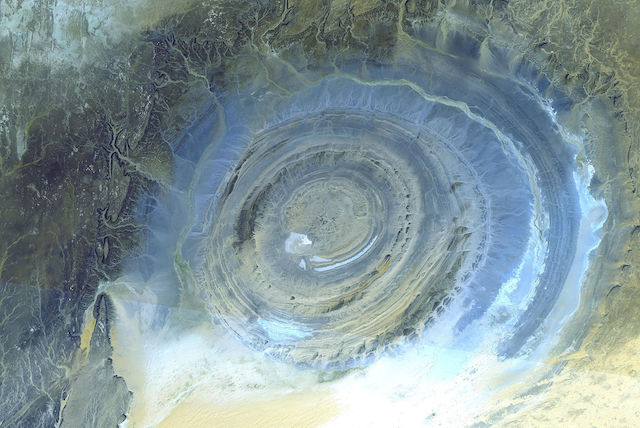
The Eye of the Sahara, also known as the Richat Structure, is a massive circular geological structure located in the desert of Mauritania, West Africa. Its diameter is approximately 30 miles, making it one of the few natural structures on Earth visible from space. It consists of a concentric ring of rocky ridges and is believed to have formed through erosion over millions of years, although this is only one of many theories regarding its origin.
Scientists believe it could have formed in a variety of other ways. We know it is not a volcano, as previously thought, and is not associated with any known tectonic activity. Some believe it is the site of a meteorological impact, although the structure lacks the characteristic central peak and raised rim of meteorite craters. Currently, the most widely accepted theory is that it is a geological dome formed by complex erosional patterns over millions of years, even if this doesn't explain its unique, almost perfectly circular shape.
3. KV55
The history of tomb KV55 began in 1907, when it was first discovered during an archaeological expedition in Egypt's Valley of the Kings. At first glance, it was a completely unremarkable tomb, with a few engravings or other decorations distinguishing it from other nearby tombs. It contained a single mummified body, as well as several artifacts belonging to several individuals.
More than a century has passed since KV55 was first discovered, yet we still don't know the burial circumstances or even who the tomb belongs to. The most widely accepted theory points to the Pharaoh Akhenaten, as radiocarbon dating shows that the body found inside is closely related to his father, King Tutankhamun. Furthermore, there is evidence that the tomb was not made for him, but instead for a woman, possibly his queen Nefertiti or perhaps one of his other wives, Kiya.
2. Ruins of Gedi
Although locals likely knew about the site for much longer, the ruins of Gedi, off the east coast of Kenya, were first discovered by the outside world in the 1920s. However, it wasn't until 1948 that British archaeologist James Kirkman conducted detailed excavations in the area. He soon realized he had discovered an ancient city, absent from local legends and no other historical traces of its existence in the wider region.
The Gedi site is currently one of the most enigmatic historical sites in Africa, largely due to its complexity. Likely built sometime in the 13th century, the settlement covers an area of at least 44 hectares, with two sets of walls separating the wealthy from the city's middle-class residents. The ruins of clay and wattle houses are still visible, including urban improvements such as wells and sophisticated drainage and sewer systems.
1. San Civilization
The Sao civilization was a mysterious ancient culture that flourished in Central Africa from the sixth century BC to the 15th century AD, making it arguably one of the longest-lived civilizations in history. We know of their existence from a wealth of archaeological evidence, including stone carvings, pottery, and metal objects, as well as oral histories.
There are still many mysteries surrounding the Sao, as we know nothing about their language, origins, or culture. According to the legends of their modern descendants, the Kotoko people, the Sao were a race of giants who lived somewhere between Nigeria and Cameroon.
However, we do know that they were an influential group of people and traded with other kingdoms in the region and beyond for hundreds of years. One theory holds that they descended from the Hyksos, a Palestinian dynasty that once ruled much of ancient Egypt. .