









When it comes to scientific mysteries, sometimes even experts can be stumped. Then, after a little thought and testing, a simple solution may emerge. And every now and then, the solution turns out to be so simple that the whole problem seems a little silly.
10. Europe's 300-Year-Old Vanilla Problem

Vanilla comes from an orchid native to Mexico, where the plants are pollinated wild bees . Today the price of vanilla can reach up to $600 per kilogram . The reason is that vanilla is damn hard to harvest.
Let's start with the fact that out of hundreds of orchid species, vanilla grows on only one. And if you don't have bees to pollinate it, you're in for a very uphill battle. Even today, pollination vanilla by hand This should be done by specialists who have been working in this industry for many years. The flowers bloom for only one day. Then the process of growing, drying, and processing vanilla takes about a year. And this is today. So what happened hundreds of years ago?
Europeans brought vanilla back to the continent in the 1500s, where it quickly became unpopular. It took literally over 300 years , Before a Belgian horticulturist tried to take a scientific approach to determine why vanilla wasn't profitable in Europe, he determined that the Mexican Melipona bee was the plant's natural pollinator, and that nothing else in Europe was up to the task. So they were missing bees. Just bees.
It wasn't until 1841 that a slave named Edmond Albius, on an island in the Indian Ocean, invented a method of hand pollination. Without a little horticultural science, who knows how long it would have been before someone devised a way to grow vanilla.
9. Mysterious signals from the Parkes radio telescope
In New South Wales, Australia, you'll find the Parkes Observatory, home to a very large radio telescope famously responsible for transmitting signals from the 1969 moon landing. Less well-known was the mystery that astronomers on site spent 17 years solving. You see, the telescope would occasionally receive mysterious signals, but no one could figure out what was causing them.
The telescope detected something called perytons. These are incredible short, pulsed radio signals of terrestrial origin. They also share a name with the mythical beast, a sign of how mysterious they were. Physicists on site speculated that they might have been caused by lightning strikes somewhere near the telescope. But this is not the case.
It so happened that some of the scientists on site were working full-time, which meant they needed something to eat from time to time. So they used a microwave to heat it up. The received signals were sent to frequency of 2.4 GHz , at the same frequency as a microwave oven.
Someone put two and two together and discovered that if open the microwave door Before the cooking cycle is complete, these perytons are released for a second. So, for 17 years, they were haunted by people heating up dinner.
8. NASA's multi-million dollar Mars probe

Have you ever gotten frustrated in math class in school and wondered when you'd ever need to know something like trigonometry or integers in real life? You may never have needed to know anything about these things, but some people do, particularly those who work at NASA and calculate satellite thrust.
In 1999, NASA hoped that the orbiter Mars Climate Orbiter could have provided useful scientific data on weather conditions on Mars. Instead, it was destroyed shortly after entering the atmosphere.
NASA launched an internal investigation to determine what had happened. The $125 million worth of hardware had never been serviced, so after all that money and months of preparation, something serious must have gone wrong. The truth, however, was something small. A simple mathematical conversion. Someone forgot to convert the math while controlling the orbiter's thrusters. The software calculated the thrusters' force in pounds-force. But some other programs used calculated it in newtons .
Along the way, scientists realized something was wrong because they had to constantly make adjustments. But by the time it arrived, it was too late. It hit the atmosphere at the wrong angle and quickly burned up upon reentry. If someone had double-checked the metric conversions, all of this could have been avoided.
7. Folded structure of an enzyme linked to AIDS.
Some of us may have a hard time influencing our egos when we're very knowledgeable about a subject and struggling to understand a related problem, while someone else, without much understanding, stumbles upon the solution as if by magic. Something like what happened when AIDS researchers were stuck trying to determine the structure of an enzyme linked to AIDS.
For years, they tried unsuccessfully to figure out the structure. So they decided on a new solution: let someone else figure it out. In this case, they used a puzzle game called Foldit. The game allows users to play with the structures of proteins and enzymes to find the most optimal folding patterns.
Researchers have been trying to hack this particular enzyme. for 13 years . Once they put it in the game for the gaming community to try out, users found a solution in just three weeks . The end result was by no means a cure for AIDS, but it was an important step toward understanding and treating AIDS-like conditions.
6. Why do flamingos stand on one leg?

Picture a flamingo in your head. Standing on one leg? It's a common image of these exotic pink birds perched on one long, thin leg. And for a long time, no one knew exactly why flamingos chose to stand like that. Only in 2019 did science give us the answer: it's literally easier than standing on two legs .
Flamingos can't balance or lean on two legs as easily; it immediately throws them off balance. Their bodies are designed to cope much better with this single leg. Experiments with dead flamingos Once again they have proven that it is much more difficult for them to maintain balance on two legs, but they stand up on one with surprising ease.
5. The Mystery of the Bermuda Triangle
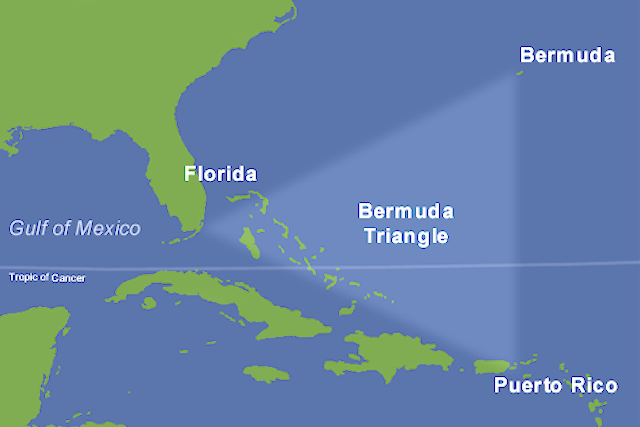
According to Karl Kruzelnicki, the mystery of the Bermuda Triangle is that we once thought it was a mystery altogether. The region is known for its bad weather, and this, combined with human error and heavy traffic, which increases the likelihood of accidents, explains everything. No curses, no aliens, no mysterious phenomena whatsoever.
Based on his research, he notes that as a percentage ships not everyone disappears here more often than anywhere else in the ocean. It's just that the sheer volume of traffic makes it seem even worse.
The name "Bermuda Triangle" was even used until 1964, and if there is any mystery, it mostly has to do with how many ships have gone missing in the area, as exact figures are difficult to come by.
4. Why do wombats have square poop?
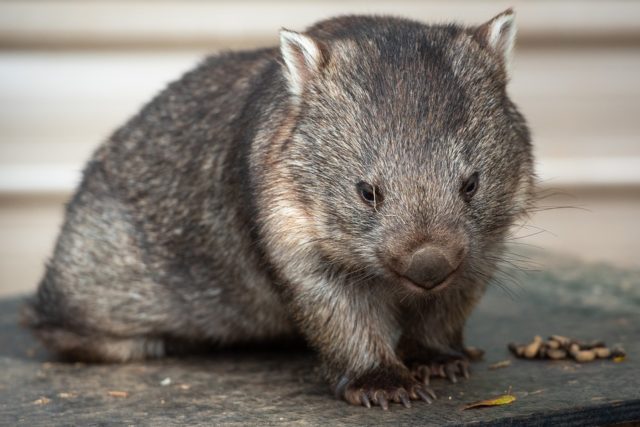
To do this, we delve deep into science and explore one of the greatest mysteries of modern biology and zoology. Specifically, why does the humble wombat produce cube-shaped poop when no other animal on earth can?
In strangely practical terms, wombats defecate strategically to convey messages to other wombats. What messages? Probably about territory, so other wombats know where they are. And the reason he's in the cube is potentially so... prevent it from rolling back . While this is a great answer to why wombats have cube-shaped poop, it doesn't explain how to do it. Because if you want to poop cube-shaped to mark your territory, you can't just will it to be that way. So what's going on in a wombat's butt?
This is where things get a little gruesome, involving a wombat autopsy. The wombat, which died in an accident, was examined, and scientists discovered that the animal's intestines had a couple of furrows , which are more elastic than the rest of the intestine. Two-dimensional imaging was performed, showing that the intestine has layers of varying thickness and rigidity. Becausethe muscles contract Over the course of several days, in order to extract all the moisture and nutrients possible from the food being digested, the intestines form these strange cubes and throw them out the back door when it's done.
3. The Mysterious Antarctic Sound of the Bio-Duck

For 50 years, Antarctic explorers have been noticing a strange sound that sounds like a quacking sound in every sense of the word. ducks . But it's underwater. It was first recorded by submarine crews, and because it repeated so frequently, it was initially assumed to be an artificial sound. Later, someone suggested a fish, but the sound was too loud for any known fish.
As luck would have it, someone studying minke whales attached trackers to a couple of them, which also had microphones. When the researchers listened to what they recorded, they sat in the front row listening to the mysterious duck sound. Combined with years of previous recordings, they were able to definitively determine that all this time This there were only striped ones . Of course, none of this explains why whales do it, but at least we know that they do it.
2. How to divide dry spaghetti into two parts

Let's say you're in the mood for spaghetti, but you only have one rather small pot to cook it in. All the noodles are too long to fit, so you'll have to break the spaghetti in half. But can you break the spaghetti in half? Like, ideally, in half, without any extra shards flying around? If you've ever broken a handful of spaghetti in half, you already know the answer. Of course not. When you break spaghetti, it shatters, just like your dreams of not having to lift tiny pieces of pasta off the stove.
Ruined spaghetti was the fate of every spaghetti chef in the world until MIT scientists intervened. It turns out there is scientific method Divide the spaghetti into just two pieces; no broken bits.
Elongated, fragile objects almost always break into multiple pieces, whether it's pasta or anything else. This happens when you apply pressure from either end, causing a bend in the center. This bend eventually breaks, causing a recoil reaction that causes the pasta to vibrate and break off more pieces.
Researchers were able to determine that if spaghetti is twisted into 270 degrees , and then gently bend them at a speed of 3 millimeters per second, they will break perfectly in half.
1. Why do you keep losing your socks?

How many socks do you think you've lost in your life? It's a recurring problem for many of us. Socks get thrown in the wash, but never return to the drawer. As a result, we end up with a pile of random socks at the bottom of our drawers. It's a silly problem that people laugh at because it's really no big deal. But why does this happen? Someone has tried to solve the mystery, and it's much less mysterious than it might seem online.
Samsung commissioned a statistician and a psychologist to solve this sock mystery, and it seems the average person is losing 15 socks a year, which seems oddly high, but who are we to argue with Samsung's science?
Two experts joined forces and discovered multiple causes for the mysterious sock migration that many of us experience. It turns out you've lost them.
Sounds pretty simple, right? They might have gotten caught in the washing machine, or behind the radiator. They might have been in the wrong load of laundry; they might have fallen off the clothesline.
Mathematician Rob Eastaway blamed Murphy's Law and pointed out that statistically, you simply can't have X number of socks and expect to never lose any at some point. Essentially, the science comes down to the inescapable nature of the universe itself. You lose socks because you can't help but lose socks.