








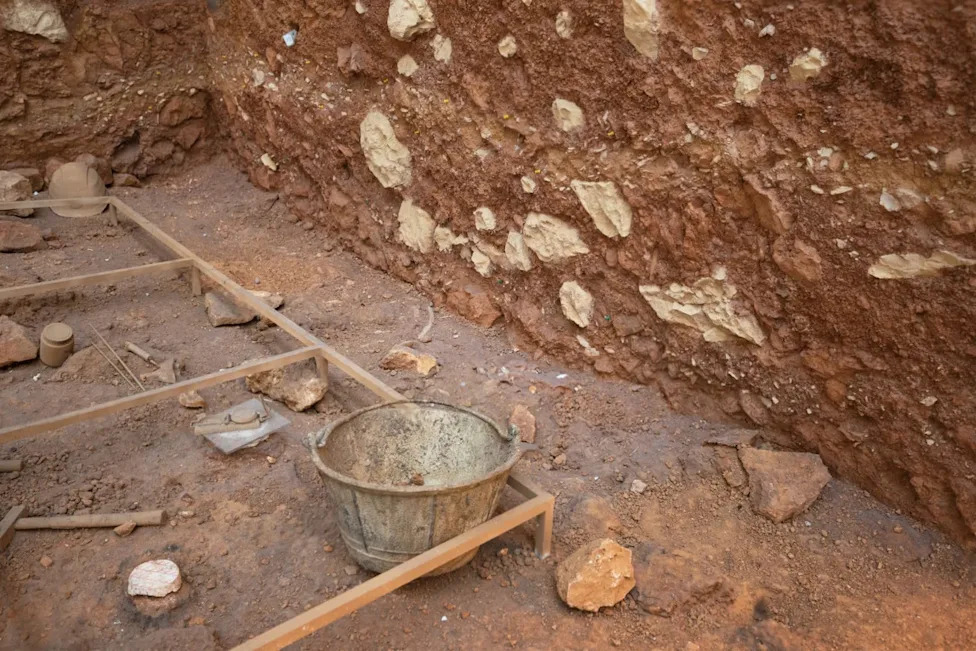
A reconstruction project in northeastern Italy has uncovered a much older layer of urban life: the remains of what archaeologists call the ancient Roman commune of the earliest known Christian church in Oderzo.
The remains were discovered in an area described by Fox News Digital as a former fish market, linking the current construction work to a site whose history dates back approximately 1,600 years to Roman and early medieval times.
What's happened?
As reported by Fox News Digital, the regional archaeological superintendency of Venice and the provinces of Belluno, Padua and Treviso announced the find in a press release in June.
The structure dates back to the 4th or 5th century AD, when Oderzo was known as Opitergium and Christianity was spreading throughout the Roman Empire.
The discovery came after archaeologists began excavations last November as part of a project to redevelop residential areas in the city, located about 40 miles northeast of Venice.
Photographs from the excavations show colorful mosaic floors and tombs located near the church's foundation walls.
Researchers said the building is about 75 feet wide and extends at least 98 feet within the area already surveyed, with a main passage and two side passages.
According to officials, "the foundation, up to 1.2 metres (4 feet) thick and built of bricks and mortar, rests on wooden piles driven into the alluvial soil - a construction method widely used in ancient times to improve stability.".
Since the eastern part of the church has not yet been excavated, archaeologists say the entire complex may be larger than what is currently visible.
So far, excavations have also uncovered four graves containing seven sets of remains.
Why is this important?
As the oldest known Christian religious building in Oderzo, this church can serve as direct evidence of religious life during a period of important changes in the late Roman world.
What is being done?
Excavations are ongoing, and additional parts of the structure may be discovered on the unexcavated eastern side of the church. This could help researchers determine the size of the entire complex in the past.
Researchers are also studying human remains found in the church. This analysis may shed light on who was buried there and how the sacred site changed over time before the building fell into disuse, was dismantled for its materials, and was ultimately destroyed in the Middle Ages.
Officials said the discovery "opens a new chapter in the history of ancient Opitergium during the late Roman and early medieval periods," adding: "Anthropologists are currently studying the remains of seven individuals, and future specialized analyses are expected to provide additional information.".
Subscribe to TCD's free newsletters to receive helpful tips, actionable advice, and a chance to win $5,000 toward your home improvement. To see more stories like this, change your Google preferences here.