








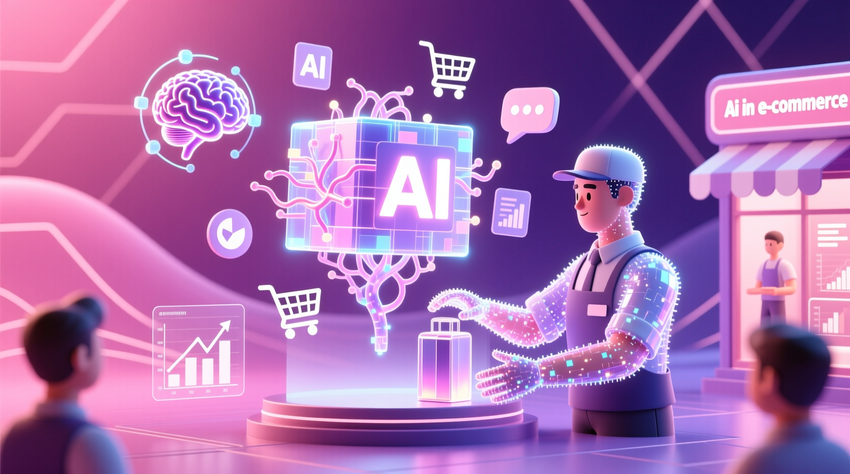
Over the past five years, artificial intelligence (AI) has ceased to be a futuristic concept and has become an everyday tool for thousands of online retailers. From automated order processing to demand forecasting, machine learning-based technologies have deeply penetrated e-commerce operations. But where will this transformation go next? And which processes can already be confidently entrusted to algorithms without fear of losing control?
In this article, we'll explore which retailers' tasks are already being solved with AI, where it hasn't yet replaced humans, and what new opportunities may emerge in the coming years.
Automating Routine: What AI Is Doing Today
While salespeople used to spend hours downloading catalogs, responding to messages, and reconciling inventory, much of this work is now automated. Here are key areas where AI has already become an invisible yet indispensable asset:
Price analysis and optimization
Dynamic pricing is one of the first areas where AI has demonstrated real effectiveness. Algorithms analyze:
- competitors' prices in real time;
- sales history by SKU;
- seasonality and calendar events;
- warehouse stock;
- changes in marketplace ranking algorithms.
Based on this data, the system suggests an optimal price that maximizes profit or turnover, depending on the seller's strategy. This approach is especially important on marketplaces like Wildberries or Ozon, where even a small price change can impact search rankings or participation in promotions.
Content generation and optimization
AI tools have long since moved beyond the "toy" stage and have become fully-fledged assistants in creating descriptions, titles, SEO tags, and even photos. Modern models are capable of:
- create technical specifications based on scans and PDF documents;
- generate SEO-friendly texts taking into account keywords;
- automatically select alternative headlines for A/B testing;
- improve the quality of images and even «draw in» the background.
Important: AI doesn't completely replace human editors, but it does take on the grunt work—writing template descriptions, translations, and style adjustments. This frees up time for creative tasks and analyzing customer behavior.

Order processing and warehouse management
Integrating AI with WMS (Warehouse Management Systems) allows for the automation of not only inventory but also logistics decisions. For example, algorithms can:
- predict peaks in demand and recommend warehouse replenishment in advance;
- optimize order picking routes in the warehouse;
- classify returns and automatically decide whether the item is suitable for resale.
For sellers working with multiple marketplaces simultaneously, it's critical that products reach the right warehouses on time and with minimal costs. A successful solution to this problem directly depends on a well-structured fulfillment system. logistics to marketplace warehouses, supplemented by AI-powered inventory analytics and demand forecasting. This approach not only reduces costs but also increases operational resilience by synchronizing supplies with marketplace warehouse requirements and minimizing downtime in order processing.
Support and Communication: AI Instead of Operator?
Chatbots and voice assistants have long been used for initial customer inquiries. They answer typical questions: "When will my order arrive?", "How do I process a return?", "Is there a discount with a promo code?" But modern systems go further:
- analyze the tone of messages and redirect «hot» requests to the manager;
- offer responses based on the history of interactions with a specific customer;
- automatically generate response templates for moderation.
However, AI is not yet capable of handling emotionally complex situations—for example, when a customer is dissatisfied with the quality of a product or wants a refund. The "human factor" is still crucial here: empathy, the ability to accommodate, and a keen understanding of context.
Demand Forecasting: From Statistics to Forecasting
One of the most promising areas of AI application is forecasting. Previously, sellers relied on past sales and intuition. Today, models can take into account hundreds of external factors:
- weather conditions;
- economic indicators;
- social media trends;
- news and events;
- competitors' movements.
This approach reduces storage costs, avoids shortages, and minimizes repurchasing. This is especially true for seasonal categories, such as gardening goods, Christmas decorations, or school supplies.

What's Next: The Near-Term Horizons of AI in E-Commerce
Technology never stands still, and we can already see the emergence of the following trends that will soon become widespread:
Real-time personalization
Soon, every visitor to a marketplace or landing page will see unique content—from descriptions to images. AI will tailor not only recommendations but also the product presentation itself to the user's interests, behavior, and even mood (based on scroll speed, viewing time, etc.).
Automatic generation of new products
AI can already analyze market gaps. In the near future, algorithms will not only identify niches but also suggest new product ideas—from packaging design to set components. For example, if users search for a "picnic set with a thermos mug" but it's not available, AI will suggest creating a similar SKU and model its potential profitability.
Integration of voice and visual interfaces
Image and voice search are increasingly becoming the primary means of product discovery. AI systems are already learning to understand queries like, "Show me sneakers like a TikTok influencer" or "Find a similar lamp, but cheaper." This requires new approaches to product descriptions and tagging—and here, AI can help by automatically generating alternative metadata.
Ethical and regulatory challenges
As AI's influence grows, questions inevitably arise: Who is responsible for algorithmic errors? How can we protect customer data? Will personalization become a form of manipulation? New regulations can be expected in 2025–2026, particularly in the EU and Russia. Sellers will have to not only implement technologies but also ensure their transparency and compliance with the law.
AI as a partner, not a replacement
Despite impressive progress, AI is still unable to think strategically, set long-term goals, or understand cultural nuances. Its strength lies in scale and speed, not in the depth of its understanding.
Successful sellers of the future won't be those who completely delegate control to algorithms, but those who know how to guide them. AI is a tool that enhances human skills: creativity, intuition, and ethical judgment.
Automation frees up time not for inactivity, but for focusing on what truly creates value: the brand, customer relationships, and innovation. And this synthesis of technology and human intelligence is the key advantage of tomorrow's e-commerce.