








WhatsAppRedditShareEmailTweetPin0 Shares
Most people don't think much about mushrooms. If you're not using mushrooms in your dinner or cleaning up mold, they're probably not high on your list of priorities, unless you're stress-watching The Last of Us. But mushrooms are much more than most of us realize. In fact, there's much more to mushrooms than we think.
As you explore the Malheur National Forest in Oregon, you'll spot tiny Armillaria ostoyae mushrooms scattered among the trees. But these aren't isolated specimens; they're all connected underground and grow from the same organism—an organism that covers an area of 3.5 square miles.
The part of the mushroom we're accustomed to seeing, the part we eat in edible mushrooms, is used only for reproduction. The rest of the mushroom lives underground in the form of a mycelial network, a kind of root system that connects all these fruiting bodies together.
This giant fungus has an entire network that attaches itself to the root systems of trees and devours them. This is how it sustains itself. And it's been doing this in the same spot for 10,000 years. In other words, the mycelial network is incredibly efficient. And it does much more than just eat roots. After all, if you lived 10,000 years, you'd probably learn a thing or two, too.
What are mycelial networks?
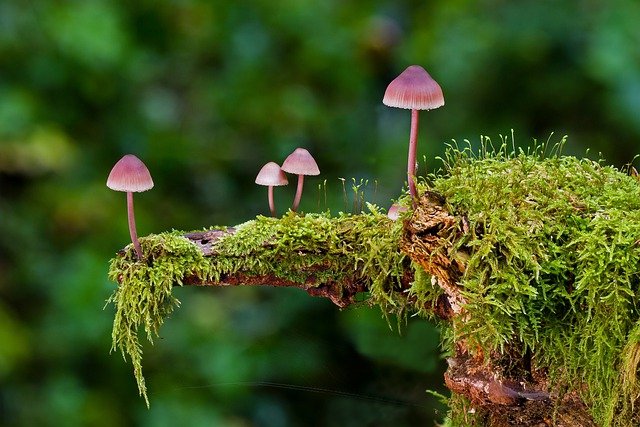
A mycelial network is a fungus that can grow to very large sizes, lives underground, and feeds on trees. What else? Mycelium is thin, hair-like threads that intertwine underground. In some species, it looks almost like a loose fabric, depending on the density of the threads. But it's not easy to see it all in one piece. Some of these individual "roots" are thinner than a human hair.
These thin filaments, known as hyphae, can be as small as two micrometers in diameter, compared to a hair's thickness of 17 micrometers. Because they branch in all directions, they form more connections than the human brain.
A little over 2 pounds of soil can contain over 100 miles of mycelium. This is how they form a mycelial network, a vast structure of threads, or even a mycorrhizal network, which is somewhat different.
A mycorrhizal network is a symbiotic network of mycelium formed between fungi and other plants, such as trees. Unlike our big friend from Oregon, which eats roots and kills trees, the fungi that form mycorrhizal networks help the trees they are associated with.
How does it all work? The fungus can extract nutrients from dead matter and soil, since it feeds on virtually anything. It transfers these nutrients to the tree's roots and, in exchange, receives some of the tree's photosynthetic energy—the energy it receives from the sun, something the fungus can't produce on its own. Up to 30% of the sugars produced by photosynthesis are thus delivered to the fungus.
In simple terms, imagine a tree as your friend who loves tacos, and you as a mushroom who loves pizza. On Friday nights, you both have a great time dining alone, but if you meet up, you can enjoy tacos and pizza, and isn't that better for everyone? The answer is yes.
Water, nitrogen, carbon, and all sorts of other minerals—which, admittedly, are less tasty than tacos and pizza—are shared among organisms for the benefit of all. One theory holds that fungi primarily get their carbon from trees, while trees get their phosphorus and other minerals.
The unique feature of this network is that the mycelium doesn't attach itself to just one tree. Like the giant in the Oregon forest, it can spread to many trees, connecting them, allowing them to exchange nutrients and sustain the entire grove, the entire forest. This is especially useful when some trees, such as young saplings, are hidden from sunlight or are located in areas with water shortages.
Fungal brains
We've already mentioned that the mycelial network forms more connections than the human brain. But this isn't the only comparison between fungi and the human mind. Research has shown that these networks possess a kind of memory, as well as decision-making capacity. At first glance, this information seems almost unbelievable, but we have abundant evidence that other organisms, such as octopuses and crows, possess remarkable intelligence, so why shouldn't such a complex organism possess it too?
In experiments, hyphae in the network demonstrated spatial orientation. They alter their developmental course depending on interactions with other organisms. Fungi have been shown to remember stressful situations for up to 12 hours and avoid the places and circumstances that led to them.
If a wooden block containing mycelium is placed in the soil as a bait and nutrient source, and then moved, the remaining mycelium will continue to grow in the place where the block was previously located, indicating that the larger organism remembers its previous location.
When networks are allowed to grow, they do so in a way that preserves resources and limits stress. Their growth patterns suggest that the entire network is interconnected and interacts, so that the entire organism "understands" what's best for it. Or, in other words, it functions like neurons in the brain.
The function of these hyphae was measured using microelectrodes, revealing polarization and depolarization of the membranes, reminiscent of nerve impulses in animals. However, their function in fungi remains unknown, but it may even be related to language.
Studies of these electrical impulses show that, at least in some fungal species, electrical signals resemble simple language. For example, the intensity of the signals increases when the network detects a food source.
The electrical recordings were analyzed for patterns, and it was discovered that similar spikes occurred in similar situations, or patterns of activity. In fact, the team was able to discern approximately 50 words within these patterns of activity, which averaged 5.97 letters in length. In English, the average number of letters per word is about 4.8.
The researcher conducting the observations was quick to point out that this could be a simple way for the network to identify food sources and things it wants to avoid. It's equally likely that this isn't a form of communication at all. However, whatever the purpose of these pulses, they aren't generated randomly, so they serve a specific function.
The mycorrhizal network allows interconnected organisms to exchange warnings. Tomato plants infected with a disease called late blight were able to transmit this information to nearby uninfected plants, prompting them to produce a protective enzyme to fight the disease. Stress signals were transmitted through the mycelium, and healthy plants received and responded to them.
Biology professor Nicholas Money has proposed that fungal networks possess what he calls a "minimal self." They are by no means intelligent on the level of the human mind. The network is nowhere near as complex as the brain, but it is complex nonetheless, and fungi exhibit a kind of rudimentary consciousness, defined by their ability to self-sustain and reproduce.
Whatever information the mycelial network may convey, something is definitely happening within it, and this concerns not only the fungus itself but also other organisms with which it is connected.
The unique properties of mycelium
There's a long-held belief that plants and music are connected, but this is usually associated with houseplants and the idea that certain types of music promote their growth. There's little hard scientific evidence to support this, although there are some suggestions that certain vibrations can either promote or hinder plant growth. Mushrooms have been shown to act in a similar way.
Mushrooms are capable of converting sound waves into electrical signals. This promotes their growth and development. These electrical impulses were measured and converted back into sound by a group of music-loving scientists as part of the Octopus Project, allowing them to record what is essentially music produced by mushrooms. Some samples of this music, recorded by mushrooms such as shiitake and others, can be found online.
Interestingly, fungi can respond to sound and even produce their own molecules, but this has more serious implications. If sound stimulates growth, then, according to the theory, every plant in the mycorrhizal network can benefit. This means that crop yields could potentially be increased simply by playing the right sounds.
Hearing isn't the only unusual ability of mycelium. It can also feed on things that aren't normally edible, such as radiation. We've already discussed how the mycorrhizal network can benefit both fungi and trees by exchanging nutrients. This is because fungi don't produce some nutrients themselves, or produce them much less efficiently than other plants.
The same theory applies to fungi when it comes to radiation. Some species of fungi, such as those in Chernobyl, have adapted to feed on radiation. Just as a tree converts sunlight into energy through photosynthesis, or you convert your tacos and pizza into energy by consuming calories through digestion and metabolism, these fungi absorb gamma radiation and convert it into energy.
It has been proposed to conduct research on the use of radio-adaptive mushrooms not only for cleaning up radioactive zones, but also for detecting secret nuclear facilities.
Mushrooms have long been known for their resistance to radiation. In one study, mice fed black mushrooms demonstrated greater than normal protection from external radiation. Therefore, eating mushrooms, especially dark, melanin-containing ones, could literally protect soldiers and others exposed to dangerous radiation. It's worth considering this the next time you're worried about X-rays.
Tree connections
Mycelium plays a vital role in forest health. Fungi are able to decompose organic matter and ensure healthy soil for the growth of other organisms, returning nutrients to the carbon cycle. They are also crucial for the reproduction of certain other plants, such as orchids. If a certain type of fungus is missing from the roots of these orchids, they cannot reproduce at all, making this type of symbiosis particularly dangerous. Plant and fungus literally need each other to survive.
Some other plant species, such as pine resin, have evolved to abandon photosynthesis and rely on fungi to provide the energy they need for survival. In fact, over 90% of all plant life depends on the symbiotic mycorrhizal network of one species or another. Without fungi, our world would look very different.
The idea that these networks connect trees and other plants and benefit them has been proposed and supported by many naturalists, physicians, ecologists, and foresters.
Is all this true?
Not everyone agrees with the concept of the "arboreal network" and the overall impact or benefit of mycorrhizal networks. Dr. Justin Karst, an expert in ectomycorrhizal ecology, believes that there's more myth than fact regarding what these networks can do, at least based on what's been documented. Karst disputes claims that these networks are beneficial to interconnected trees and seedlings, citing a lack of any real, compelling evidence.
Also questionable, according to Karst, is the idea that mycorrhizal networks are as widespread as previously assumed. Too few forested areas have been mapped to draw such a conclusion, and only two studies even suggested the existence of a network, lacking sufficient data to support the theory of beneficial symbiosis.
Karst went on to challenge the previously mentioned idea that networks deliver nutrients to all connected trees, including seedlings. In fact, there's as much evidence that network connectivity can harm these seedlings as it can benefit them.
A third claim, related to the previous one concerning tomatoes, suggests that trees can send warning signals through the network to alert other trees to a dangerous insect infestation, allowing uninfested trees to begin producing defensive enzymes. While this sounds improbable, Karst says it has never been supported by any peer-reviewed published research.
Karst doesn't deny the existence of these networks or their potential benefits, but simply points out that one shouldn't be so quick to believe everything one reads when not all the evidence supporting them necessarily supports them. Furthermore, there's ample evidence supporting many of the remarkable things we know about mycelial networks, and certainly enough to motivate people to delve deeper and seek the truth about these complex organisms.
Other articles that may interest you