






New season of the series «"Clarkson Farm"» (Amazon Prime Video) is a show that should never have been made. Not because it's bad; it's very good. And not because it lacks occasional brutal realism or endless depth of thought; it scores highly on both counts. But because Jeremy Clarkson was told to stop working to fully recover from a stress-related heart condition and surgery. I don't think a spoiler warning is necessary here, as that fact is well known.
I kept wondering how they would manage to stay fresh. «Clarkson Farms» and avoid monotony. Ultimately, life threw Squire Clarkson a series of unexpected curveballs: clogged arteries and, worse – much worse – the dreadful Starmer government. And the Diddly Squat team brilliantly exploited these two adversities to create a new season that's better than the last.
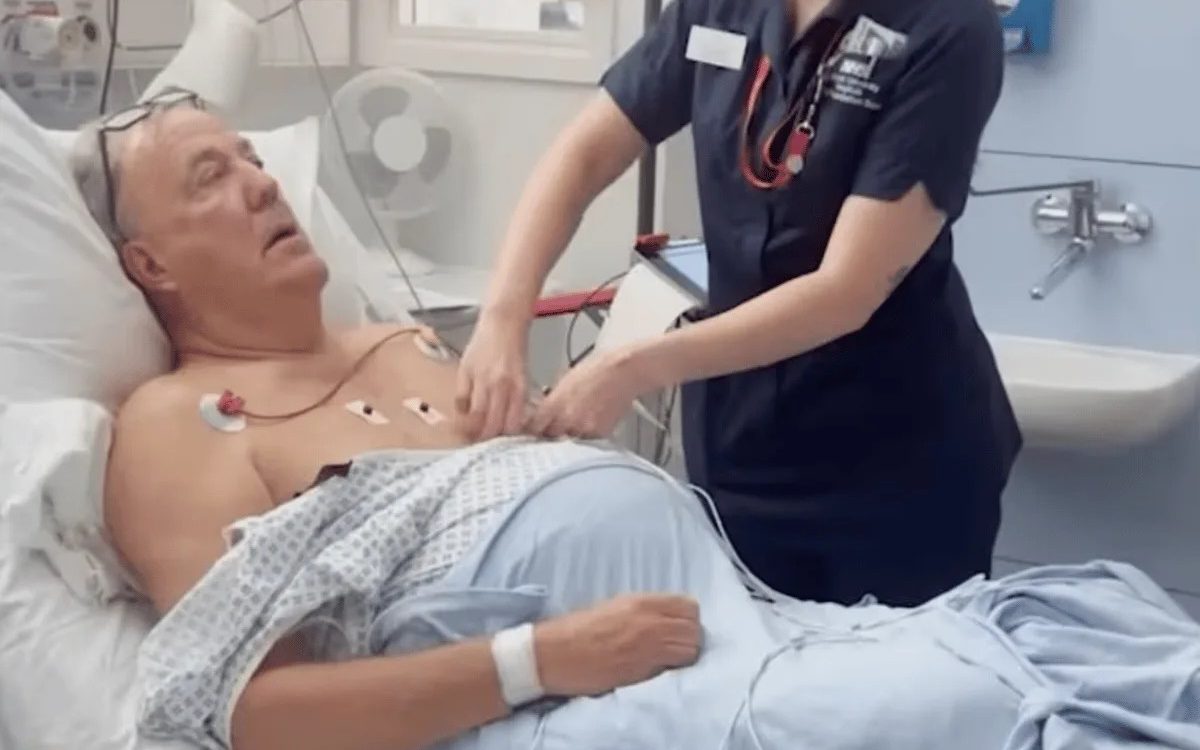
Making TV is incredibly hard work. And making a farming series, where you have to wrestle with large animals or sit in the cab of a tractor, is even harder. There's a delicate fragility to these new episodes: we see our coffin-avoiding hero defy doctors and continue running his business, and watching it, we think, "Please don't die, Jeremy.".
It's also jarring to think that Didley Squat is just one heart attack away from being divided up over farmer Starmer Harmer's family tax bill. It's all brilliantly played by the recently aged Clarkson, who seems to secretly enjoy overacting his illness. It's touching to watch the rest of the Didley Squat crew show concern and protection for him. Clarkson texts me on WhatsApp: "I'd describe the first few episodes as 'kind.' I think they didn't air the last two for reasons that will become clear when they air." I'm looking forward to it.
And it's wonderful because it's so true. On most British farms, there's an old man wandering around the yard. Often it's the farmer himself, or perhaps a member of the older generation of the family business, well into his 80s and still forced to work to keep the family farm afloat; still manfully lugging sacks of feed or grabbing sheep by the neck. Retirement is a luxury rarely available in farming.
Just like in real life: Most British farms have an old man wandering around the yard – Prime Video/PA
I know all too well that farming is a stressful business. Readers of my books know that I've spent the last 26 years struggling to make our family farm in Dumfries and Galloway thrive. Like Jeremy, I tried—and mostly failed—to farm crops, cattle, and sheep, nearly going broke several times, before thankfully finding success, at least for now, in dairy farming.
When a business diversifies into customer-facing work—in my case, holiday homes, in Jeremy's, a pub—the stress multiplies. And too many of us have suffered as a result. In my case, it was a nervous breakdown seven years ago. I spent months like a babbling idiot, in a psychotic state triggered by government officials fining me £20,000 I didn't have; the fine was later overturned. And unlike the public sector, where the upper class (who, ironically, are often the cause of stress for farmers) can take years of sick leave at our expense, if you run your own business, you have to keep working. Being in a leadership position demands it, and you can't just pass the buck.
This is one of the reasons why agriculture always ranks dubiously near the top of the charts for workplace accidents and, tragically, suicides. There's always something to worry about, but since we've relapsed into 1970s-style socialism, the biggest threat to our business, more serious than weather, animal disease, or price collapse, has been our own government. No doubt for wise parenting reasons, Clarkson's three children are kept out of the picture, but if Diddley Squat Farm is like any other farm, succession planning has recently become a priority; hard-earned money has been spent on lawyers and life insurance to ensure that, in the event of an untimely death, the farm wouldn't fall to an unscrupulous taxman. The final relaxation of inheritance tax policy has given many a respite, but they still face anxiety and expenses.
Clarkson joins a farmers' rally against Labour's family farm tax in November 2024 - Carl Court/Getty
Clarkson receives top-notch advice from his land agent, the inimitable Charlie Ireland, and many others. But for most farmers, the support is far less comprehensive. I think I speak for the entire industry when I say that Jeremy has done us all a huge service by helping the British public see things from our perspective, and I don't think I've ever seen such widespread public sympathy for farmers in my lifetime.
The series deftly uncovers the challenges facing all family farms and helps viewers understand why Rachel Reeves's family farm tax is so detrimental to large businesses like Clarkson's. Labour's assault on agriculture has turned us all into activists, and we watch Clarkson lead his small force (see: Edmund Burke) into battle in Whitehall alongside 45,000 other farmers, including me. Clarkson is now a formidable player in the arena of rural politics, and we watch him agonize over whether to disobey doctors' orders and risk a heart attack to support the campaign. He harbors a deep-seated hatred for this socialist government. He half-jokingly tells me, "I want to block the ports to deprive Starmer of his quinoa and avocado supplies.".
Another theme this time is technology, something we've become accustomed to in previous seasons. But now there's a twist. Who would have thought that Clarkson, the world's greatest car enthusiast, passionate about huge, overly complex Lambo tractors, would suddenly rekindle interest in tiny driverless tractors, robots, and drones? He takes Caleb on a brief tour of the agricultural superpower that is the Netherlands. There's no more patriotic supporter of British agriculture than Clarkson, but he rightly points out how painfully we lag behind the Dutch and other countries due to underinvestment in cutting-edge technology. This is exacerbated by Reeves's economically illiterate budgets.
In the new series, Clarkson and Caleb Cooper explore next-generation agricultural machinery — Prime Video/PA
Gradually, it dawns on viewers that this vision of an AI-powered future is both captivating and engaging, yet also terrifying and dystopian. Farm workers are written out of the script everywhere. This, incidentally, is another reason why Labour's "jobs tax"—a higher rate of employer National Insurance—is utterly insane, because it accelerates this process. As the increasingly despondent and Luddite Caleb gradually grasps the implications of what's happening, the series takes on an elegiac tone, and we begin to wonder whether Diddley Squat Farm will be entirely run by robots in 10 years.
The first four episodes of season five of Clarkson Farm are available on Amazon Prime Video.
Jamie Blackett is a Dumfriesshire farmer and author «A red rag to a bull» и «"Land of Milk and Honey"» (Quiller Publishing House).
Try The Telegraph today for full free access. Discover their award-winning website and essential news app, plus helpful tools and expert guides on finance, health, and leisure.