








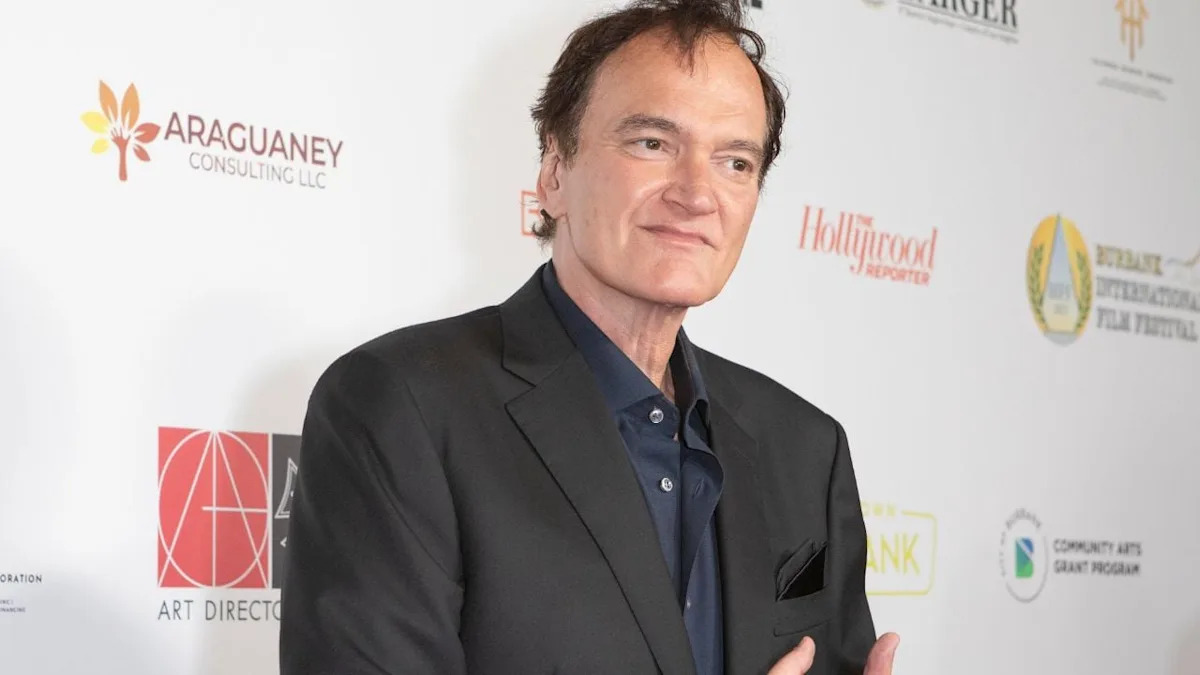
Quentin Tarantino has found a new way to express his dissatisfaction with modern Hollywood.
Director of the films "« Pulp Fiction"» и «Once Upon a Time in Hollywood» wrote in Sight and Sound magazine , that the film industry has become so disappointing since the pandemic that he now begins to dissect most new films almost immediately. The Guardian reported that Tarantino called the industry a "tasteless sausage factory" and said that the current notion of what constitutes a film evokes more "contempt" than generosity.
The most apt and at the same time the simplest phrase: «Lately I prefer reading books.».
Tarantino said that new films constantly lose him.
Tarantino's criticism was not directed at any one studio, franchise, or individual film.
He wrote that since the onset of the pandemic, it has become virtually impossible to release a new film without subjecting it to thorough analysis. Among the problems he listed were implausible decisions, pandering to audiences, poor casting, and ideas he called "simply stupid.".
He also compared the current period in cinema to the 1980s, a decade he had criticized before. This time, he claimed that films from the last six years make those of the 1980s look much better by comparison.
The commentary is in classic Tarantino style: straightforward, generalizing, and designed to provoke debate. It's also relevant at a time when Hollywood is already grappling with franchise addiction, streaming platform releases, shrinking theatrical release windows, and the question of which films are still worth leaving the house for.
He named several films that he liked.
Tarantino didn't write off every last film he made.
The Guardian newspaper reported that he singled out Steven Spielberg's films.« West Side Story» and Kevin Costner «Horizon: An American Saga» as some of the recent films he liked. He also devoted much of his article to praising Joe Carnahan's crime thriller «The Rip ), which is coming to Netflix, starring Matt Damon and Ben Affleck.
Entertainment Weekly magazine reported that Tarantino described «"The Gap"» as a gripping police thriller that kept him engaged throughout. He praised Carnahan's direction, the cast, the cinematography, and the screenplay by Carnahan and Michael McGrail.
This praise prevents this angry attack from devolving into a blanket denial. Tarantino says exceptions still exist. He just believes they've become rare.
His favorite recent example is a Netflix crime film.
Praise in Rip's address also makes the argumentation less predictable.
Tarantino has often spoken of himself as a director deeply concerned with theatrical distribution, old genres, film history, and the ritual of film viewing itself. Yet one new film he touts as a rare success is a Netflix crime thriller.
Thus, his complaints concern not so much the format as the construction. He's dissatisfied with the plot, the unconvincing casting, and the films, which seem more designed to please the public than to be successful.
This also puts Netflix in a strange position in this debate. Tarantino may have grown tired of the Hollywood "sausage factory," but the film that impressed him has now been released on the streaming service.
Tarantino himself is between chapters of his film.
Tarantino's own career has entered an unusual pause.
His last feature film was «Once Upon a Time in Hollywood» (2019). Later, in 2021, he published a novel based on the film.
The Guardian reported that a sequel set in this universe is currently in development, with David Fincher set to direct. Entertainment Weekly reported that the premiere «The Adventures of Cliff Booth» The film is scheduled to hit theaters on November 25th and will be released on Netflix on December 23rd.
Tarantino also abandoned plans for film "Film Critic"« , which was supposed to be his tenth and possibly final film.
His next big project isn't a film.
For now, the next major step in Tarantino's career doesn't involve a film set.
He's working on play "The Popinjay Cavalier" ), an adventure play expected to premiere in London's West End in 2027.
This makes his critique of Hollywood more relevant. Tarantino isn't promoting a new film or trying to sell his return to theaters. He analyzes the current state of the film industry, naming only a few recent exceptions related to the shift to theatrical release, and says that the art form that once mattered most to him now often makes him reach for a book.