








Short of going back in time, the best way for most of us to experience what battle was like in the past is through television and movies. Unfortunately, both have given rise to a number of misconceptions about what happened in ancient wars. We invite you to explore the most common misconceptions about ancient warfare and the warriors involved.
10. The Spartans were great warriors
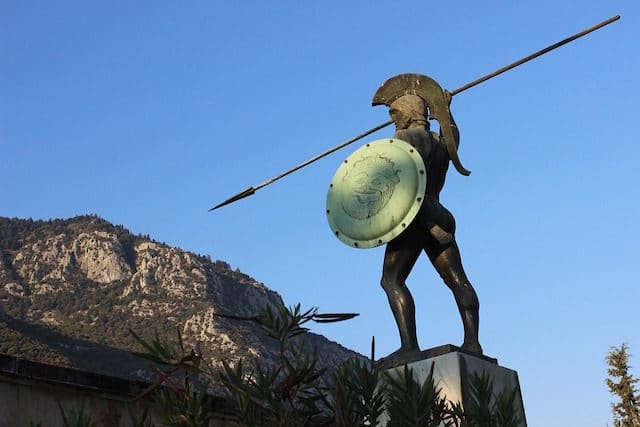
The "word and sandals" film genre that popularized many Greek epics is also partly responsible for the modern belief that the Spartans were exceptional warriors on the battlefield. And no film has done more to reinforce this belief than «300» .
In real life, while the Spartans were undoubtedly capable on the battlefield, they certainly didn't have a reputation among the other Greek states for being formidable or even noteworthy for their martial prowess. In fact, in one story, some men from Aegiai came to the Oracle at Delphi to ask who among all the Greeks was the best. The Oracle dealt them a rather harsh blow, suggesting they were perhaps the worst of all Greeks. However, in the list of the best, the only nod the Spartans received was for the quality of their women. It was the Argive people who were mentioned as skilled on the battlefield.
At the Battle of Champions in 550 BC, 300 Spartans fought 300 Argives, and the end result was one Spartan and two of their enemies. If nothing else, they were evenly matched, with a slight advantage over the Argives.
Regarding the famous battle shown in the film«300 Spartans» , It is true that Leonidas, King of Sparta, led an army of 300 Spartans to confront the massive Persian force. He also brought some six or seven thousand other Greeks from many other city-states, and for two days they held off the Persians at a mountain pass. However, Xerxes's forces were able to outflank the Greek army, and while most of them fled, the Spartans were left behind. The Persians cut off Leonidas's head after he was killed. This was certainly a feat of remarkable bravery for the Spartans, but the fact is that they did not win the battle or prevent the Persians from continuing their march through Greece.
9. The knights were noble
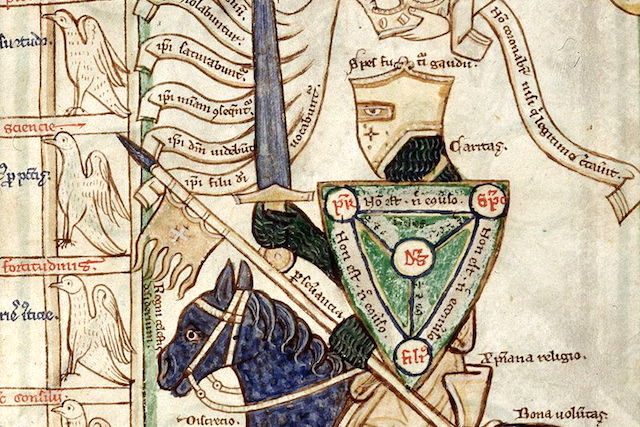
Most of us think of knights as noble men, given that this is where the very concept of chivalry originates. This myth has often been reinforced in books and films, especially in the Arthurian legends. Sir Lancelot, Sir Galahad, Sir Gawain, and all the rest were polite and noble men. But the reality is that knights were often just men with swords. They were hired muscle, with the skill and desire to inflict pain on others if they so desired. A man in armor on horseback in the Middle Ages was little different from a modern tank.
In fact, the code of conduct that we think of as how knights should behave and the rules they should follow did exist, and it arose as a direct response to the fact that so many knights were killed by ugly, wild men.
The Church developed a code of chivalry after the attack on Constantinople during the Fourth Crusade. In that battle, and in many before it, knights brutally slaughtered civilians. They killed, stole, and raped with impunity because no one could stop them. And this is the sole reason the Church sought to create rules to restrict their behavior.
8. Medieval armor was incredibly heavy.
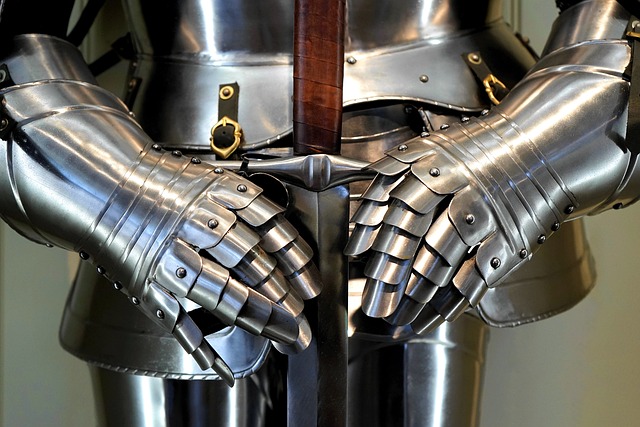
Some have long held the belief that a knight in full plate armor would be extremely heavy and clumsy. In the version «Henry V» Laurence Olivier's play features a scene in which a knight in full armor is lifted onto a horse by a crane. This gave rise to the modern belief that knights were so bogged down by the weight of their armor that they could barely move and had to be lifted onto horses to regain mobility.
In reality, armor typically weighed somewhere between 45 and 55 pounds. A modern Marine would carry gear weighing between 60 and 100 pounds into battle. Even a modern firefighter carries gear weighing between 30 and 40 pounds on the job.
7. Boiling oil was a common defense for the castle

Castles were heavily fortified and nearly impregnable when it came to ancient warfare. They are, after all, giant stone boxes. Still, they had to be defended, and what better way to destroy a small group of enemies attempting to storm the gates than by dousing them with a cauldron of boiling oil? It seems entirely possible when you say it that way, and chances are you've seen it once or twice in a movie. However, in real life, things might not have been quite like that.
Oil is expensive and was previously much harder to obtain. Modern technology has greatly simplified the process of refining oil, but in ancient times, filling a cauldron with oil and then boiling it required considerable time and money.
There's little evidence that this was a common practice in castle defense. More likely, he'd boil a pot of water and pour it on his enemies. Alternatively, hot sand could also be dropped on enemies, as finding extremely hot sand seeping through your armor could severely burn your skin. But petroleum simply wasn't available in sufficient quantity to make this a practical weapon.
6. The knightly fight was highly skilled
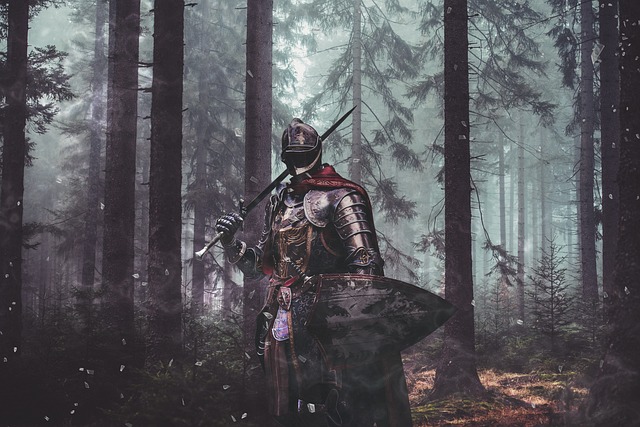
It seems that a knight was expected to be a highly skilled fighter, and in many cases this was true. But not in every case. And even if a knight spent years honing his combat readiness, in the heat of battle it wasn't always practical to go head-to-head with his perfect sparring technique against his enemy.
In many cases, combat between knights was less about skill and more about who could hit the other guy in the head harder. Considering both men might be heavily armored, swordplay wasn't always paramount. In fact, military historian Robin Neillands said that "knightly warfare doesn't require much skill, being simply a matter of bringing the enemy to the ground.".
5. Knights were always killed in battle when they lost
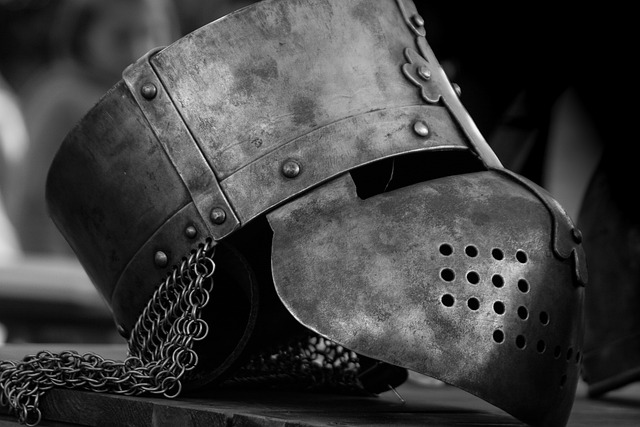
War is generally a brutal business, and there's little mercy on the battlefield. This kind of violence defeats the purpose of war in the first place. However, there are times when killing isn't the primary goal, the end of the war.
When knights met on the battlefield during war, it wasn't always a "kill or be killed" situation simply for financial reasons. A knight who survived a battle was worth more than one who didn't. Not only could you take the equipment of a knight you defeated in battle, you could also ransom it from any lord they served. At the Battle of Bremühl in 1119, three knights died and another 140 were captured. This was certainly partly due to the fact that the knights, who considered themselves Christians, were unwilling to shed the blood of other knights, but the fact that they were worth so much money was also certainly a factor.
4. All battles began with charges
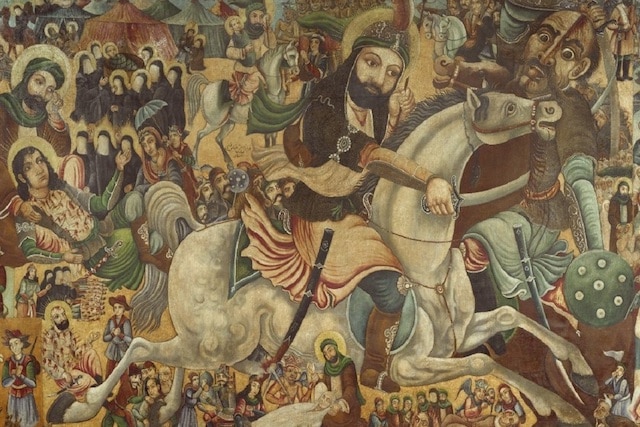
The charge is a staple of battle that most of us have seen time and time again in movies. Two enemy forces on opposite sides of the battlefield, and then, at the right moment, both sides rush together like absolute madmen, weapons drawn, meeting in the middle in a clash of steel and blood. While it's damn spectacular in film, it's utterly pointless in real life.
This doesn't mean that a charge is a maneuver that has never been done before. It certainly is, and cavalry charges have a long history in combat. But if you truly want to win a battle, a smart general will never allow his soldiers to run roughshod over the enemy without orders. Part of the reason Roman armies were so successful in battle is because they made good use of the phalanx. This is an orderly unit of soldiers working together in formation. Breaking formation is what leads to losing battles. When soldiers stay in formation, they are in a much better position to defend themselves against the enemy.
The problem with combat formation maneuvers is that they don't look particularly exciting on film.
3. There were no real female warriors (like the Amazons)

One of the most popular tales from Greek history and mythology involves a tribe of warriors known as the Amazons. This is in no small part due to Wonder Woman. When combined with other tales from Greek mythology, such as the stories of Hercules, it is commonly believed that the Amazons were purely fictional. In fact, this is not the case at all.
Evidence from burials found in Russia has shown that Scythian women, whom Herodotus believed to be descendants of the Amazons after the unification of the two peoples, were largely warrior women. Excavated graves reveal women buried next to their weapons. Their skeletons show them to be bow-legged, indicating they spent a lot of time on horseback, and they were also unusually tall for the period in which they lived. So, in fact, they truly were gigantic warrior women. At least, that's what some Greek warriors believed.
2. The swords were heavy

You've undoubtedly seen at least one movie where a character moves to pick up a broadsword another character was just wielding and collapses under the weight of it. By modern standards, there's little doubt that a sword must have been a large, crude weapon, incredibly unwieldy, except in the hands of the most skilled and powerful knights of antiquity.
The truth is, swords weren't bulky at all. If you think about it, how could they be? If a sword was difficult to move, it was useless in combat. No matter how strong you were, the inertia created by swinging a massive, heavy piece of metal would make it practically impossible to wield in a fight.
The average sword used by people in the Middle Ages weighed between two and a half and three and a half pounds. A hand-and-a-half-length fighting sword would likely weigh around four and a half pounds. Even the largest two-handed swords, used by the strongest fighters, rarely weighed more than three kilograms, which is only about six and a half pounds.
1. The bloodstreams were supposed to bleed the enemy

There's a line in the center of many swords that you might have noticed if you've taken the time to look at one. This shallow groove runs almost from the hilt to the tip of the blade. You'll see them on bayonets, some Japanese blades, and even some fighting knives. The proper name for this groove is a fuller, but they're also known as blood grooves and blood gutters.
The name "blood groove" gave rise to the belief that the purpose of the fuller was to allow blood to seep out of the wound after stabbing an enemy, causing them to die faster. If the blade didn't have a blood groove, the blade itself could theoretically seal the wound, and the victim wouldn't bleed much at all. The blood groove ensured that blood would spill, and your victim would soon die—if not from the wound itself, then from blood loss.
The fact is, a blood groove has nothing to do with blood. Instead, a fuller is incorporated into the blade's design when the smith forges it to reduce the weapon's overall weight. A blade with a properly designed fuller can be over 35% lighter than an identical blade without one. There's no sacrifice in the blade's integrity or its functionality.