








PinRedditShareTweetEmailWhatsApp0 Shares
If you've never seen a zombie movie or encountered any works on the subject, you might be living in some strange transdimensional bubble. Whether you like the genre or not, you should at least be familiar with zombie literature and its basic principles.
Starting from the film "Voodoo"« 1914, ending «White zombie» 1932 and «Night of the Living Dead» Since 1968, the zombie theme in cinema has been slowly and steadily evolving, starting with its voodoo roots and gradually (as expected) evolving into the images of the living dead, thirsting for human flesh, embodied by George Romero.
Since the first film, "The Living Dead," zombies have literally exploded on screen and evolved, resulting from epidemics, fungi, aliens, and other causes. It's become a multi-billion dollar industry. And that's great for the world of fantasy, but what about reality?
We're so fascinated by the idea of bringing the dead back to life. Couldn't science intervene in science fiction and make it a reality? On the one hand, it sounds absurd. Of course, the dead can't come back to life. But remember that Lauren Canaday was clinically dead for 24 minutes before being revived. Some people have lived without a heartbeat for 27 minutes.
These cases shouldn't be confused with the Lazarus effect, which creates the impression that a person died and then came back to life, sometimes several hours later. This is a true clinical death. And people have come back to life. So does it matter if less than half an hour has passed? What if we could increase that time? Is it ever possible to return from the dead, ideally not as a zombie, but simply as normal, with minimal side effects? Let's see what science says.
How long can a person be dead and still be resuscitated?
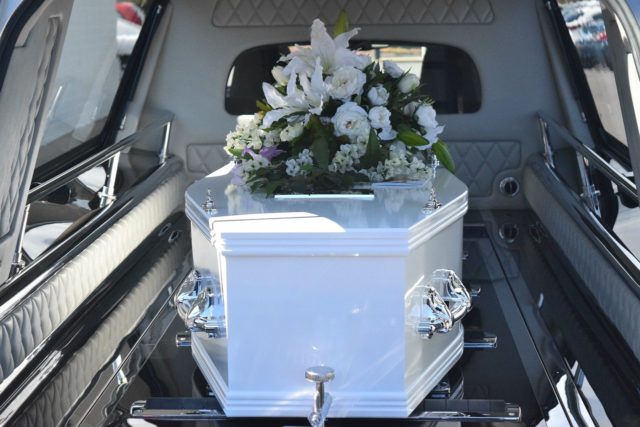
Carol Brothers suffered cardiac arrest, and after approximately 30-45 minutes, her heart began beating again on its own. Others have come back to life after seemingly only a few hours of cardiac arrest. Velma Thomas was resuscitated a full 17 hours after being presumed dead. These are all examples of the Lazarus effect, which we mentioned earlier.
The Lazarus effect typically occurs about 10 minutes after a person is pronounced dead. This means they've gone into cardiac arrest, someone started CPR, they were determined to be dead, and CPR was stopped. Start the timer, and after 10 minutes, the person will simply spontaneously revive.
It's important to remember that the "Lazarus effect," or more properly called self-regeneration, is not technically a return of the dead to life. Being declared clinically dead doesn't mean you're dead. It simply means that, in this case, signs of life are no longer detectable. Vital signs indicate that the heart and brain are no longer functioning, but in reality, there's only a delay in restoring blood flow to the body. Science can't fully explain why this occurs, but the rare people who experience it never truly die.
However, it is still important to remember this, as there are cases where a person is not dead, but was declared dead, and could have been saved.
In normal situations, a person only has a limited number of minutes to save a life. The brain requires oxygen and blood. If you don't breathe for five to ten minutes, there's a high risk of irreversible brain damage, if you can be resuscitated at all. After 15 minutes, life is considered virtually impossible.
How to resurrect the dead
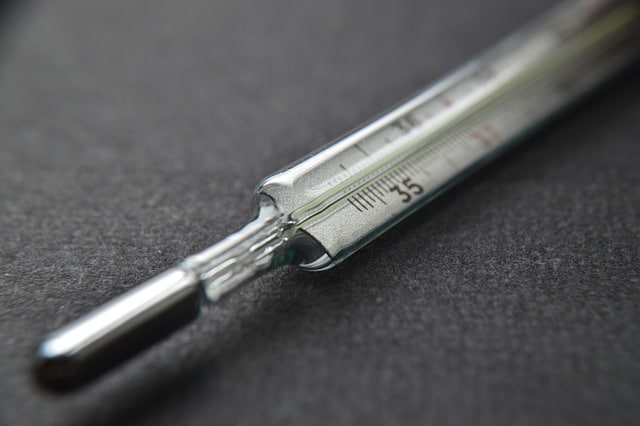
It's worth noting that there's death, and then there's death. We have ways to prevent death. For example, cardiopulmonary resuscitation (CPR). It can be the difference between life and death. It can prolong life after a person should have died, and it's a fairly simple thing we all know. There are other methods, similar to CPR, that can have a similar impact, preserving or prolonging life.
Induced hypothermia is a treatment sometimes used in patients who have suffered cardiac arrest to preserve brain function and improve their chances of survival. Hypothermia is generally avoided, but after cardiac arrest, when blood flow is disrupted, there is a risk of brain or organ damage. The lower temperatures achieved with induced hypothermia help protect tissues until blood flow is restored, minimizing the risk and long-term damage that could otherwise occur.
There are now treatment and resuscitation centers that specialize in precisely lowering body temperature to a level that can significantly increase the chances of survival.
Experimental plans

Experimental studies are also being conducted that may help not only prevent some damage, but also completely reverse the death process.
Cryogenics has been vaguely familiar to most people for many years. It was mostly presented humorously, and jokes still circulate about Walt Disney's frozen head. But it's not all jokes. In 2002, baseball player Ted Williams died, his head surgically removed and cryogenically preserved. It's believed that Williams could be revived in the future using technologies and methods we don't yet have.
Tomorrow, BioStasis will offer cryopreservation to its clients, most of whom work in the tech sector and have the resources to attempt to preserve their brains after death. The idea, as with Williams' work more than twenty years ago, is to preserve the body until the cause of death can be eliminated.
In some cases, the body itself is not involved. Many of these people wish to preserve only their brain. In these cases, there is a belief that a new body may appear in the future, or that they will only exist virtually.
In 2016, BioQuark proposed an experiment injecting stem cells into the spinal cords of patients clinically confirmed to be brain dead. The plan was to combine this with electrical nerve stimulation, laser therapy, and protein injections. The idea was harshly criticized in scientific circles, but it demonstrated that there are those with sufficient resources and interest in employing the most incredible methods to cheat death itself.
In 2019, researchers from Yale University truly pushed the boundaries of what's possible, managing to restore some brain function to a pig that had been dead for four hours. Blood flow and cellular activity were recorded, and while this didn't bring the pig back to life, it did challenge established notions about brain death and what's possible in such cases. As a reminder, this typically takes 15 minutes.
The pig's brain was saturated with a chemical solution. Brain activity was observed for several minutes, and it was completely normal. However, this did not mean the brain was actually thinking. The restored functions were extremely limited, and the brain was in no way aware of what was happening, nor did it feel anything like it.
In 2022, another experiment was conducted on pigs using a device designed to circulate blood and other fluids throughout the body. This time, organs that had been dead for several hours showed signs of tissue regeneration. As in the previous experiment, the pigs were not resuscitated in a manner that would create the impression of having returned from the dead. They did not achieve a state close to consciousness. But this is a step forward, and perhaps one day it will lead to serious ethical reflection on the difference between life and death.
Virtual immortality
There's another way to revive the dead, one that involves a different kind of science, one that goes beyond biology. It requires computer science. The ability to preserve your entire mind, your fleshless essence, inside a machine.
Science fiction has been toying with the idea for years: uploading the human brain into a computer. Conceptually, it's not hard to imagine; most of us, even with a basic understanding of computers, at least understand the theory behind their operation. Practical application, of course, would be much more complex.
How far-fetched is this idea? Is it completely fiction or simply something we can't yet achieve? Ray Kurzweil believes it could become a reality as early as 2045. The human brain is thought to have about 2.5 million gigabytes of memory, in computer terms, and that's certainly a huge amount. That's 2.5 petabytes, which is enormous, but not far-fetched. It's now possible to connect several large hard drives to achieve this amount, and petabyte-sized drives will soon be available, so memory isn't the issue.
The human mind, of course, is more than just a collection of raw data. Your personality is shaped by how your mind works and how you use those memories. Your cerebral cortex alone contains 125 trillion synapses that determine your personality. Your entire brain may contain quadrillions of such synapses.
Your personality isn't just the product of your brain. Chemicals and hormones influence brain function, your mood, your personality, your memory, and everything else. If you're just a brain without access to the body that produces all those hormones and chemicals, will you ever be able to truly be yourself in a virtual space?
The mind-body connection is why neuroscientist Moheb Kostandi believes it's never possible to essentially put your mind into a computer. But others aren't so sure. Elon Musk, for example, believes it might one day be possible to use something like Neuralink to upload your entire personality.
Researchers have theorized that this is possible even with our limited understanding of how the brain works, thanks to the principles of emulation. If the brain functions as it does, and non-physical parts such as personality, consciousness, and memory emerge from the physical structure, then if we perfectly replicate the physical part, the non-physical parts should fall into place. In other words, if we can accurately recreate your brain, whether from cloned tissue, some organic substitute, or in a virtual network, then your entire mind should fit perfectly, like your hand in a glove. Theoretically.
The problem with brain emulation today is that we can barely replicate a mouse brain, let alone a human one. Neurons, synapses, and all those connections are incredibly complex.
There are also potential ethical issues with the idea of virtual consciousness retention. For example, imagine waking up and becoming a computer. Your mind is yours, you think just as you do now, but 200 years have passed, and someone downloaded you. Now you belong to them. You have no body, you can never go anywhere or do anything except virtually, and presumably at the whim of whoever controls the hardware you're in. That's terrifying.
The question also arises as to whether digital immortality is immortality at all. If you are just your mind placed in a machine, are you still human? Given our current attitudes toward human rights around the world and how certain groups are not considered equal for a variety of reasons in various places, it's not hard to imagine that a ghost in a machine would hardly be considered alive by many.
Right now, this is all just a theory, and we can point out countless flaws in its operation, but in a century or five centuries, it could be as simple as downloading any program. And if that happens, any other methods of resurrecting the dead we've mentioned will pale in comparison, because virtual immortality will be just that: immortality. Your mind will be able to exist forever, for as long as you want. Now that's something.
Other articles that may interest you