







WhatsAppRedditShareEmailTweetPin0 Shares
In 1968, Ohio State University glaciologist John Mercer wrote a paper about the dangers of melting the Antarctic ice sheet. He examined data from glaciers and dry lake beds that had been previously flooded and concluded that approximately 120,000 years ago, all this ice was liquid. He then hypothesized that this could happen again. That the ice could melt, and sea levels could rise sharply.
The idea that ozone holes form first, then global warming occurs, and then climate change causes the ice caps to melt is obviously not new. It's been around for a long time, but it only really gained traction in the 1970s. That's when satellites began to measure ice loss for the first time, and the loss began to be unequivocally proven. In the 1990s, the melting of the Greenland ice sheet accelerated sharply, doubling the rate observed since the 1960s.
By 2021 and 2022, ice loss had increased significantly. In both years, ice loss exceeded the average for the entire previous decade. Seven of the ten years with the most negative mass balance—that is, the years when glaciers lost the most ice—occurred after 2010.
By 2023, mountain glaciers had lost the equivalent of 26 feet of water compared to 1970 levels. Or, in other words, it was as if 94 feet of water had been removed from each of their peaks. So yes, the ice is melting, whether some want to admit it or not. It's happening relatively quickly, and the situation seems to be getting worse with each passing year. What does this mean for the ice caps and, ultimately, for us? Let's see what the experts think.
Ice caps, glaciers, or ice sheets
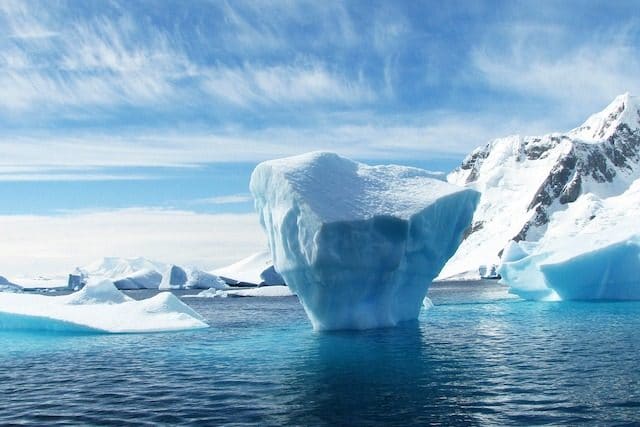
Terminology surrounding ice melt can be confusing because, as with many other things, the media and the general public often use the terms interchangeably. However, there are differences between ice caps, ice sheets, and glaciers. While it may seem like an ice cap is the most significant ice formation, the opposite is true. An ice cap is a glacier with an area of less than 50,000 square kilometers or 20,000 square miles. An ice sheet is much larger.
When a chain of glaciers and ice caps connects, it's called an ice field. All of these are types of glaciers. When news reports of melting ice caps are made, they're likely referring to ice sheets or even ice fields, as all are under threat, but the term "ice cap" has become more common.
The glaciers that exist at the Earth's North and South Poles are commonly referred to as polar ice caps. Traditionally, these were permanent glaciers. Their melting is significant because for most of history, since we have been able to observe such phenomena, we neither expected nor knew that it could happen on such a large scale. These are the ice caps that most people think of when they hear about melting ice and climate change. Only recently has Greenland been included in this equation. But these are just a few of the glaciers found around the world. Countries like Chile, Pakistan, Tajikistan, and many others also have glaciers that are threatened by melting.
Up to 991 TP3T of the world's freshwater is stored in these glaciers. If the ice caps were to melt completely, it would change the world as we know it.
How quickly do they melt?
We know they're melting, and they're melting faster than we expected. But what exactly does that mean? According to NASA, Arctic ice thickness has decreased by 401 TP3T since the 1960s. Decade by decade, it's been decreasing by about 91 TP3T.
These numbers sound daunting, but percentages often make things seem less impressive than they really are. Let's look at it this way. Antarctica loses about 150 billion tons of ice per year. That's just the melting ice flowing into the ocean. Dramatic, right? Greenland, on the other hand, loses 270 billion tons of ice per year. On August 1, 2019, Greenland lost 12.5 billion tons of ice in just one day.
Since 1985, Greenland has lost one trillion tons, or approximately 1.1 trillion tons, due to glacier retreat alone. As of 2024, Greenland is losing 30 million tons per hour, which is 20% more than previously estimated.
Part of the problem is that the Arctic is suffering from Arctic amplification, a phenomenon in which it is warming about four times faster than the rest of the world.
The World Counts website keeps a daily count of ice loss for those who enjoy apocalyptic data in real time. In the first month of 2025, approximately 77 billion tons of ice melted worldwide. Over the course of the year, 750 billion tons are expected to disappear. That's 24,000 tons every second, a figure so staggering it's hard to imagine what to do with it.
So, let's start with the big numbers. More than 750 billion tons. From the time we began tracking such events in 1961 until almost ten years ago, in 2016, the world lost 9 trillion tons of ice. And we've already seen that losses in Greenland exceeded expectations by more than 20%.
How much time do we have left? Well, looking ahead, I'll say it's not that much.
How long will they last?

Scientists from the US Center for Atmospheric Research have determined the date of Arctic ice disappearance. According to their calculations, the ice will be completely gone by 2040. There are concerns that by 2100, a third of all glaciers worldwide will disappear, and not just in the Arctic.
According to some forecasts, all Arctic ice will melt by the 2030s. For this to happen, summers would need to become increasingly hot each year, as they have so far. 2024 will be the hottest year on record, surpassing 2023. In fact, the period from 2015 to 2024 was the tenth warmest year on record. Antarctic sea ice extent in 2024 was the lowest on record, surpassing 2023.
Of course, warming periods have occurred throughout history. Skeptics often cite this and other reasons to argue that there is no crisis and that warming and cooling are simply Earth's natural cycle. The problem is that this time, it's not entirely natural, and there's ample evidence to support this. Humanity has significantly increased the concentration of greenhouse gases in the atmosphere compared to the past, and at a much faster rate.
Regardless of the historical causes of climate change, it is currently being driven by humanity, and we see the results year after year: weather conditions are becoming increasingly severe and dangerous. While animals, plants, and humans will likely adapt over time, relatively rapid changes still pose numerous challenges.
What happens if they disappear?
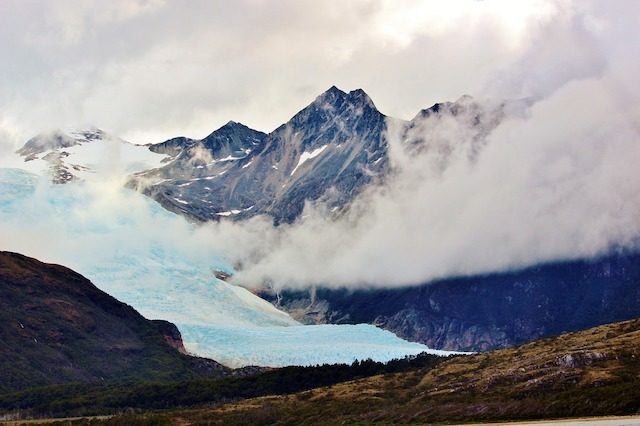
The most obvious problem with melting ice caps is that all that ice turns into water. All that water has to go somewhere, which means sea levels will rise. One projection from the Intergovernmental Panel on Climate Change warns that sea levels could rise 10–23 inches by 2100. If things go awry in Greenland, sea levels could rise up to 20 feet. Greenland and Antarctica combined could destroy coastal cities like New York, Los Angeles, and much of Florida.
For comparison, a one-foot (30 cm) rise in sea level would submerge approximately 100 feet (30 meters) of coastline. This means that coastlines worldwide would potentially retreat by 200 feet (60 meters). Just imagine how many cities are currently located right on beaches.
Rising sea levels will also cause saltwater to infiltrate freshwater aquifers and contaminate many freshwater sources. This could impact the environment, as well as agricultural land and municipal water supplies in areas that are spared potential flooding.
It is estimated that by mid-century, damages from floods caused by rising sea levels could reach up to $1 trillion.
Heat waves will also pose a serious threat, as we already see annually. But they will intensify as ice is lost. Ice is good at reflecting light and heat back into the atmosphere. Without ice, the Earth absorbs this heat. This means summers will be hotter and more deadly.
This is partly due to the fact that as glaciers melt and permafrost in the Arctic subsequently loses, massive amounts of methane will be released into the atmosphere. This potent greenhouse gas will amplify the effects of global warming by melting more ice and releasing more methane. By 2100, up to a billion tons of methane could be emitted.
The flip side of the coin is that winters, paradoxically, have become colder. Polar jet streams, made less stable by warming Arctic air, will travel greater distances and bring more powerful storms to areas unaccustomed to them.
What would happen if the Atlantic Meridional Overturning Circulation collapsed?
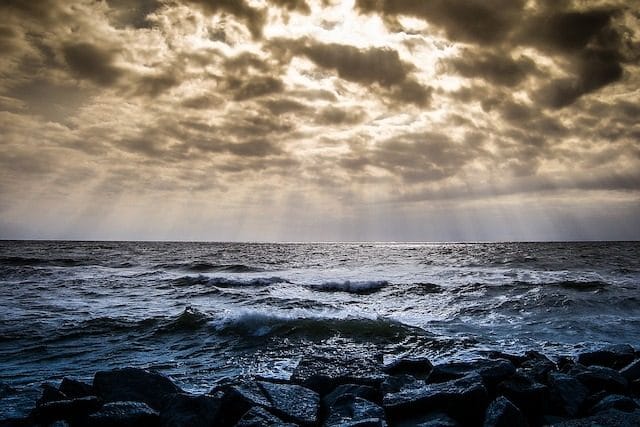
The Atlantic Meridional Overturning Circulation (AMOC) is an ocean current that, in a sense, acts like a conveyor belt. It circulates, exchanging cold and warm water throughout the Atlantic Ocean. Warm water from the Gulf Stream flows toward the Arctic, while cold water flows downstream. Saltier water moves north, sinking and pushing warmer water to the surface along the coast of Europe.
This circulation plays a vital role in maintaining the relative stability and resilience of our climate from season to season and year to year. However, we believe rising global temperatures and melting ice are affecting and slowing this circulation. Too much warm water and too much fresh water are disrupting the system. Some fear it could collapse completely.
If heat exchange slowed or stopped abruptly, it would not proceed as it had before. European waters would become colder, affecting the climate of Europe and Africa. Precipitation would increase in some places, droughts in others, and monsoon seasons would shift. Sea levels on the east coast of North America could rise sharply, storms would become much more intense, and the effects could be irreversible. Temperature changes could lead to ice age-like conditions in the Northern Hemisphere and warmer temperatures in the South. But we don't know for sure.
Are we doomed?
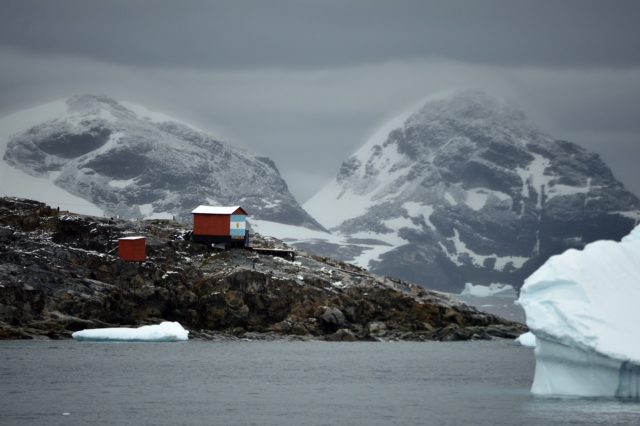
As dire as many of the figures we've cited may seem, it's important to remember that these are mostly worst-case scenarios and assumptions. Furthermore, forecasts generally indicate that about a third of the world's ice will disappear by 2100. No one has yet made any concrete predictions about when or whether all the world's ice caps and glaciers will melt.
If this does happen, it will be literally centuries away. Perhaps even a thousand years. While it's difficult to have great hopes for the future, there's always the possibility that by then people will take this more seriously and actually do something about it. And since this is the future, we'll hopefully be able to cope with it fairly easily with the right technology.
Other articles that may interest you