









Certain periods of history are constantly revisited for various reasons. People love to explore the past and the world that once was, from world wars to revolutions and countries' independences, along with the fall of empires and other significant historical moments. One such historical period that has attracted considerable attention is Ancient Greece. .
For centuries, Ancient Greece has been at the center of historical discussions. We've told stories of war, democracy, gods, Spartans, Trojans, and all things Greek to tell the epic tale of this fascinating period. However, Greece was built on mythology and tales of gods and fantastical creatures. So much so that it permeated every aspect of Greek history. As a result, the history of Ancient Greece has become somewhat inflated or distorted compared to its reality. To truly understand this legendary time in human history, we must separate fact from fiction and understand some of the misconceptions we still struggle with today.
10. The Greeks were not a single nation.
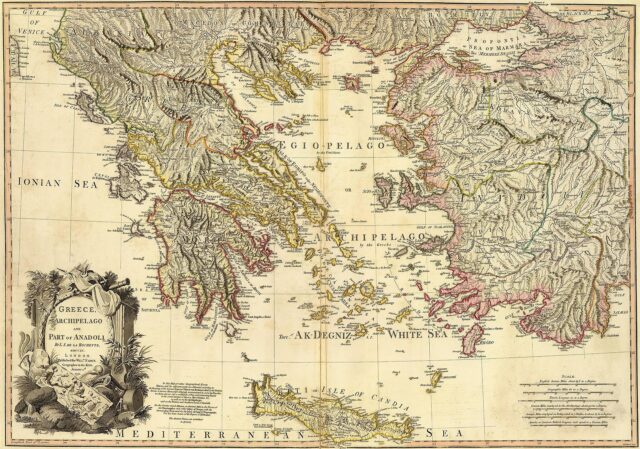
Greece, as a nation, is filled with rolling hills, mountains, and rivers, which acted as natural dividers between the various city-states that existed. The Greece we know today is a relatively unified nation. However, ancient Greece was almost the complete opposite.
Ancient Greece was a collection of autonomous city-states, known individually as policy , which shared nearly identical ideologies, languages, lifestyles, and cultures. However, beyond these shared lifestyles and values, there was little unity or affiliation between these city-states. Even the best examples were short-lived or very vague in their definition of "affiliation." There was no real consistency, as each polis was governed differently. Some polises adopted the democratic system originating in Athens, while others adopted more traditional forms of government, such as oligarchy, aristocracy, and tyranny.
Often, what occurred in Greece was an imbalance of power, with some city-states gaining significant influence and dominating neighboring, slightly weaker city-states. Unity between city-states was usually the result of an impending war or conflict, such as Persian Wars between 492-449 BC.
Greece was a peninsula that later became a nation during the Hellenistic period after the death of Alexander the Great. He is credited with spreading the Greek language, art, culture, and urban planning, which gradually led to the unification of the nation .
9. Divine love of color
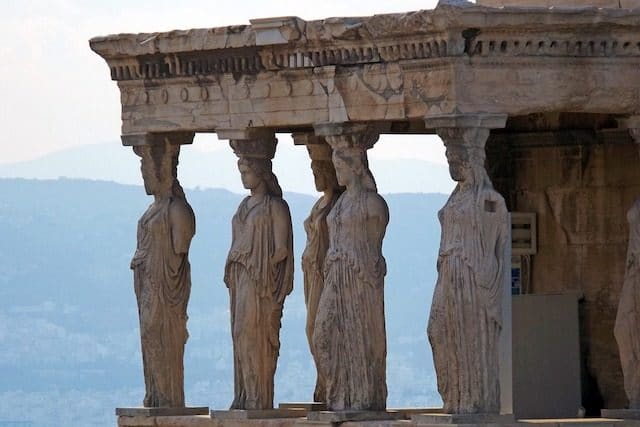
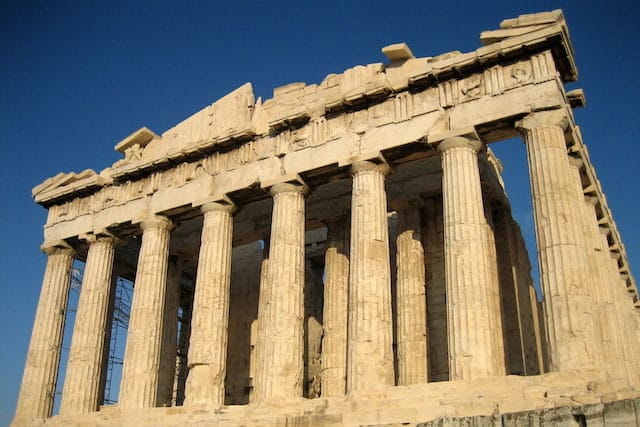
The misconception about the Greeks and color arose from their statues and impressive buildings such as the Parthenon, the Temple of Zeus and many other Greek temples being depicted as colorless structures.
The ancient Greeks loved marble, which was often their first choice for any construction project. Iconic buildings that still stand today, such as the Parthenon, were constructed using it. Pentelic marble . Most of the temples and statues will be made of a mixture marble, limestone, tuff, carved stonework, local stone and wood .
For centuries, our knowledge of the color of Greek statues and buildings was flawed. We believed that everything the Greeks created was an architectural and design marvel, constructed primarily of pure white marble. There was a preconceived notion that the ancient Greeks neglected color , but now we know that's not true. Not only were their statues painted, but their buildings, like the Parthenon and other temples, were also sprinkled with color. And there were no dull colors. The ancient Greeks loved bright colors, especially purple., red, yellow and white . However, it is important to note that their classification of these colors was different from ours today. For example, red for the ancient Greeks could be anything from orange to purple .
Our understanding of the Greeks' relationship to color has been largely based on ancient buildings and statues where the paint has faded after centuries of concealment or burial beneath the surface.
8. Spartans
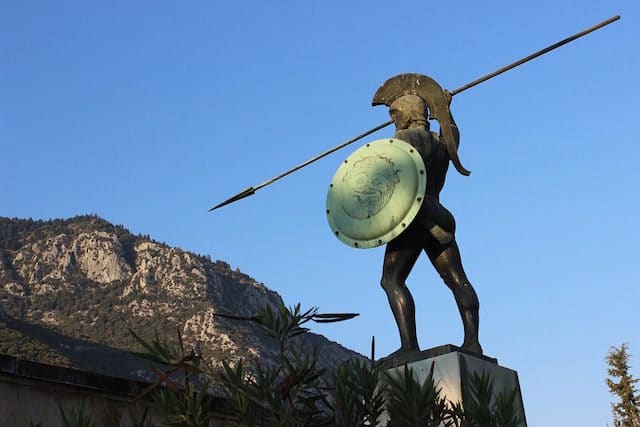
We get a lot wrong about the Spartans. This is understandable, given everything we're told and shown about the mythical warriors of Ancient Greece who fought the Athenian army. However, a large part of why we're so wrong about the Spartans stems from how little we actually know about them.
We were wrong about some important things about these legendary warriors, which has been proven. For starters, Sparta was not the name of an ancient Greek city-state. Instead, it was in Lacedaemon The Spartans lived. During the Peloponnesian War (431–404 BC), Sparta's warrior society grew, taking on the rival city-state of Athens. Their culture focused on military service from a young age and loyalty to the state.
Already at the age of seven, Spartan boys began training and state-sponsored education . They were taught what it meant to be a Spartan, which meant an understanding of duty to one's state, endurance, and discipline. Any healthy man became a Spartan soldier.
Perhaps the greatest misconception about the Spartans was their relationship with the rest of Greece. Although Greek unification was slow, the Spartans were not as champions of the Greek cause as we have been led to believe. They chose not to join the pan-Greek alliance that led to the Greco-Persian War because of their anti-democratic views. While they were brave warriors who ultimately fought alongside the Greeks, they were not the infallible heroes they were portrayed as.
7. Pederasty Mentoring in Ancient Greece
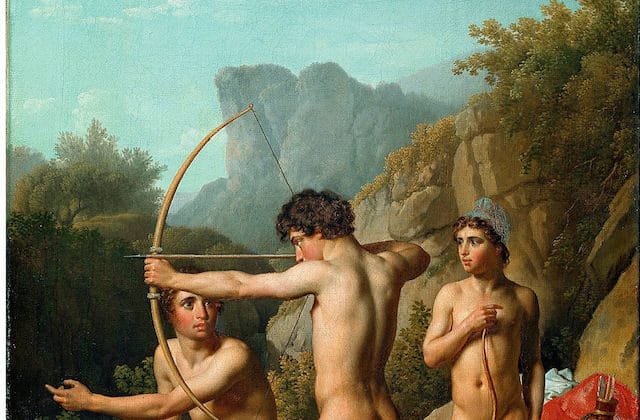
In ancient Greece, it was common for young Greek boys to take apprenticeships from older men. This was common not only in Athens but throughout ancient Greece, even among the Spartans. This was their version of formal education. Boys needed to undergo training to advance in Greek society.
There were rules in the relationship between mentor and protégé. First, it lasted only until the protégé grew a beard. Second, the mentor was dominant. The basis of this mentorship was to educate the youth about all aspects of the world, sometimes including sex. Attitude Greeks to sex was associated not so much with love as with lust, desire, or aphrodisia.
The mentee was considered an eromenos, the passive partner in a homosexual relationship. The mentor determined when the eromenos was ready to integrate into Greek society as an adult. If the adult abstained from sexual relations with the boy, it meant the boy was ready. However, if the mentor continued to have sex with the eromenos, they were expected to submit out of respect and gratitude. This was common practice in ancient Greece , although the rules varied from policy to policy.
While many today consider this an abuse of power, in the ancient world it wasn't viewed that way. Instead, it was simply part of growing up for boys. Sex was viewed differently in the Greek world. Thus, while some aspects of pederasty were frowned upon, it was still commonplace at the time.
6. Technological advances are underrepresented
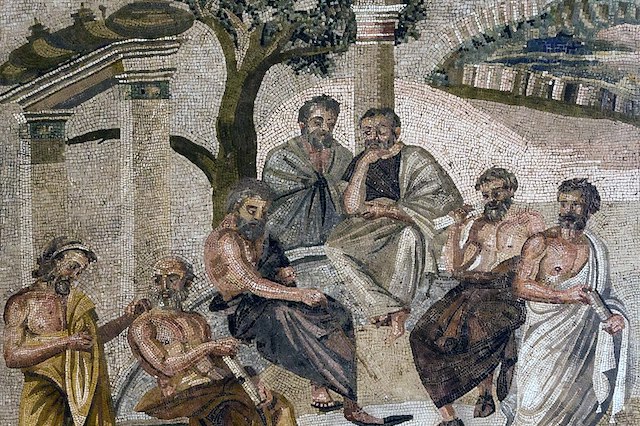
There are many things we have to thank the ancient Greeks for, yet the modern world never seems to remember them. When we think of Ancient Greece, we think of gods, wars, the Spartans, and the incredible structures they built. However, while all of these things are worthy of attention, it's their technological advances we completely underestimate and often completely ignore.
Ancient Greece was filled with some of the greatest minds the world has ever known. From Plato to Archimedes, everyday items we have today, such as alarm clocks, automatic doors, central heating, and showers, can all be traced back in one way or another to these great minds. Famous examples of Greek technological achievements include Plato's creation of the first alarm clock and Archimedes' creation of the first steam cannon. The ancient Greeks are also credited with the invention of lighthouses., the first of which was in Alexandria , as well as clock towers, weather stations, water mills and much more.
5. Lighting the Olympic flame was not a Greek idea.
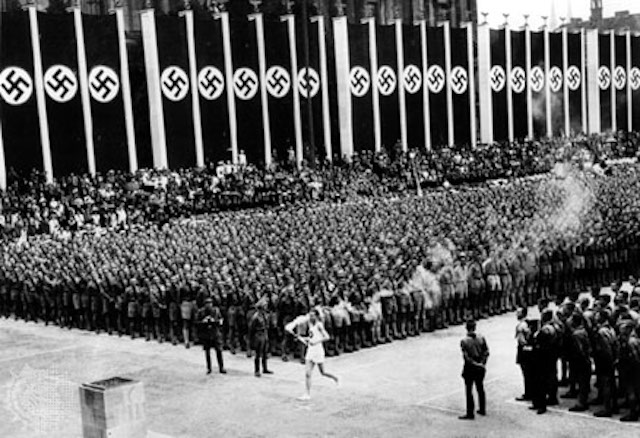
The modern International Olympic Games began in In 1896 in Athens, which is quite appropriate, given that they had already been held there for over half a millennium. Some aspects of the Olympic Games, we only assume, have existed for centuries. Given the Games' long history, we've always assumed that the lighting of the Olympic flame is an ancient tradition. This is not true.
The history of the Olympic torch relay actually dates back to Berlin in 1936 . Dr. Carl Diem was inspired by the writings of Plutarch and ancient Greek paintings on creation of the Olympic flame , which became a tradition. He was conceived and paid for Nazi Germany just three years before the outbreak of World War II. The project was led by Nazi propaganda master Joseph Goebbels.
During World War II, the Olympic Games were not held. When they resumed in 1948, the Olympic flame returned, but with a new message: peace. It passed through devastated Europe from ancient Olympia to London. The first torchbearer began the relay, lowering his arms, removing his army uniform, and taking up the flaming staff for the first leg of the journey.
4. Trojan War
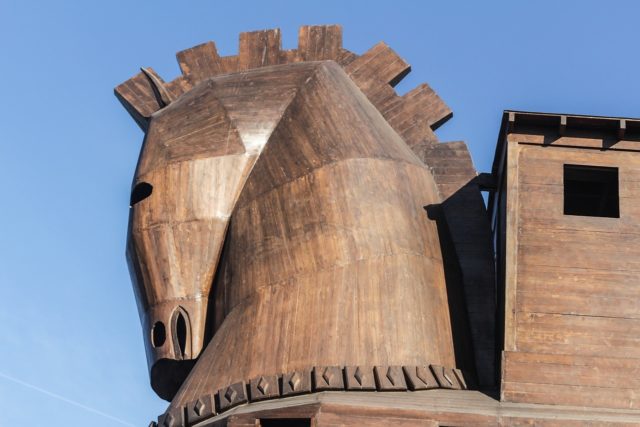
There is a lot of controversy surrounding the Trojan War. Most people know all about it. this war , in which the ancient Greeks clashed with the inhabitants of Troy in western Anatolia. We know of the famous Trojan Horse, given to the inhabitants of Troy as a deception to lure Greek soldiers within the city walls. From there, the Greek soldiers laid waste to the city, killing the men and taking the women. There's just one problem: we're not sure this actually happened.
For a long time, this story was treated not as myth or legend, but as fact. The truth is, we have no evidence to support the existence of the Trojan War, the wooden horse, or anything else related to this legendary tale. We only know of this legend because it is celebrated in ancient Greek plays and texts, such as "« Odyssey » Homer и Iliad . Eventually, it came into literature from the Romans as "« Virgil's Aeneid.
While the ruins Troy exist in Anatolia, debate continues over whether this is the same city in Homer's text, along with discussions about whether there was a war at all.
3. Leonidas and 300 men
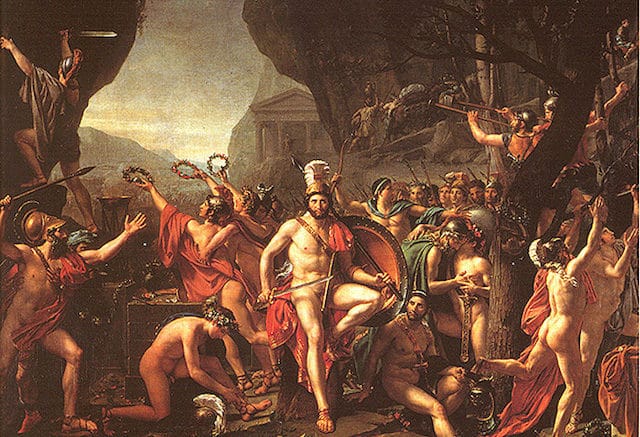
Most people learned about Leonidas and the 300 from Zack Snyder's 2006 film,« 300 Spartans." Unsurprisingly, the film (and the graphic novel it's based on) doesn't quite accurately depict the battle. at Thermopylae in 480 BC. Persian Wars .
Legend has it that Leonidas and 300 Spartans single-handedly held off the army of the Persian king Xerxes I. However, the truth is more nuanced, as it adds more context to how they got there, how accurate the numbers were, and, of course, the whole "Spartans fought alone" thing.
When the Greco-Persian Wars began, King Xerxes I sent a massive army of between 70,000 and 300,000 men to attack from the south. Leonidas had a much smaller army, only from 6,000 to 7,000 soldiers , who followed him into battle. His army consisted of Greek soldiers from various city-states and, of course, 300 Spartans. The much smaller force held off the Persians for three days, until betrayal gave Xerxes the advantage.
Ephialtes, a Greek citizen, betrayed his country and army by telling Xerxes about the route around Thermopylae. He even led part of the Persian army along the trail. The Persians destroyed part of the Greek army, forcing it to retreat. However, Leonidas, 300 of his bodyguards, several helots, and 1,100 Beatians remained and continued to fight. Retreat would have defied Spartan laws and customs.
The details of the battle have never been fully agreed upon. Most believe that Leonidas and his army fought bravely, but ultimately met their end at the hands of a much larger Persian invasion. Some, however, believe there were survivors, and even consider Leonidas one of them. Unfortunately, there is no definitive proof for either theory.
2. Burning of the Library of Alexandria
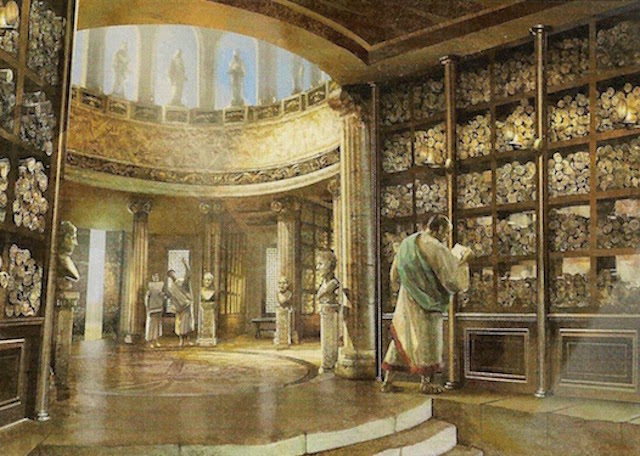
The Library of Alexandria was one of the most famous examples of Ancient Greece's influence and power in the ancient world. It was a hub for scholars from around the world seeking to sift through the books and scrolls of ancient civilizations.
When Alexander the Great died in 323 BCE, the knowledge he had acquired during his lifetime of conquering and exploring the world was preserved. This inspired a movement to preserve and share knowledge on a much larger scale than had previously been practiced. The creation of the library was led by Demetrius of Phalerum , a disgraced Athenian politician who became an adviser King Ptolemy I Soter .
К 283 BC. The library was completed. It is estimated that between 200,000 and nearly a million original texts were collected from around the world and stored in this center of knowledge until its destruction in 48 BC.
The exact cause of the burning of the Library of Alexandria is often blamed on the Muslim army. However, in reality, it was merely an accidental casualty of war. Julius Caesar Caught up in the Egyptian civil war between Cleopatra and her brother, Ptolemy XIII, Caesar sided with Cleopatra. This led to Ptolemy and his forces besieging him in the great harbor. Caesar saw only one solution: to destroy the enemy forces. In doing so, Caesar and his men destroyed part of the harbor and started a fire that spread and ultimately consumed the Library of Alexandria and its hundreds of thousands of ancient texts, almost all of which are now gone forever.
1. The shaky, somewhat boring history of democracy
The ancient Greeks are often credited with the birth of democracy. In a sense, this is true. However, our understanding of what Greek democracy looked like seems to glorify something that wasn't as impressive as the democracy we know today.
Democracy began in Greece when the Athenian leader Cleisthenes introduced a new system known as democracy to the people of Greece in 507 BC The word "democracy" comes from the combination of the words "demos", which means "people", and "Kratos", which means "power".
Meaning this new system «The goal of "rule by the people" was to create greater peace and stability. To have a system in which an unpopular government was voted out, rather than overthrown by rebellion or revolution.
However, their democracy does not deserve praise. Yes, it was the first of its kind, and in the future it would become more inclusive and representative of all people. However, in ancient Greece, it represented only a select segment of the population. In Athens, only free men were considered citizens. This meant that women had no representation, were not voters, and were not active in the political system.
We often forget how the ancient Greek government functioned. Every year, 500 names were chosen from among all Athenian citizens. These 500 people would serve in their government for a year. They served as legislators and drafted laws that were voted on by the entire Athenian population. This meant that their democracy was a direct democracy, which did not carry over into modern democracies. Instead, most modern democracies are representative democracies.
Despite all the praise we bestow upon the ancient Greeks for their creation of democracy, we often overlook the flaws in their own creation. While it took centuries to correct these flaws, some are still being addressed today.