








ATTENTION: This article contains spoilers for "In God We Trust," the season 3 finale of Euphoria, now streaming on HBO Max.
It all ends with Ali.
More from Variety
-
Euphoria finale recap: [SPOILER] dies, [SPOILER] gets revenge, and Cassie further cements her position on OnlyFans.
-
Euphoria star Adewale Akinnuoye-Agbaje used the Stanislavsky method to play Alamo: "Speaking with a Southern accent for nine months was a sacrifice I was happy to make.".
-
«"Euphoria" and "The End" will conclude the 19th episode of Balinale.
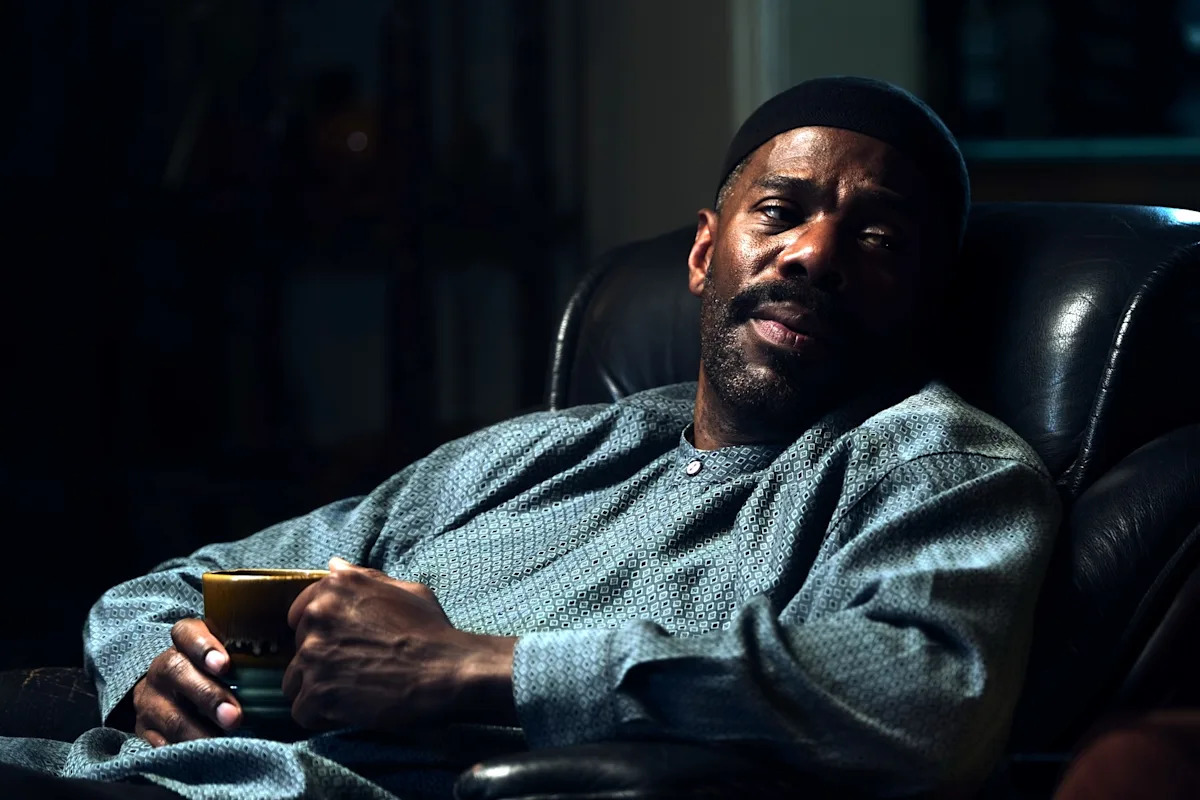
Ali, played by Colman Domingo, was a constant presence on Euphoria, despite appearing in only 11 of the HBO series' 26 episodes. A recovering drug addict, he serves as a mentor to Rue (Zendaya), whose struggle with drugs is chronicled throughout the series. In the Season 3 finale—which also appears to be the series finale—the show finally follows Rue down the abyss. Ali nearly dies with her.
After Ali's backstory was revealed in the penultimate episode, the finale opens with Rue escaping Laurie's (Martha Kelly) ranch before a DEA raid and somehow returning safely to Ali's apartment. They learn on the news that Fez (played by Angus Cloud in seasons 1 and 2, who died in 2023) has escaped prison, and against Ali's wishes, Rue rushes to her car to find him. In her mind's eye, she replays memories of Fez, then drives to her childhood home, speeding past police tape as officers scream and chase her. There, she tearfully greets her mother (Nika King) and offers her hand. But then we see Rue, shrouded in darkness, lying on her back, reaching upward. It was all a dream, as her brain was reeling from the Percocet overdose given to her by Alamo (Adewale Akinnuoye-Agbaje). In real life, when Ali comes to, Rue is already dead. Calmly, but painfully, he asks God to grant her peace. Then he finds the pills on the coffee table and tests them for fentanyl; the test is positive. He slams his fist on the table and calls Rue's mother to tell her the news.
The next time we see Ali, he's at an Alcoholics Anonymous meeting—his last, as he says. In a masterfully delivered monologue, Ali tells his fellow recovering members that he once believed empathy was the key to redemption, that if people showed more compassion for addicts, they could all begin to heal. But now he realizes, he says, that if you can empathize with an addict, you can also empathize with a dealer. He no longer wants to be part of this passive cycle. He says he'll find another way to be helpful. It becomes clear he plans to avenge Roo. Returning home, he saws off the end of his shotgun and dons his old Army uniform. He has nothing to lose.
«"Once we learn his backstory and figure out who he is, that will set the stage for the final episode. It's a brilliant stroke of genius from Sam Levinson," Domingo says in an interview. Variety . "He instilled in me enormous faith and trust that I could handle it, and that the audience would be with me and understand. Knowing that Sam is exploring the problems of young people struggling with addiction, he always returns to the moral core that Ali maintains and makes accessible to Ru.".
Ali drives to the Alamo strip club, the Silver Slipper, and demands that Kitty (Anna Van Patten) call her manager. G (Marshawn Lynch) comes out, and they sit across from each other at a table. Ali discreetly presses a shotgun to G's groin and threatens him not to lie. But when Ali asks G where Roo got the fentanyl, G lies and says he doesn't know. As promised, Ali shoots him, and as everyone panics and falls to the floor, Ali screams for Alamo Brown to come out.
While several strippers, patrons, and employees tremble in fear, two men converse. Ali admits he's come to avenge Roo. They agree to do business "the old-fashioned way," simultaneously drawing their guns, like in an old Western. But when Alamo tries to fire—a few seconds too early—nothing happens. He looks at Bishop (Darrell Britt-Gibson), who was supposed to load his gun, and realizes he's been betrayed. "See you in hell," he says as Ali kills him with all three of his remaining bullets. Although there are several other armed men in the club, Ali emerges unharmed.
Ali then travels to El Paso, Texas, to an estate that Rue says was "the most peaceful place she'd ever been." He tells the family that "Ruby," as they knew her, "is in a better place," and they offer their condolences. He introduces himself as Martin McQueen—his real name before converting to Islam—and is invited in. At dinner, he sits at the head of the table and imagines Rue sitting in the empty seat across from him, praying, "May her memory be a blessing." At the end of the scene, the camera pulls back to reveal the house, where an American flag flies. In voiceover, Rue says, "God bless us all.".
Domingo spoke in detail Variety about the people in his life who influenced his work on Euphoria, his long-standing collaboration with series creator Sam Levinson, and what it was like saying goodbye to Rue and Ali.
How did you feel after watching the finale and saying goodbye to this character and story?
It was incredible, focused, and clear. It felt authentic, it reflected Ali's journey. I loved it. I watched a clip with Sam a couple of months ago, and I was blown away. I felt like it matched what Sam said at the very beginning, when he was just casually telling me what he wanted to do with season three. He said, "I'm going old school. I'm going Old Testament. Because that's where we are in our society, in our world." Even the setting and his idea of shooting it like a Western made it clear that this is an American story, and it's about good and evil. The characters are so expansive now. They feel enormous, but they're also multifaceted. You know who the villains are, who the good people are, and you know the ones in the middle who are just trying to figure it all out.
It brought out another side of Ali that I thought was really helpful. It's underneath him, too. He's talked about his body like that. He's talked about his struggles, his dark side. One of my favorite ideas Sam and I came up with for that episode was, at one point, I was like, "What is he wearing when he does this?" So we went back to our Season 1 brainstorming sessions and suggested that Ali is a former firefighter and military man. I said, "What branch of the military? Let's figure it out." We said, "The Army." I said, "What if he's in an Army uniform?" And Sam said, "Oh my God, I was just about to suggest that!" I said, "Because he ultimately aspires to serve, so he goes back to service . »This is important to him.” All these little details were important and strategically thought out.
When Ali discovers Roux's body, he's neither completely shocked nor has a nervous breakdown. He's devastated, but calm and unsurprised. Tell me about your approach to this scene.
I made a very conscious choice. I'm naturally very expressive. I'm very emotional. Ali, on the other hand, is more reserved in his emotions, without any ambiguity. Having lived through a pandemic, having lost so many people, having lost faith and hope, and being someone who has also served in the military, Ali has to be more pragmatic about death. When we were filming this, I wanted to be as quiet as possible. It was like he understood it just by looking at her body language [from across the room]. He assessed the situation very quickly, and then he walked up to her. You can barely see her, but I could see what makeup she had on, or what she was saying. It was very personal. Then he saw the pills. This loss is profound, but he's still determined to find out what happened. Who are these people? What's behind this?
What I especially love is that we flash forward two months to that meeting, and there are so many subtle hints. He's not wearing the kufi anymore. He looks like a regular guy, and he says he has to do things differently, that there are good guys and bad guys, and the good guys are going to have to deal with the bad guys, and I'm going to have to arm myself the same way the bad guys arm themselves. It's about his measured approach to all of this. The sawed-off shotgun, the uniform, the farewell to his old life: "I'm going to have to right some wrongs, it's a matter of life and death, and I'm willing to die for that because I'm not committed to anything else." I think he believed Rue was his last chance. If he could help her, he would feel redeemed for his own tragedies, mistakes, and addiction. If he could do good for Rue, he would feel better.
Do you think that all this time he knew Ru, he saw her as his last chance for redemption?
Yes. As he got to know her better, he adopted a different tactic: he listened and tried to be honest. He didn't have a relationship with his two daughters, so Rue became a kind of substitute for him, and he became a substitute for her. He thought, "Maybe I can be the man this young woman needs and help her reach her potential. I can take this struggling young woman and help her become a better person." He began to invest in Rue, getting to know her tenderness, her hopes, her dreams, her aspirations, her flaws. He fell in love with her. She's like a daughter to him.
We don't see much of Ali's suffering after he discovers Roo, but there's a moment where he presses his hands against the doorframe and bows his head. Can you talk about that? It's a Christ-like image.
That was the idea. I just found it in that moment. The secret of that scene is that Rue's body is still there. She hasn't been removed. He's doing all this while her body is still on the couch. He's trying to process what happened. No one's calling anyone yet. Sam and I both wanted it to be a quiet pain. And when I walked up and raised my hands, it felt right. It felt like a cross. It felt like I'd done everything I needed to do. It was in that moment that he turned into another Ali. Into Martin.
I just found it in the moment. There are moments that I think are just divine. Working with Sam and Marcel [Rev, cinematographer], divine moments just happen. I'd look at them and think, "Oh my God, this is a crucifixion moment." He needed a moment of rest, he stretched out his arms, laid his head down, and that was it. It wasn't tears or screams. It was all internal.
How do you imagine Ali spent the months between Roo's death and his last Alcoholics Anonymous meeting? How do you think he came to the decision to leave AA and avenge Roo? And he mentions relapsing—how do you think that affected him?
I think he was probably wandering the streets of L.A. searching. I think he was driving around L.A. looking for something meaningful to make sense of everything that was going on. A purpose. There are people who feel like they have nothing left, people who have doubts and anxiety in their lives, and he was always trying to comfort them by saying, «No, everything’s going to be okay. You have to believe in something bigger than yourself.» And suddenly, he stopped believing. I think he was really quiet for a couple of months, and I think he was in deep pain but didn’t know what to do with it. And then at some point, he just went numb and tried to feel something and started drinking. I like to think he just picked up the bottle and sat with it, probably to calm his mind.
I compare Ali to people I know, and I have a close friend who served two tours in Iraq. I used to judge him, saying, "You have a drinking problem." But now I think, "Actually, I understand that you probably need something to calm your mind. I hope you can manage it in a way that's healthy for you, but I don't know what horrors you're reliving over and over again that you can't escape." I think Ali was in exactly that state. And I think by the time he got to that meeting, he was examining his beliefs and what he had now reframed those beliefs to justify his future actions.
Let's get to the point. When Ali arrives at the strip club and confronts G, he calls him a monkey, which is extremely offensive for a black man. Why did he say that?
98% of dialogue is Sam Levinson's, and 2% is when Marshawn Lynch and I are fighting each other. I'll throw in a few colloquialisms. "Sit down, monkey ass"—that line came out when Ali realized what he was dealing with and what Marshawn was trying to do. Sam didn't write it, but it's my take: "As a black man, I can relate. I see what you're doing." Ali, of course, will puff himself up and let him know, "I'm not afraid of you." I also use the N-word occasionally. It just makes sense.
I want to commend Sam. It’s been incredible this season to see such vibrant, vibrant Black characters—all so diverse—sharing scenes together. I love Darrell [Bishop]«s character. You’re like, »What happened to him? Is this guy on the autism spectrum? I can’t figure out if he’s good or bad, or how he’s playing it.« He’s a wonderful part of the season. And Adewale’s great, too. I think it taps into the genre of blaxploitation, where people embody ideas that are a little more representative of who they are. He’s embraced this whole persona, this cowboy, Western style of expression, and I completely understand that. We have versions of ourselves that we present to the world, especially as African-American men, and all of these men collide in »The Silver Slipper.« It’s incredible, all these different representations of Black masculinity around Rue’s character. Her character doesn’t have a Black father, but she’s influenced by all these different Black men in different ways.
How does Ali feel after finally killing Alamo? He deliberately used up all his bullets and knew there was a high chance he'd be shot as he left the club, but he'd accomplished his mission.
In that scene, Sam and I were working on the devastation in Ali's character. He's kind of... I wouldn't say dead, more like mortified. But he feels, "At least I've destroyed a big part of that system. Maybe this will have some kind of impact. People will stand up and say, 'No, you can't use women like that. You can't treat people like that.'" He's making a statement. And it's liberating. When he walks out, he doesn't know what world he's entering.
Everyone will interpret this episode differently, but I believe there's a version in which Ali died on the same day as Roux, and it's all from Roux's perspective. It's part of her dream, in which Ali will avenge her death. He actually meets her in the Promised Land. It all takes place in this surreal world.
What happens to Ali in practice? He shoots up this place, and then he just walks away, drives to Texas, and goes back to the farm? No police or anything—what happens? And once he gets to the farm, does he stay there? My husband, who watched the episode with me, said, "Where does he go after that?" I don't know. I think he goes somewhere, remaining completely anonymous. This is his redemption. He probably just continues to live on this earth.
This is very biblical. Very much in the spirit of the Old Testament.
It's very Old Testament. He's just wandering the earth, maybe searching for truth and love and grace, and he finds little moments. I really love that Sam gave me that little moment on the farm where he's watching the calf and the little girl is saying, "Come on. Dinner's ready." All those little moments where he's just smoking a cigarette and looking at the earth. I think that's where he's going to go from here.
Religion and faith—and the difference between them—are a major theme this season, particularly in Ali's storyline. He's a man who converted to Islam as an adult, though he appears to have abandoned organized religion, as he's removed his kufi and gone back to calling himself Martin. There's also a lot of Christian imagery: Rue's Bible, that moment with Ali in the doorway, the Christian family in the house. And Ali closes the season with the Hebrew phrase, "May her memory be a blessing." Ali clearly still has some faith, but it's different now. What conversations have you and Sam had about faith? What does this theme mean to you?
I want to talk about my brother, Rick. Growing up, my brother, Rick, was always searching for religion. I went to the mosque with him because he was curious about different religions and philosophies. I passed on a lot of that to Ali. I watched my brother stay up all night reading the Bible and listening to [Nation of Islam leader Louis] Farrakhan talk. All these ideas about how to live in this world, how to be a good person serving humanity. I think that takes an inquisitive heart, and Ali has such an inquisitive heart. He's searching.
Many of the people I know who suffer from addiction are also heavily addicted to religion. It becomes an addiction. Religion causes a lot of euphoria . And I think Ali wore himself out with this, because he was looking for it in so many books, wills, and studies, and he was also trying to find God in Ru. In his monologue, he said, «I stopped. I didn’t believe in anything. But you can’t live like that.» He knew you had to something, What will tie you to this world, otherwise you won't be able to live. That's me too. I believe in that. You have to believe in something. If you don't believe in God, believe in the Cinderella room at Disneyland or something like that, you know? But it's hard. I talk to people who feel lost or lonely: "Do you pray? Do you meditate? What do you think about? How do you cope with this world?" And people don't have that.
It was an incredible journey playing Ali. This was a man who was truly trying to move forward with dignity, reflecting on religion and spirituality. And yet the world kept doing what it did—challenging him, sometimes letting him down. The things and people you believe in hurt you. They destroy you. They destroy your faith. He speaks to people who have been broken or hurt by religion, but he keeps saying, «You have to keep going. You have to dust yourself off and believe again.» Because he knows that, ultimately, that’s grace. That’s love. That’s being part of something, feeling connected to each other.
What a wonderful character, you know? I really loved playing Ali, and if this is truly the last season, I think I gave Ali my all. He was a gift to me, and I hope a blessing to others. He's a character I think will stay with me for a long time. He's incredibly human and complex, like everyone else, but he's always searching for the light.
This interview has been edited and condensed.
The best of variety
-
What's Coming to Disney+ in June 2026?
-
What's Coming to Netflix in June 2026?
-
Tony Awards Predictions: Early Predictions Including 'Death of a Salesman' and 'The Lost Boys,' Plus Possible Records for Squibb, Lithgow, and Apple.
Subscribe to the Variety newsletter. For the latest news, follow us on Facebook, Twitter, and Instagram.