








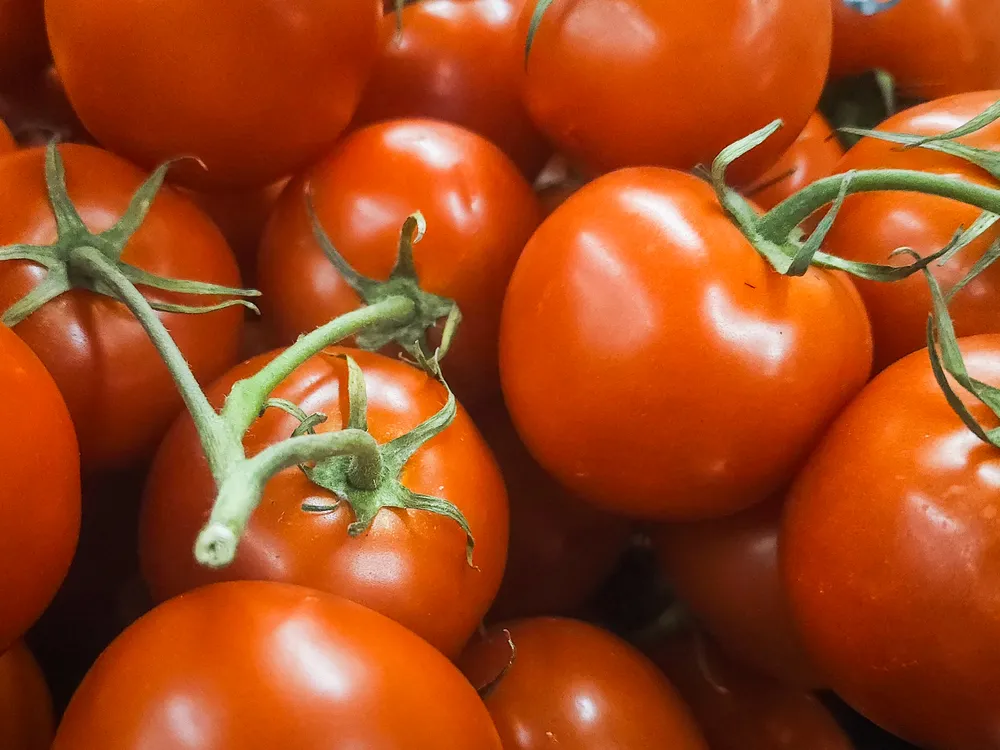
History has dealt a terrible blow to the tomato. One of the earliest known European references to the dish was made in 1544 by the Italian herbalist Pietro Andrea Mattioli, who first classified it as a nightshade and a mandrake—a category of foods known to be aphrodisiacs. Mattioli's classification of the tomato as a mandrake had later consequences. Like similar fruits and vegetables in the nightshade family, such as eggplant, the tomato acquired a reputation for both poisonousness and temptation.
In Mesoamerica, the tomato, which originated in South America, was eaten by the Aztecs before Europeans arrived and named it his tomatl , its name in Nahuatl. It is believed that the tomato was not cultivated in Britain until around the 1590s. In the early 16th century, Spanish conquistadors returning from expeditions to Mexico and other parts of Mesoamerica were believed to have first brought seeds to Southern Europe. Eventually, around 1880, with the invention of pizza in Naples, the tomato became widely popular in Europe.
Horticultural historian Elizabeth Whittle wrote in 2016 that in the 1540s and 1550s, the tomato was grown in Europe "mostly as an exotic curiosity and by only a few people.".
According to Whittle, Mattioli described the tomato as edible in the same way as eggplant. And, Whittle continued, in a later Latin edition of his classification in 1554, "it was first called 'pomi d'oro,' or golden apple, in print, a name which quickly became generally accepted and remains in use in Italy to this day.".

«"There seems to have been confusion as to whether this tomato was edible or not," Whittle wrote. "This may have arisen in part because the leaves are poisonous. Although Mattioli recorded it being eaten in Italy, there was doubt outside of Italy.".
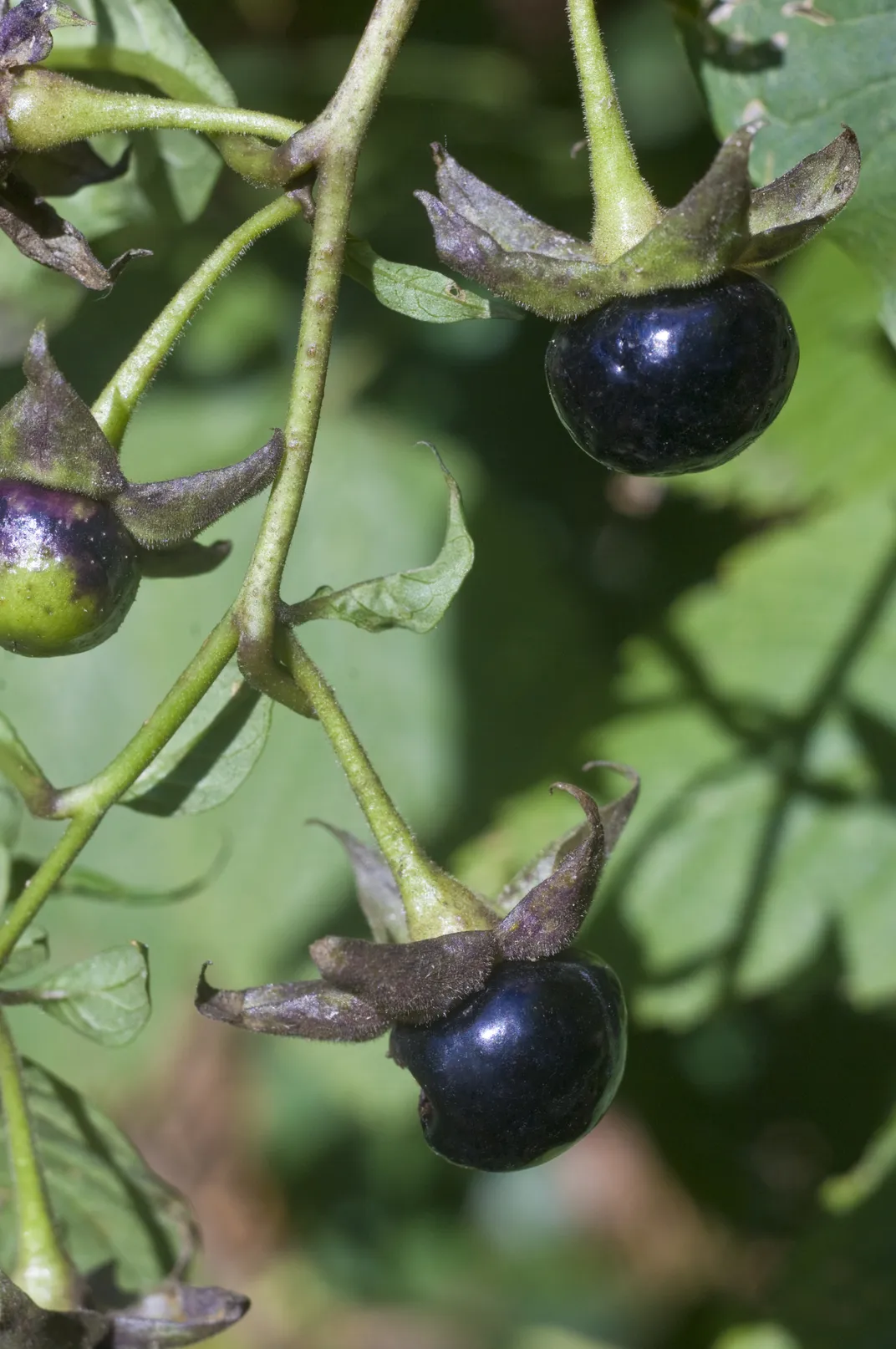
As Andrew F. Smith details in his 1994 book «The Tomato in America: Early History, Culture, and Culinary Arts» , Before this fruit reached North American tables, it was classified as deadly nightshade—a poisonous plant in the nightshade family that contains toxins called tropane alkaloids.
But what really made the tomato, according to Smith's research, was John Gerard's 1597 publication of his «Herbalist» , a history of plants that relied heavily on earlier agricultural work by botanists Rembert Doduens and Charles de l'Ecluse. According to Smith, much of the botanists' information (which was apparently initially inaccurate) was plagiarized by Gerard, a barber-surgeon.
Smith notes Gerard's thoughts: "Gerard believed that 'the whole plant' had a 'disgusting and foul odor'... The fruit was spoiled, which he left for everyone to judge. While the leaves and stem of the tomato plant are poisonous, the fruit is not.".
Gerard's view of the tomato, though based on error, prevailed in Britain and the British North American colonies for over 200 years.
In the 1600s, Dr. Richard Serflet translated the book into English «Maison Rustique . A guide to housekeeping by Charles Etienne and Jean Libault. The translation says of the tomato: "This plant is more pleasing to the eye than to the taste or smell, because the fruit, when eaten, causes disgust and vomiting.".
By the 1700s, many Europeans feared tomatoes. According to one theory, the "golden apple" became the "poison apple" because aristocrats were believed to fall ill and die after eating it, but wealthy Europeans used pewter plates, which were heavily laced with lead. Because tomatoes are highly acidic, when placed on this particular type of plate, the fruit leached the lead from the plate, which was said to lead to lead poisoning. At the time, no one made the connection between the plate and the poison; the tomato was assumed to be the culprit.
But Joe Schwartz, director of the Office of Science and Society at McGill University in Montreal, dismisses the story as impossible. In a video for Montreal Gazette , published in 2023, he said, "The amount that would be leached would be negligible, and you would never get sick from it." He added that another explanation is more realistic: the tomatoes were small and grew as berries on the poisonous belladonna plant, another name for deadly nightshade. "So herbalists simply assumed that because of this resemblance, the tomatoes were poisonous," Schwartz said.
The first known mention of the tomato in the British North American colonies was published in a plant history by herbalist William Salmon. Botanology In 1710, which places the tomato in the Carolinas. The tomato became an acceptable edible fruit in many regions, but word of it spread slowly across North America, along with many myths and questions from farmers. Many knew how to grow them, but not how to cook them.
Around the 1820s, local periodicals and newspapers began to feature numerous tomato recipes, and fears and rumors about the plant's potential poison persisted. By the 1830s, a new problem arose: a green worm, now known as the tomato hawk moth, three to four inches long with a horn protruding from its back, began to invade tomato patches across the state. According to «"Illustrated Annual Register of Rural Affairs and Farmers' Almanac"» (1867) edited by J.J. Thomas, it was believed that mere contact with such a worm could result in death. The description is chilling: "The tomatoes in all our gardens are infested with a very large, thick-bodied, green worm, with oblique white stripes along the sides and a curved, spiny horn at the end of the back." The worm was "an object of great terror, as it was believed at that time to be poisonous and imparted a poisonous quality to fruits if it accidentally crawled upon them.".
But, Thomas continued, the anxiety eventually subsided. "Now that we've gotten to know it, all those fears have disappeared, and we've become completely indifferent to the creature, knowing it's just an ugly-looking worm eating some tomato leaves," he wrote.
As agricultural societies grew, farmers began exploring the uses of the tomato and experimenting with different varieties. Smith wrote that as early as the 1850s, the name "tomato" was so highly valued that it was used to market other plants. By 1897, innovator Joseph A. Campbell discovered that tomatoes kept well when canned and popularized condensed tomato soup. .

Today, the tomato is a staple in cooking and consumed worldwide in countless varieties, from grape to cherry. Smith's book notes that more than one and a half billion tons of tomatoes are produced commercially worldwide each year. A 2022 study, based on statistics compiled by the Food and Agriculture Organization of the United Nations, notes that "approximately 180 million tons of tomatoes are grown annually worldwide, a 165 percent increase over the past two decades." But some of the plant's nocturnal past seems to have followed it into pop culture, making it a worthy villain. In the 1978 comedy-horror film «Attack of the Killer Tomatoes» Giant red spots terrorize the country.