








We live our lives rarely asking questions about the world around us or showing curiosity about what we already know. Many little-known facts about ordinary things remain a mystery to most of us. Some of the everyday objects we see around us hide intriguing stories that are truly fascinating to explore.
This list will spark your curiosity and introduce you to little-known facts about many everyday things in the world.
1. Diamond, known as the hardest material on the planet, can shatter if struck with a regular hammer. Its "hardness," or resistance to scratching, is high, but its "toughness," a different property, is low.

Diamond, one of the world's most precious stones and an allotrope of carbon, is also the hardest natural material known to man. However, "hardest" doesn't mean most durable. "Toughness" refers to durability or the ability to resist breaking, while "hardness" refers to resistance to scratching. This means a diamond can be easily broken with a hammer.
The hardness of diamonds is 2.0 MPa m¹/², which is better than other gemstones, but not as good as other materials. However, two types of diamond—Ballas and Carbonado—are exceptionally hard because they are more crystalline than single-crystal diamonds and are used for various industrial purposes. All other diamonds, despite their high scratch resistance, are susceptible to fracture. ( source )
2. The distinctive yellow color of school buses was established as a national standard in 1939. Research has shown that people notice this color 1.24 times faster than red.
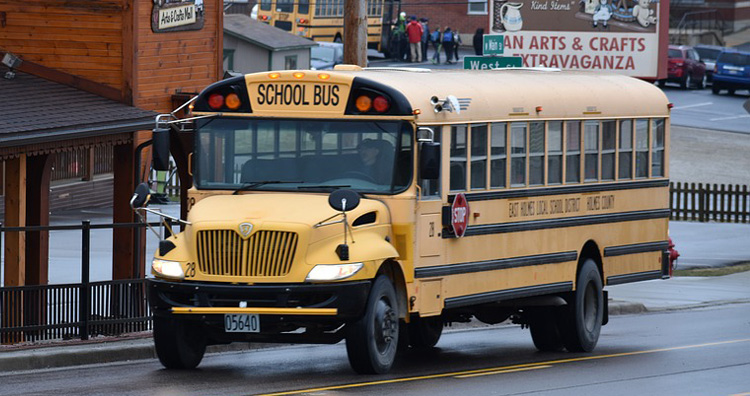
After school buses in North America began being painted a color dubbed "School Bus Yellow" in 1939, several other countries followed suit. In Canada and the United States, the color is officially called "National Glossy School Bus Yellow." This color, made from chrome yellow paint containing lead, is known to be perceived by our peripheral vision 1.24 times faster than red. Before the advent of school buses, this color was used on post office buses in countries such as Sweden, Germany, and Switzerland.
But this fact wasn't the reason for the color's choice. Dr. Frank W. Cyr, a professor at Columbia University in New York City who later became known as the "father of the yellow school bus," organized a conference to establish national standards for school bus construction, at which the color was also determined. The black letters on this color were the easiest to read in the relatively dark early morning hours. This color was established by the National Institute of Standards and Technology as Federal Standard No. 595a, color 13432. ( source )
3. Until 1979, hurricanes were only named after women, but this changed after feminist groups spoke out against implied sexist comments that only women were "stormy" and "unpredictable.".

For over a century and a half, hurricanes have been named to settle personal feuds, demonstrating sexism and racism. Although hurricanes were historically named after both men and women, in the early 1950s, the World Meteorological Bureau decided to use only female names for hurricanes. The reasons for this decision are not disclosed, and some believe it was because hurricanes originate in the oceans, and oceans have traditionally been considered feminine in maritime tradition.
When forecasters began using sexist language about hurricanes named after women, calling them "capricious," "teasing," or "flirting" with the coast, feminist groups were offended and fought back. Prominent feminists like Roxie Bolton and other women convinced the US government to reintroduce male names for hurricanes. The last hurricane in the US was named Florence. One of the most devastating hurricanes was named Katrina. ( source )
4. Converse's popular sneakers are classified as "house slippers" because this allows the company to save over 33% in import duties. That's why their soles have a very thin layer of felt.

The 110-year-old Converse company, a subsidiary of Nike since July 2003, sells shoes in more than 160 countries. Nike acquired the company for $309 million. Many have wondered why the soles of the famous Converse sneakers wear out. The reason isn't functional, but economical: it allows the company to classify the sneakers as "house slippers" and save $33% in import duties. This is a classic example of "tariff engineering.".
Footwear classification for customs tariff purposes is based on what constitutes 50% or more of the shoe's sole. Therefore, despite the fact that the soles of these shoes, like most other models, contain rubber, Converse showed foresight by adding felt and saving money. Had they not done so, the shoes would have cost at least 33% more in stores. Previously, when Converse was founded in 1908, it manufactured rubber shoes and only began producing athletic shoes in 1915. (1, 2)
5. Marlboro cigarettes were originally designed for women. The famous red stripe on the filter was intended to hide lipstick stains. But the cigarettes failed to appeal to women, and after changing the filter color to brown, they were marketed to men.

Known as one of the world's best-selling cigarette brands, modern Marlboro cigarettes, famous for their brown filters, were launched 15 years after London-based cigarette maker Philip Morris trademarked the name "Marlboro" ». When they first appeared in 1923, they were sold as a luxury cigarette in hotels and resorts. In the 1930s, they were advertised to women under the slogan "Soft as May." A red stripe was painted on the filter, advertised as "the one that hides lipstick stains.".
Shortly before the outbreak of World War II, this brand was withdrawn from sale due to poor performance. Later, when a group of doctors published a study showing that unfiltered cigarettes were more harmful than filtered ones, Philip Morris changed the cigarette design, removing the red stripe, and began marketing them to men. Frank Gianinnoto designed the red and white box, which is still in production, with the Latin slogan "« Veni, Vidi, Vici» , written on it - the famous dialogue from Julius Caesar, meaning "I came, I saw, I conquered.".
Marlboro sales soared after a major advertising campaign featuring a variety of characters, including sailors, construction workers, and weightlifters. The cowboy proved the most popular and was chosen for future campaigns. The brand soon became the fourth-most popular cigarette brand in the United States and eventually entered the global market, achieving success there. (source)