








Modern Iran stands atop the ruins of some of history's earliest and most advanced civilizations, even if most remain largely forgotten. These kingdoms were responsible for many innovations we take for granted today—from postal service to windmills and the humble ice cream.
10. Cooling
Yakhchal was an ancient Persian refrigeration technology developed around 400 BC. It is one of the earliest known refrigeration methods and is largely similar to modern refrigerators, at least in its use. Yakhchals were constructed with a large mudbrick dome above the ground and were designed to store ice in the scorching desert climate of ancient Persia, often reaching heights of up to 60 feet.
Below ground, spacious underground chambers were used to store ice, food, and anything else that needed to be refrigerated. The primary material used was a special mortar called serouge, made from sand, clay, egg whites, lime, goat's wool, and ash, which provided effective insulation.
The cooling mechanism of these ancient refrigerators was based on evaporation, whereby air was cooled by evaporating water. In winter, ice was brought from nearby mountains and stored in these ice pits, ensuring a constant supply throughout the year.
9. Windmills

Nashtifan, a village in northeastern Iran, is home to well-preserved examples of windmills that first appeared in ancient Persia, also known as asbads. These towering structures, approximately 65 feet tall and approximately 1,000 years old, were among the earliest windmills in history. They were made of clay, straw, and wood and were primarily used to pump water and grind grain into flour.
Interestingly, this design differs greatly from the familiar European horizontal-axis windmills, as they are powered by drag rather than lift, and their wooden blades are located on a vertical axis. These ancient structures are currently under the care of a certain Ali Mohammed Etebari, a local volunteer from a nearby village.
8. Chess

It's difficult to say whether chess originated in Iran or India, but ancient Persia undoubtedly played a significant role in its popularity today. Some historical accounts mention the game as a classic competition between Indians and Persians, primarily to demonstrate their intelligence.
The Persian influence on the game can be seen in its terminology, and vice versa. Over the years, many words from chess have entered the Persian lexicon, such as "ruh" (rook) and "shah mat" (checkmate).
Some of the earliest surviving chess pieces were discovered in northeastern Iran, something that cannot be said of any other country. In famous excavations near the city of Afrasiab, archaeologists found ivory chess pieces reminiscent of Persian ones. Rukhs .
7. Battery
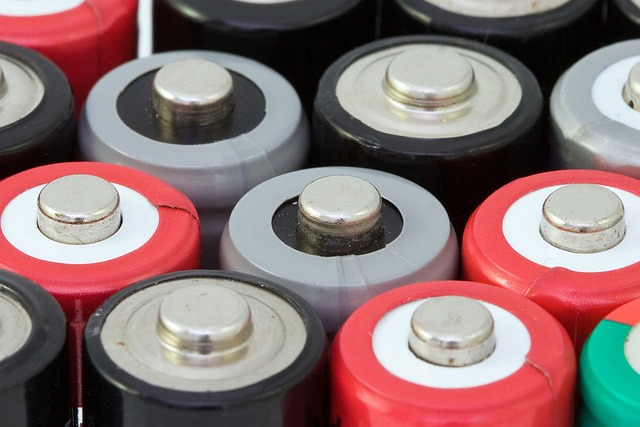
The ancient Baghdad or Parthian batteries were discovered near Baghdad during the construction of a new railway in 1936. They date back to the Parthian Empire some 2,000 years ago—a powerful empire that existed between 247 BC and 224 AD in what is now Iran.
These old batteries were made from clay jars and asphalt plugs, with an iron rod surrounded by a copper cylinder. When filled with an electrolytic solution, such as vinegar, the jars could produce a voltage of about 1.1 volts, although their exact purpose remains unknown.
While not all scientists agree on their specific function, one theory is that they were used for electroplating, an industrial process in which one layer of metal is deposited onto the surface of another metal, such as silver or gold. .
6. Miniatures

The art of Persian miniature painting emerged and flourished during the Mongol and Timurid periods from the 13th to 16th centuries, reaching its apogee around the 15th century. Furthermore, the Mongol rulers who came to Iran brought with them Chinese influences and artisans, further strengthening the unique Persian artistic tradition.
Miniatures were primarily used as illustrations, as they could make stories and plots more engaging. This period also saw the fusion of art and poetry, as miniatures were an ideal medium for narrating the finest poetic works of ancient Persia. Notable works in this field include miniatures based on works such as the epic poems of Ferdowsi and Nezami, the Shahnameh and Khamsa, respectively. The development of Persian miniature painting also led to the emergence of distinct schools with their own styles and regional influences in Iran, such as those of Shiraz, Tabriz, and Herat.
5. Ice cream

As far as we know, ice cream is a popular dessert everywhere. We still don't know exactly who invented it first—since the journey takes us through many empires and cultures—but we do know that the first form of modern ice cream appeared in Persia sometime around 500 BC.
The Persians developed something called Bastani, which combined grape juice, fruit juice, and other sweet flavors to create something reminiscent of ice cream as we know it. This early version was similar to sorbet in appearance and taste and was once so expensive that it was considered a luxury. The invention of the aforementioned yakhchals ensured that the dessert would remain cold for an extended period of time, allowing for experimentation and the creation of more diverse types of ancient Iranian ice cream.
4. Rope

Systemqanat was an ancient method of collecting water that originated in Persia about 2,500 or 3,000 years ago. The technique was so successful that old ropes could still be found in regions ruled by the ancient Iranians, primarily in Iran and Afghanistan. It is estimated that around 50,000 are scattered in arid regions of Iran alone. ropes . Unfortunately, many of them have fallen into disrepair or dried up due to factors such as siltation, urban migration, and a lack of expert knowledge to manage them.
Ropes They are primarily used for irrigation. The most common design involves a network of underground canals that draw water from mountain aquifers, which is then transported down inclined tunnels to fields and other areas requiring irrigation. This technology is known by different names in different regions, including falaj , khettara , foggara и karez .
3. Academic medicine

The concept of hospitals that are also medical schools is widespread today, though most people forget its true origins. The ancient city of Gundeshapur in Persia played a crucial role in the development of academic medicine, as it invited medical scholars from all over the world—from Greeks to Indians and Syrians—to come and practice their craft in the city. This collection of ancient knowledge from various civilizations led to the birth of teaching hospitals, medical schools, and academic medicine.
During the Sasanian Empire, between 226 and 652 CE, Gondishapur became known as the "City of Hippocrates." The city's academy offered instruction in various disciplines beyond medicine, including philosophy, theology, and the natural sciences. Scholars from various civilizations studied here, translating and practicing texts from ancient Indian, Syriac, and Greco-Roman sources. It was here that medical education transitioned to a system in which medical students worked and learned under the supervision of other, more experienced specialists.
2. Mail

The British Empire is often considered the first civilization to have a functioning postal service, though in reality it's nowhere near that. Between 550 and 330 CE, the Achaemenid Persian Empire established a vast postal network that spanned their vast empire, stretching from Greece in the west to India in the east. The central link of this system was the famous Royal Road—a 1,500-mile highway connecting Sardis in Asia Minor with the Persian capital of Susa.
This road allowed the Persians to create one of the world's first known postal systems, with efficient mail delivery by skilled horsemen. The King's Road itself was a marvel of engineering, being the first and longest road of its kind in history, even longer than many modern interstate highways.
Messages were transmitted from one couriers to another, regardless of weather conditions. This network played a crucial role in gathering information throughout the empire and was primarily used for administrative purposes, such as issuing decrees and maintaining administrative control over the vast Persian territories.
1. Human rights
Written in 539 BC, the Cyrus Cylinder was a peace treatise named after one of the great Persian emperors, Cyrus the Great. It contained what many historians consider to be the first declaration of human rights by an organized state.
A cylinder discovered in Babylon, in present-day Iraq, in 1879 details the conquest of Babylon by King Cyrus and the subsequent advances in civilization and science in his empire. It proclaimed freedom for slaves and immunity from persecution for the entire Jewish population, as well as a charter for equal treatment for all races living in cities. These principles inspired subsequent declarations of individual rights throughout history, including Magna Carta , the US Constitution and the French Declaration of the Rights of Man and of the Citizen.