








When reading history books, we often come across the names of places or cities that don't currently appear on maps. We usually dismiss these as mythical places and figments of the author's imagination. But some of these places are far from mythical. They are simply ancient cities, lost to time and waiting to be discovered. Here we've collected ten such lost cities that have been rediscovered.
1. Heracleon
Heracleion, an ancient Egyptian city swallowed by the Mediterranean Sea 1,200 years ago, was discovered in 2000 and has been the site of underwater excavations ever since.
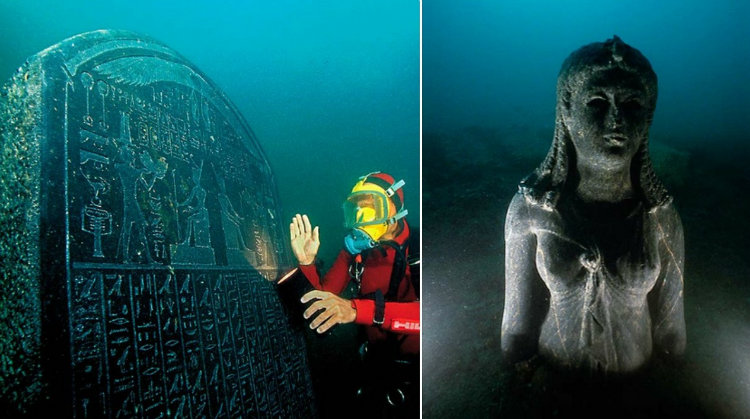
For centuries, the city of Heracleion was considered a legend. Herodotus mentioned it as a city of extraordinary wealth. According to legend, even Helen of Troy and her lover Paris visited the city. But after the city disappeared beneath the Mediterranean Sea about 1,200 years ago, the stories about Heracleion were proven true. It was discovered by French underwater archaeologist Dr. Franck Goddio while surveying the area. He was searching for French warships that sank there in the 18th century, but instead discovered a lost city.
Built in the 8th century BC, Heracleion now lies underwater at a depth of 45 meters in Aboukir Bay. Researchers have discovered the remains of more than 64 ships buried in a thick layer of clay and sand on the seabed. Gigantic statues, some 5 meters tall, were brought to the surface. The seabed is still littered with hundreds of smaller statues of minor gods. Gold coins and bronze and stone weights were also found.
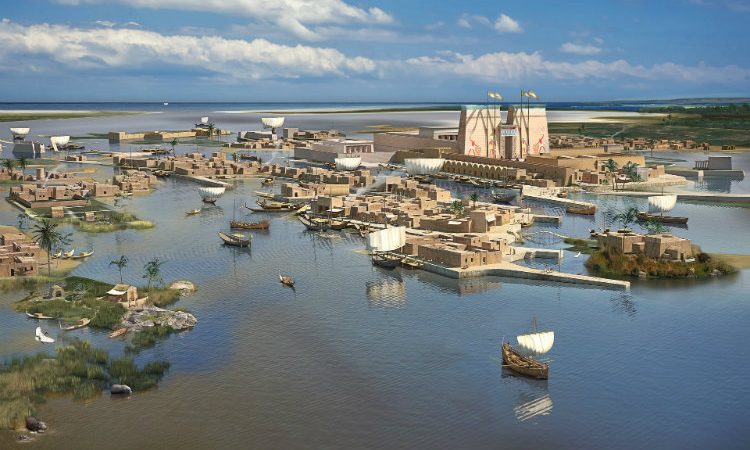
Researchers, together with German television documentary filmmakers, created a 3D reconstruction of the city. It depicts a massive temple to the god Amun-Gereb in the very center of the city. An extensive network of canals and streams extends from the temple, making the city the most important port in the Mediterranean at the time. (1,2)
2. Shi Cheng
Founded around 1,300 years ago, the city of Shicheng was deliberately flooded to create an artificial lake, after which it lay forgotten for 50 years.

The ancient city of Shicheng was built around 1,300 years ago. It was once the political and economic center of China's eastern Zhejiang province. But fifty years ago, it vanished without a trace. This is because the government decided a new hydroelectric dam was needed. So, despite its beauty, the city was deliberately flooded in 1959.
The city is now called "Lion City" because it is located between the Five Lion Mountains. It was abandoned in Qiandao Lake until it was rediscovered around 2009. Upon discovery, the entire city was found intact, including wooden beams and staircases. It has since been revived as an underwater adventure park for tourists. (1,2,3)
3. Ciudad Perdida
The ancient city of Ciudad Perdida, founded in 800 AD, was discovered in 1972 when a group of local treasure hunters found a series of stone steps leading up a mountainside and followed them to the abandoned city.
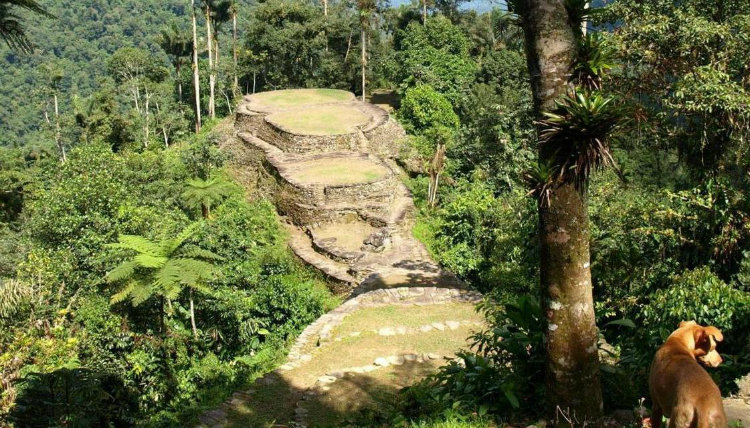
Ciudad Perdida is an ancient city located in the Sierra Nevada de Santa Marta and the Teyuna Archaeological Park in the Sierra Nevada region of northern Colombia. It was built around 800 CE, approximately 650 years before Peru's Machu Picchu. It was first discovered in the early 1970s, when thieves and treasure hunters plundered the site. Soon, gold figurines and ceramic urns from the city began appearing on local black markets, sparking the interest of archaeologists.
Archaeologists led by the director of the Colombian Institute of Anthropology arrived at the excavation site in 1976. They completed the reconstruction between 1976 and 1982. According to local tribes, they knew of the city's existence but kept it a secret. They even visited the site regularly before it became widely known. Locals believed Ciudad Perdida to be the heart of a network of villages inhabited by their ancestors.
Ciudad Perdida can be reached by climbing 1,236 stone steps. The city consists of a series of 169 terraces carved into the mountainside, a network of paved roads, and several small circular plazas. Entry is only possible via stone steps through dense jungle. The site is now open to tourists on foot. (1,2)
4. Timgad
The ancient Roman city of Timgad lay buried for over 1,000 years under sand, partially preserved at a depth of up to one meter. It vanished from history until its excavation in 1881.

Timgad, located on the northern slopes of the Aures Mountains, was founded by Emperor Trajan in 100 CE as a military colony. For the first few hundred years, the city lived peacefully. Beginning in the 3rd century, it became a center of Christian life, and in the 4th century, a center of Donatism. But beginning in the 5th century, the city experienced numerous religious conflicts, civil wars, and barbarian invasions. By the 6th century, Timgad was burned to the ground by local Arab tribes. It eventually fell into oblivion and lay partially preserved for over 1,000 years under a meter of sand.
Tigmad disappeared from history until its excavation in 1881. With its square enclosure, orthogonal layout, and two perpendicular roads running through the city, it is a fine example of Roman urban architecture. The city boasted baths, a magnificent theater, half a dozen temple complexes, a library, markets, fountains, and majestic arches. Tigmad is now a UNESCO World Heritage Site. (1,2,3,4)
5. Derinkuyu
In 1963, a man in Turkey knocked down a wall in his home and discovered a passage to the lost ancient underground city of Derinkuyu.

Derinkuyu is an ancient multi-level underground city in the Derinkuyu district of Nevşehir Province, Turkey. It is believed to have been built during the Byzantine era, between 780 and 1180 AD. However, who built it and why remains a mystery. The city was discovered in 1963 when a Turkish man demolished the wall of his home. In doing so, he accidentally discovered a secret room leading to an underground tunnel, which in turn led to the city of Derinkuyu.

Derinkuyu is the largest excavated underground city in Turkey. It extends to a depth of approximately 60 meters (200 feet). It could have housed up to 20,000 people along with their livestock and food supplies. Inside is a network of kitchens, stables, churches, tombs, wells, cellars, storage rooms, community rooms, and schools. When the city was functional, it had approximately 600 entrances. To protect against invaders, heavy stone doors were installed that could completely seal off Derinkuyu from the inside. Currently, only about half of Derinkuyu is accessible. The city opened to visitors in 1969 and is now a popular tourist attraction. (1,2,3)
6. The city of mosques of Bagerhat
The city of mosques, Bagerhat, boasts more than 50 Islamic monuments, and the Mosque of Sixty Columns was abandoned after the death of its founder in 1459. It was rediscovered after the removal of the vegetation that had hidden the city from view for centuries.

The City of Mosques, Bagerhat, is an ancient city in Bangladesh, located in the suburbs of Bagerhat, at the confluence of the Ganges and Brahmaputra rivers. It was founded by the Turkish general Ulugh Khan Jahan in the 15th century. He created a planned city with roads, bridges, reservoirs, and cisterns. He also built numerous mosques, tombs, palaces, and his own mausoleum. In total, this once-lost city contains over 50 Islamic monuments.
But after the death of the city's founder in 1459, it gradually became overgrown with jungle. Lacking fortifications, the city disappeared into the impenetrable mangrove swamps of the Sundarbans. Later, in 1895, an extensive survey of the area was conducted, and the city was rediscovered. Restoration work began in 1903, and in 1985 it was designated a UNESCO World Heritage Site. This historic city is included in Forbes magazine's list of the world's fifteen lost cities. One of the city's most famous architectural structures is the Sixty Column Mosque, built with 60 columns and 77 domes. (1,2,3)
7. Machu Picchu
Smallpox-carrying conquistadors wiped out the inhabitants of this royal mountaintop fortress, and the Lost City of the Incas remained "lost" until its discovery in 1911.

The stone city of Machu Picchu is a 15th-century Incan citadel perched on a mountain ridge at an altitude of 2,430 meters above sea level. This famous symbol of Incan civilization was built as an estate for the Incan emperor Pachacuti around 1450. Just 100 years after its founding, the site was abandoned due to the Spanish conquest. Most of its inhabitants died before the Spanish military conquest began. The cause was smallpox, introduced by foreigners. Over the centuries, the surrounding jungle became overgrown. Locals knew of its existence but kept it secret from the outside world.
Centuries later, in 1911, a Peruvian guide led Yale University professor Hiram Bingham to the lost city of Machu Picchu, and the city became known to the outside world. The Incas had no written language, so they left no records of why they built the site or how they used it before it was abandoned in the early 16th century. But the buildings, walls, terraces, and ramps provide compelling evidence of their engineering prowess. More than 700 terraces conserved the soil and facilitated agriculture. They also served as part of a vast water distribution system that conserved water and limited erosion on the steep slopes. Today, Machu Picchu is a UNESCO World Heritage Site. (1,2)
8. Pompeii
When Mount Vesuvius erupted in 79 CE, the nearby Roman city of Pompeii was buried under several meters of ash and rubble. The ruined city remained frozen in time until it was discovered by a surveying engineer in 1748.
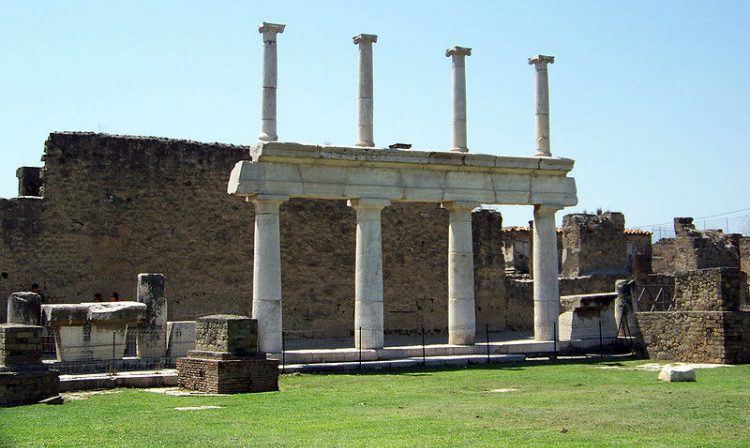
Pompeii, an ancient Roman city near modern-day Naples, was devastated and buried under four to six meters of volcanic ash and pumice during the eruption of Mount Vesuvius in 79 CE. Evidence of the destruction was initially recorded in a letter by Pliny the Younger, who observed the eruption from afar. In it, he described the death of his uncle, Pliny the Elder, an admiral in the Roman navy who had attempted to rescue the townspeople. He wrote, "Darkness fell, not the darkness of a moonless or cloudy night, but as if a lamp had been extinguished in a dark room.".
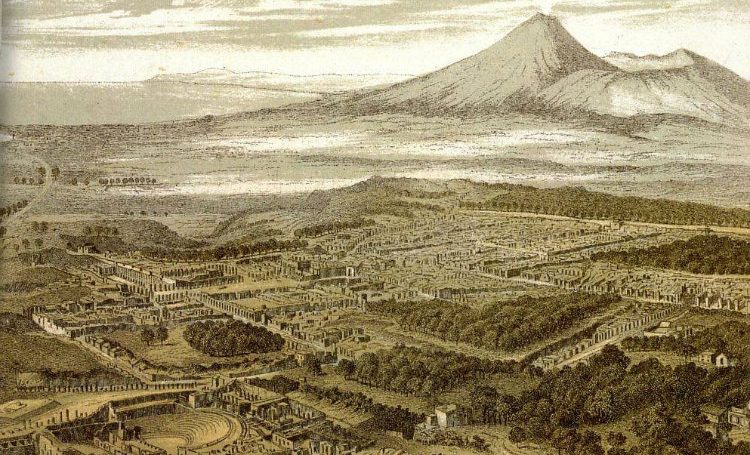
The excavation site was lost for approximately 1,500 years until it was rediscovered in 1599. One hundred and fifty years later, in 1748, it was rediscovered by the Spanish engineer Roque Joaquín de Alcubierre. Volcanic ash protected Pompeii for a millennium. The objects buried beneath the city were preserved thanks to the lack of air and moisture. During excavations, voids in the ash layers, which once held human bodies, were filled with gypsum. This allowed archaeologists to determine the precise position of the individual at the moment of death. Even after hundreds of years of work, about a third of the city remains buried. (1,2)
9. Holtun
Hidden for centuries in the dense rainforest of Guatemala, the lost Mayan city of Holtun was discovered after locals reported the previously unknown site had been looted.

Holtun, originally called La Macina, is a Maya city in Guatemala. The city was bustling with life and occupied from the Middle Preclassic to the Late Classic periods. It is unclear how the city gradually fell into decline. For a long time, locals knew something was buried in the Guatemalan rainforest, but they had no idea what it was. Centuries later, looters discovered the entrance to the lost city. Locals reported the looting. In response, Guatemalan authorities officially designated the area a protected site in 1994.
Since then, archaeologists have regularly visited the area to unravel the mysteries of the lost city of Holtun. In 2011, 3D mapping was conducted, erasing centuries-old jungle cover, revealing the approximate outlines of nearly a hundred buildings. In 2010, researchers determined the location and height of a seven-story pyramid using GPS and electronic distance measurement technologies. They also discovered an astronomical observatory, a ritual ball court, several stone dwellings, and numerous other structures.

In Holtun, archaeologists discovered giant masks dubbed the "Stone Head." They measure approximately three-quarters of a mile (one kilometer) long and a third of a mile (0.5 kilometers) wide. From approximately 600 BCE to 900 CE, it was a bustling, medium-sized Maya center, home to approximately 2,000 permanent residents. But today, its structures are buried beneath several feet of earth and vegetation. Even the three-pointed pyramid of the "Stone Head" now looks like a mountain in the middle of the forest. (1,2)
10. Helike
The ancient Greek city of Helike was flooded by a tsunami in 373 BC and rediscovered in 2001, buried in an ancient lagoon near the village of Rizomylos. After numerous unsuccessful expeditions, Helike was rediscovered in 2001.

Helike, an ancient Greek city, was founded in the Mycenaean period by Ion, the leader of the Ionian nobility. It soon became the capital of the Twelve Cities of ancient Achaea. But one winter in 373/372 BC, a powerful earthquake struck the southwestern shore of the Gulf of Corinth. It was accompanied by a tsunami that destroyed and flooded the city of Helike.
One hundred and fifty years after the disaster, the philosopher Eratosthenes visited the site. He reported finding a submerged but still standing bronze statue of Poseidon there. Around 174 CE, the traveler Pausanias visited the coastal site, still called Helike, and reported that the walls of the ancient city were still visible underwater. For many centuries afterward, its submerged ruins remained visible. Later, the site silted up, and since then, Helike has survived only in ancient texts and legends.
Over the course of hundreds of years, numerous expeditions were conducted in search of Helike, but none succeeded in finding anything more than two small coins. Finally, in 2001, the city of Helike was rediscovered, buried in an ancient lagoon near the village of Rizomylos. In 2012, cobblestones, clay tiles, and ceramics were discovered in a layer destroyed by an earthquake, further confirming that the site was indeed Helike. (1,2,3)