








WhatsAppRedditShareEmailTweetPin0 Shares
For some reason, climate change continues to be debated in some circles. Perhaps it's because we live in a world where people are willing to argue about literally everything, regardless of what it is or why. For the purposes of our question today, we'll take it for granted that climate change is a real phenomenon, and it will have real consequences for you, me, and everyone else in the world.
Accepting climate change as a fact is one thing, but understanding what it means is quite another. People are right when they say that Earth has experienced periods of climate change in the past. We've had at least five ice ages, there have been warmer periods, and life still exists on Earth. Does this mean we can survive severe climate change without much difficulty? How severe is climate change? And, most importantly, is it possible that climate change could wipe out humanity?
These are pretty serious questions, and since these are all just guesses, we can't be 100% sure. But we can rely on the opinions of some experts!
Climate vs. Weather
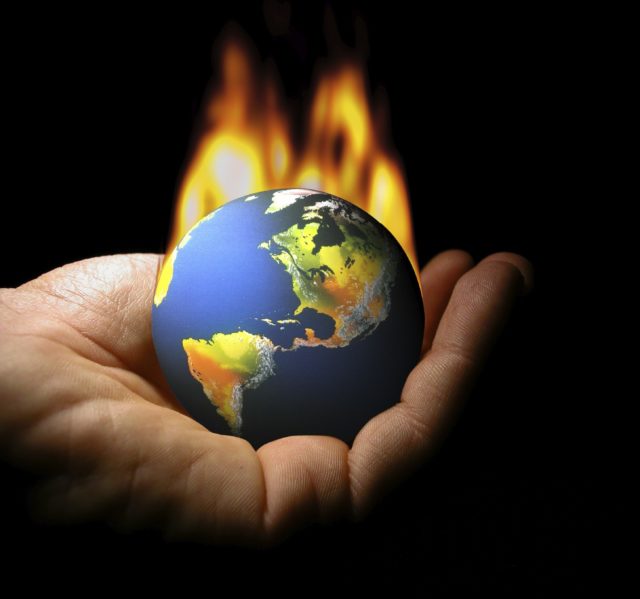
It's important to remember one point that climate change deniers, intentionally or not, often overlook. Just because it's cold today doesn't mean climate change doesn't exist. Climate is an average of conditions over a longer period.
If the temperature is below freezing on November 1st and that's abnormal, you can arrogantly go online and say, "Pfft, so much for climate change," but that misses the point: subzero temperatures on November 1st are, in fact, abnormal. It also ignores the fact that June 1st may have been 10 degrees hotter than any other time in history. These are trends, not isolated incidents.
Too many people think of climate change as just money in their wallets. "Look, I have $100, great!" But in reality, their bank account is overdrawn, and they owe $1,000. Those $100 are weather problems. The debt is climate change. That's the whole picture!
Global temperature trends

If you're still 100% unsure about climate change, we can look at global temperature trends. Have there been warmer days in the past? Absolutely. But remember, we're looking at trends.
The global temperature record began in 1850, and we've been recording it ever since. As of early 2024, 2023 was the warmest year on record, 1.18°C above the 20th-century average. That's not a huge number, and that's why we could have an unusually severe snowstorm in late April 2023, when spring should have arrived, and still record the warmest year on record. Because later that year, more than 2,700 people in the United States died with heat-related complications listed on their death certificates. This is a record number of heat-related deaths, and it shows that people need to focus on more than just one random cold day to combat rising temperatures when too many random hot days throughout the year push the thermometer in the opposite direction.
All ten of the warmest years on record have occurred in the last decade. This means that every year since 2014 has been one of the warmest on record. The situation is only getting worse. As of November 2024, everything was on track to become a new warmest year on record.
By 2030, temperatures are expected to rise by 1.9–2.7°C. This increase is linked to countries like China, which has seen rapid growth in fossil fuel emissions in recent years. While fossil fuel use has stabilized, it has also grown faster than expected.
Similarly, there is concern that the US government may backtrack on any promises it has made to reduce emissions and combat climate change, which could lead to further increases across the board.
How hot is the world?

In 2016, the Paris Agreement was signed and ratified by 55 countries, agreeing to reduce greenhouse gas emissions to prevent global temperature rise from reaching 1.5°C above pre-industrial levels by 2030. However, projections already indicate that the 1.5°C mark will be reached by 2024. This trend is expected to continue for at least one of the next five years. In 2015, the probability of this happening was considered to be 0.1 TP3T. It is now estimated to be around 80.1 TP3T.
Since 1980, the number of places worldwide experiencing extreme heat waves has increased 50-fold. We are moving in the wrong direction.
Why 1.5°C?
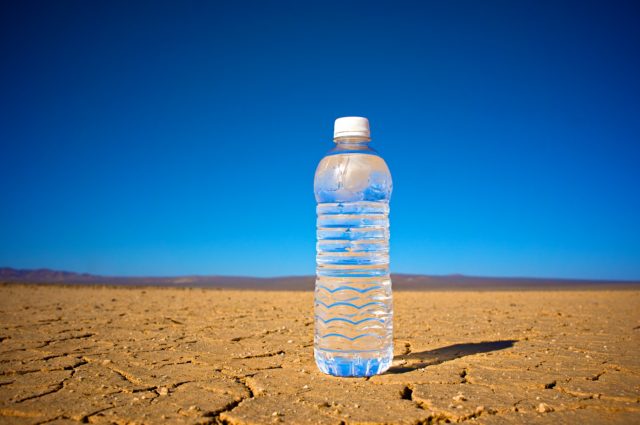
The 1.5 degrees Celsius mark didn't appear out of nowhere. Serious research has been conducted on the potential impacts of long-term global warming. Therefore, if temperatures are 1.5 degrees above pre-industrial levels in 2024, it doesn't necessarily mean the end of the world. The problem is that if such temperatures persist for several decades and we fail to reduce them, and 1.5 degrees Celsius above pre-industrial levels become the norm, various ecosystems and regions on Earth will be unable to maintain their current conditions. Essentially, we're talking about the creation of deserts and the destruction of agricultural lands, forests, and the like.
Some people who seem quite knowledgeable on the subject claim that climate change is nothing to worry about, as it's a natural part of Earth's history. So why not take a look at some of their claims and see why they might not be as accurate as climate change deniers claim?
Arguments for climate change denial
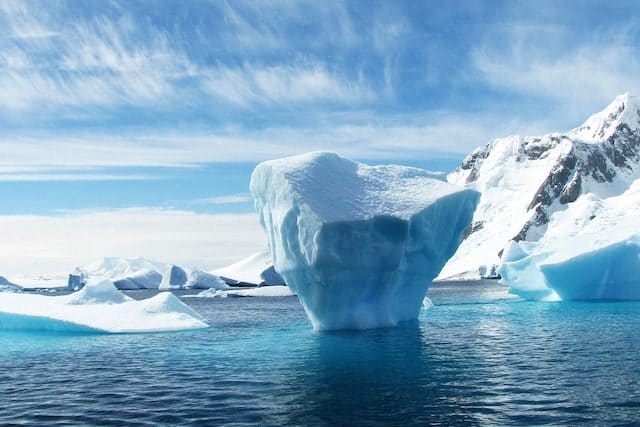
If you ever engage in an online discussion with a climate change skeptic, they'll likely mention the idea that Earth's climate has changed many times throughout history. We've already mentioned ice ages and warm periods, and yes, Earth's climate has changed many, many times over the 4 billion years of this planet's existence. But that's not the whole story.
To argue that there is no reason to worry because greenhouse gas emissions have been rising sharply throughout history is to miss what has happened next, not to mention that we are accelerating this process faster than ever occurred naturally.
These spikes were followed by massive ecosystem changes, species extinctions, and ice ages. The consequences are long-term but quite persistent. People focused only on the next ten years will not see or perhaps even care about these long-term consequences, but history shows that they are real.
Some also try to claim that there are disagreements in science, that not all experts agree on climate change. And of course, not all experts agree, but some claim the Earth is flat, which doesn't mean there's genuine disagreement among scientists. According to NASA, 97% scientists still working in this field agree that climate change is caused by human activity.
The media has published articles about how climate change could bring benefits, such as making days more pleasant and mild in places like Canada. And that's true. Canadians won't have to endure as many harsh winters, but that somewhat misses the bigger picture.
The effects of climate change include things like the aforementioned 2,700 deaths. It's also linked to increased tornado activity, floods, droughts, crop failures, species extinction, ecosystem collapse, and so on. It's even directly linked to modern slavery, where people affected by climate disasters are forced into poverty and slavery to survive. So, sure, you can enjoy a "green" Christmas, but come July, an entire city on the other side of the world could be wiped out by temperatures rising above 50°C.
Attempts to find a silver lining in climate change are futile at best. It is estimated that by 2050, the total losses to the global economy could reach approximately $23 trillion.
How hot does a planet have to get to become uninhabitable?
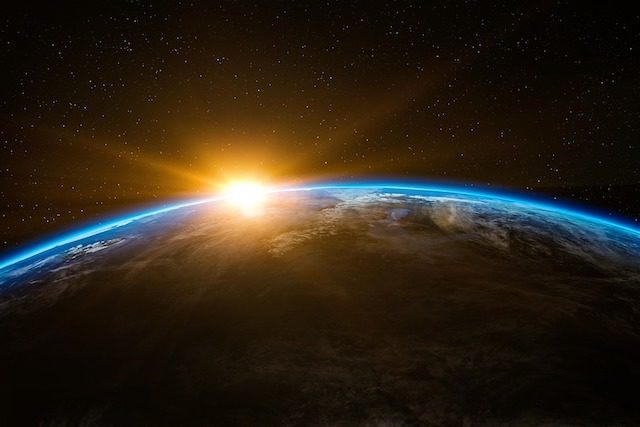
So, let's say we all agree that climate change is happening, humans are causing it, and that it's not good news. The last part is open to interpretation. We know we're driving species extinct, severe weather events are becoming more frequent, and people are dying as a result. But at what point does this become unacceptable? How much warmer does the Earth have to get before we all start hurtling toward inevitable doom?
We don't need to look for isolated heat-related deaths; they happen regularly around the world. In 2024, more than 1,000 people died when temperatures reached 52°C during the Hajj pilgrimage in Saudi Arabia. In Europe, around 47,000 deaths were linked to extreme heat. This is already happening.
Studies have shown that a person can tolerate a temperature of 31°C (88°F) with 100°T humidity before they become unable to regulate their body temperature. This applies to young, healthy people. If you are elderly or have other medical conditions, this figure will be lower. This means you will need help to lower your temperature if it reaches this level, as you won't be able to do it yourself, and you will face consequences, including heatstroke and possibly death.
When analyzing these temperature readings, it's important to remember that humidity is the primary cause of these problems. If you live in a dry climate like Arizona, you can tolerate higher temperatures because you'll sweat and cool down. If the hottest day in Arizona were 100%, you wouldn't lose anything due to sweat. You'd have to endure the heat in all its glory, and that could be deadly.
This temperature/humidity assessment is also highly subjective. If identical twins are in the same place at the same temperature, but one of them has been working all day, they will be more likely to suffer from heatstroke at lower temperatures or humidity. As global temperatures rise, larger areas will be subject to this heat stress for longer periods of time, making survival impossible for some individuals.
If temperatures rise 2 degrees Celsius above pre-industrial levels, 2.2 billion people in the Indus River Valley of India and Pakistan, another billion in China, and 800 million in sub-Saharan Africa will be trapped in this intolerable zone for extended periods each year. That's a total of four billion people, or half the world's population.
If temperatures rise by 3°C, similar conditions can be expected in the United States along the entire East Coast and even as far inland as Chicago. South America and Australia will face the same. We expect temperatures to rise by 3°C by 2100 if we fail to halt climate change. If temperatures rise by even 2°C by then, it is predicted that up to a billion people will die as a result.
If temperatures stabilize at 40 to 50°C, many species, including humans, will be unable to survive. Fortunately, this is an extremely unlikely outcome globally, but it could occur in some isolated areas, forcing populations to flee their homes.
It's important to remember that it's not just the heat that concerns us. Melting ice is causing sea levels to rise, flooding coastal cities. Increased hurricanes, floods, tornadoes, and droughts are also contributing factors.
Can humanity survive global warming?

The 1 billion deaths figure we mentioned earlier is an exception. It's an extreme case. Some projections go as low as 40 million. That's as if all of Canada, or Michigan and Texas, died simultaneously. Now consider the fact that you just heard us say 40 million deaths were the lower limit. That's the best-case scenario, and it's absolutely terrifying.
Overall, few climate scientists believe that climate change will wipe out humanity, but it shouldn't be ruled out entirely. We'll likely survive and adapt. But that doesn't mean everything will be fine, there won't be serious consequences, and we won't lose a lot of people. It will be terrible.
We will witness mass migration necessary for survival in the face of climate change. People living on islands will be forced to flee because, as sea levels rise, islands will disappear. Tens of millions, if not hundreds of millions, of people will be forced to migrate from extreme temperature zones that are no longer suitable for human habitation.
To prevent famine, crops will have to adapt, and farmers in certain areas will have to switch to new varieties. Growing seasons will change, water availability will fluctuate, and dozens of other factors influencing agriculture worldwide will have to be considered.
Climate change has happened, is happening, and will continue. We can only guess how severe the consequences will be, but let's hope we continue to move toward preventing as much damage as possible.
Other articles that may interest you