








WhatsAppRedditShareEmailTweetPin0 Shares
If you spend much time on social media these days, you've likely encountered at least one joke about a sleep paralysis demon. It's a funny ending, but the term isn't made up out of nowhere. The idea of a sleep paralysis demon has been around for a long time, and it's actually a very serious thing, even if it sounds like fantasy.
Technically speaking, the sleep paralysis demon is a real phenomenon. It's not a supernatural being that attacks you at night and freezes you in your bed, but something does happen when people experience this phenomenon.
What is sleep paralysis?
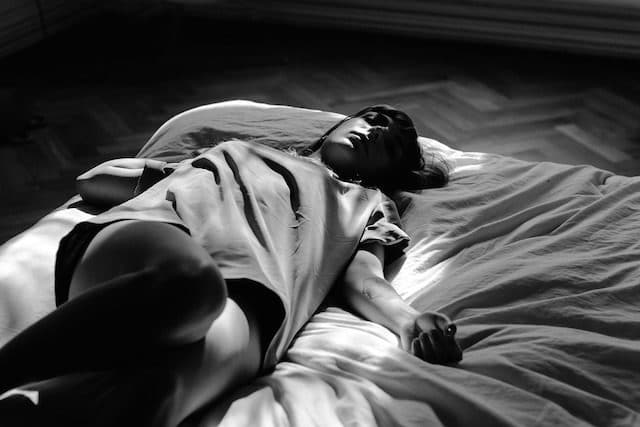
Before getting too worried about creepy demons, it's worth understanding what sleep paralysis is. It's a unique phenomenon that most people will never experience and, therefore, have no idea what it can do.
Let's start by saying that sleep paralysis, or muscle atonia, is a phenomenon you actually experience; you just probably aren't aware of it. Everyone experiences sleep paralysis; it's an essential part of rapid eye movement (REM) sleep. If you weren't experiencing sleep paralysis, you might be reenacting your sleep activities in your dreams. This could include running, talking, and perhaps attempting to drive a car. People who suffer from sleepwalking experience a sleep paralysis dysfunction, meaning the opposite occurs.
The brain sends neural signals throughout the body to prevent your hands and feet from replaying the events of your dreams. This typically begins when you enter rapid eye movement (REM) sleep and gradually ceases as you emerge.
Sleep paralysis becomes a problem when it occurs outside of rapid eye movement (REM) sleep. In such cases, a person may regain consciousness and be aware of their surroundings, but their body remains paralyzed, as it is during REM sleep. You cannot move your limbs or speak. This has been compared to the sensation of being trapped in your own body.
If you've never experienced this before, you can imagine what it's like. You wake up, feeling fine, and then realize your body isn't cooperating. Your mind seems clear, but your limbs refuse to function. That's a terrifying prospect in itself, and we don't need to add the demonic element that's about to overtake you.
When a person is awake enough to remain conscious, but muscle atonia persists, this is called sleep paralysis. In fact, it's a very common phenomenon, experienced at least once in a lifetime. By some estimates, 7.6% people experience it during their lifetime. However, up to 40% people may experience isolated instances of sleep paralysis.
Sleep paralysis can occur in otherwise healthy people, but certain conditions can worsen it. These include other sleep disorders, such as narcolepsy, as well as excessive alcohol consumption or high stress levels.
History of sleep paralysis and paranormal phenomena
Imagine a time when science wasn't as advanced as it is today. Imagine living in this world and waking up one evening in your bed, able to move your eyes, able to sense the world around you, but unable to do anything else. For some reason, you can't sit up. You can't call for help. You're trapped inside your own body, yet convinced you're not alone. What do you think happened in the era before science?
Given the prevalence of sleep paralysis in the modern world, it's safe to assume the situation was similar in the past. Let's go back 500 years to a random person waking up in this state. They would likely think something supernatural was happening. It hardly seems like a disease, and, as we've already discussed, it can affect perfectly healthy people. There would be no reason in your mind to believe there was any earthly explanation.
In people's minds, sleep paralysis is often associated with paranormal phenomena. But it's not simply a state of wakefulness and inability to move. Many report shallow breathing, as if unable to take a full breath. And for many, this manifests as a feeling of heaviness on the chest, as if something invisible is pressing down on you, weighing you down.
The Old English word maere describes a spirit that sits on your chest and tries to strangle you. This, combined with night, causes nightmares. In German, this was called hexendrücken, and in French, cauchemar. These are all names for the same phenomenon.
On the east coast of Canada, it was sometimes called "Old Witch Syndrome." It was believed that a witch sat on the chest, preventing the person from moving or breathing normally. Brazilians have a myth about an old witch named Pisadeira, who is the culprit. Nigerians have similar beliefs, but there she is a female demon. In Japan, she is a vengeful spirit.
In Hong Kong, they call it "ghost oppression," and it's descriptively similar to sleep paralysis. If you go to Mexico, you might encounter the phenomenon of "having a corpse climb on me," which isn't the most catchy name, but it's a pretty accurate description and conjures up some good images.
Because sleep paralysis is so universal, there's no culture, time, or place where people haven't experienced it. Written sources on the subject can be found dating back to 10th-century Persia. As a result, explanations were invented that were appropriate to the time. And these supernatural beliefs were the only ones people could come up with. Therefore, demons, witches, and other monsters became the most common explanations.
After all, how else can you explain the invisible force that weighs on you and prevents you from moving at night? Even today, we make films about sleep paralysis and sleep paralysis demons—it's perfect material for the horror genre.
Why demons?

So, if sleep paralysis and its connection to paranormal phenomena are a thing of the past, why are we talking about sleep paralysis demons today? Especially when we have science and can explain why it happens. Why do you get millions of results if you Google "sleep paralysis demon" right now?
Your brain is to blame for this. Remember, this happens during sleep. The problem isn't just that your body can't move, but also that you're conscious. Neither should happen simultaneously. When this happens, your consciousness is still in the sleep process; you're likely moving in and out of rapid eye movement (REM) sleep, which is when you dream. Therefore, you may experience vivid hallucinations during this time.
Your brain signals that you're awake, but at the same time, it's functioning at a dream-like level, and these two worlds don't mix well. This is a recipe for so-called hypnopompic or hypnagogic hallucinations, depending on whether they occur while waking or falling asleep. These are things you see that aren't real, like mistaking a coat in the corner for a monster, but in the moment, they feel real.
Since you're conscious when this happens, it doesn't qualify as a dream. It's a hallucination. They can be visual, but you can also sense them by touch, hearing, or even smelling them. You might smell something that's not there, or hear it creeping toward you in the dark. It might last just a few seconds, or it could last for several long, agonizing minutes.
Although hallucinations, and not always visual ones, happen to different people. Some have actually seen demons, witches, and other creatures sitting on them or lurking in their rooms. Your imagination can easily complete the picture, and if the situation is already frightening and you see movement and hear sounds, you'll likely imagine the worst.
Ghosts, demons, vampires—these are all fairly common occurrences. One theory explaining why you see disturbing and supernatural things has to do with how the chemicals paralyzing your body affect your mind. Since some people also report out-of-body experiences, a sense of detachment from your own self may occur, as if you're no longer attached to your body. When this happens, you feel detached from something external.
Your brain will send signals to your body to move. You're experiencing something unpleasant and want to escape. But at the same time, other parts of your brain register that you're not moving. And if you don't have the same sense of self you normally experience when you're awake and moving, your brain may incorrectly fill in the gaps.
Research has shown that people born without limbs can still experience phantom limb syndrome. This has led to the theory that our brains are programmed to understand the shape of the human body. We have a map in our heads of what we should look like.
During sleep paralysis, when your brain commands you to move and you don't, other parts of your brain can recreate this map, essentially creating a double in your mind. Except now you're also stuck in your own mind, halfway between wakefulness and sleep, creating a hallucination of another being, fully capable of movement.
Unfortunately, something as simple as creating a duplicate of yourself rarely happens. The mind doesn't work that way, and due to a heightened sense of terror, the victim often sees something horrific. The upside is that for most people, this will be an isolated incident.
However, for those who suffer from it chronically, it's much more difficult because the sensations always seem real at the moment they occur. Like any nightmare, when you wake up, you realize it was just a dream, but that doesn't change the fact that you woke up screaming and drenched in a cold sweat. At that moment, you were terrified.
Nightmare Incubus

In 1781, Henry Fuseli painted his famous painting "The Nightmare." The painting depicts a woman on a bed with a small incubus demon perched on her chest. This image has become synonymous with the demon that causes sleep paralysis. It accurately captures the sensations people report experiencing.
This painting became famous and serves as one of the best classic visual representations of the idea of the sleep paralysis demon. In its time, the work was considered highly erotic, and you can see for yourself the sexual undertones within it.
This theme also continues to be present in the hallucinations experienced during sleep paralysis for many people today. Sometimes, there's a feeling of being visited by some entity in your dreams, which likely explains the legends of incubi and succubi, who are said to exploit their sleeping victims for sexual purposes.
So, while it may be difficult to remember, especially under the circumstances, if you ever find yourself in a sleep paralysis situation, know that whatever you see, feel, or hear in the room is most likely not right next to you.
… Probably.
Other articles that may interest you