








WhatsAppRedditShareEmailTweetPin0 Shares
Everyone likes to think they have control over their lives and, at the very least, their bodies. Many people talk about bodily autonomy. Most agree that you have the right to decide what you do for yourself. For example, you can refuse medical treatment if you want. You can get tattoos and piercings if you want. You can dress how you want, do your hair how you want. You're in control. Except when you're not.
There are aspects of your body over which you have no control. These aren't decisions you make, but rather functions. For example, the beating of your heart. While there are exercises you can do to calm yourself down if your heart is beating too fast, you generally can't make or stop your heartbeat at will. And that's a good thing, of course.
Holding your breath is possible, but most of us couldn't do it before losing consciousness or dying. And if you lost consciousness, you would automatically start breathing again, provided nothing else was preventing it.
Digestion, circulation, and hormonal balance all occur without your conscious awareness. So how does your body decide what you can and cannot control? What about things we have limited control over, like breathing or going to the bathroom? Let's take a look at this amazingly complex machine that is you, and in particular, your nervous system.
The nervous system as a whole

Your body, at least technically, has two nervous systems. One is the central nervous system, and the other is the peripheral nervous system. However, the peripheral nervous system can be further divided into smaller subsystems. The peripheral nervous system includes the autonomic nervous system and the somatic nervous system.
The peripheral nervous system can be further divided into the sympathetic, parasympathetic, and enteric nervous systems. We won't cover all of them, but we'll start with the sympathetic nervous system, then discuss the autonomic and somatic nervous systems and see how they relate to what you can control in your body.
The central nervous system is your brain and spinal cord, which receive and process all sensory data. The enteric nervous system controls the digestive system and, although it's related to things you don't control, isn't particularly relevant to the rest of this discussion, so we'll ignore it as well. Let's focus solely on the peripheral nervous system and move on from there.
Peripheral nervous system
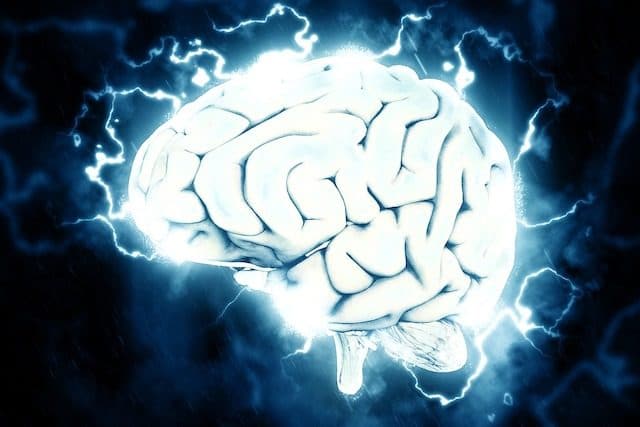
If the central nervous system is like a computer's hard drive, processing and responding to information, then the peripheral nervous system is all the devices connected to it—all the cables, cameras, keyboards, and everything else you own. This is what transmits information to and from the central nervous system.
Information transmitted through the peripheral nervous system to the central nervous system controls all the functions of your body that you can't consciously control. Essentially, any nervous system other than the brain and spinal cord is considered a peripheral nervous system. This includes the nerves that run throughout your body, as well as any other sensory receptors you have.
The peripheral nervous system can be divided into the autonomic and somatic nervous systems. All of its functions are controlled by these two systems. This includes all your senses, such as touch, smell, and vision, as well as all your bodily movements and all the unconscious processes that constantly occur within your body. This is what we want to examine.
Autonomic nervous system
The autonomic nervous system connects your brain with most of your body's organs. Therefore, all functions of the liver, heart, lungs, and so on are regulated by the autonomic nervous system. Most of these functions apparently occur unconsciously. For example, eye function is regulated by the somatic nervous system because you exercise conscious control over it, although vision with open eyes, particularly pupil dilation, is also a function of the autonomic nervous system.
As mentioned earlier, the autonomic nervous system can be divided into the sympathetic, parasympathetic, and enteric nervous systems.
The sympathetic nervous system is sometimes called the "fight or flight" response. Essentially, it regulates everything related to stress in the body. This can include heart rate, blood pressure, and sweating, as well as digestion and urination.
In contrast, the parasympathetic nervous system is a kind of opposite. It's even called the rest-and-digest system. While the sympathetic nervous system can help you in stressful situations, the parasympathetic system is designed for non-stressful times. Essentially, it controls the same thing, just not when you need a stress response. So, it can constrict your airways to relax your lungs, lower your heart rate, or do whatever else is necessary to help you stay calm and balanced.
While it sounds simple on paper, there are actually many complex coordination processes going on within the autonomic nervous system that are necessary to maintain the delicate balance that ensures your daily functionality as a living, healthy being.
Let's look at the enteric nervous system, which we discussed earlier. It controls digestion, but it begins with salivation in the mouth. When you're about to eat food or taste it for the first time, saliva is produced in your mouth, which initiates the digestive process. This function is controlled by your nervous system. The passage of food into the stomach, the muscle contractions that propel the bolus, the entire digestive process, and the movement of food through the stomach into the intestines—all of this is controlled by this same system, like a factory with a beginning, middle, and end to the production line. And that's just one process.
The vagus nerve network is responsible for much of the information transmitted from organs to the brainstem and ultimately to the brain itself, and it is extremely complex. So complex, in fact, that we are only just beginning to understand how these nerves interact with our brain within the organs and how data is transmitted and processed between them.
It is the vagus nerve that is ultimately responsible for processes such as digestion, heart rate, breathing, blood pressure, the sensations you experience through your skin and muscles, urination, speech, immune response, and even your sense of taste.
The vagus nerve network, with 100,000 fibers extending from the base of the brain and back, contains up to 37 types of sensory neurons capable of responding to a wide variety of stimuli, including pressure, toxins, nutrients, and even stretch. And they transmit information not only to the brainstem but also to much more complex regions of the brain responsible for memory, emotion, and our overall sense of self. This means these automatic processes are far more complex than we imagine.
Somatic nervous system

The somatic nervous system is a little easier to understand. This is because we are constantly actively interacting with it. While the autonomic nervous system controls everything unconsciously, the somatic nervous system is what is under your conscious control.
When you decide to take a step and go for a walk, that's your somatic nervous system at work. When you pick up your phone and start scrolling through your social media feed, your somatic nervous system controls the muscles in your hands, forearms, and even your eye movements as you read on the screen. Everything you do with your body is controlled by your somatic nervous system.
Most of our conscious bodily functions are controlled by a network of nerves. For example, ten cranial nerves, originating from the brainstem, control most head movements. The majority of the peripheral nervous system consists of 43 nerves, including the aforementioned vagus nerve. Thirty-one pairs of these nerves originate from the spine, and 12 pairs originate from the skull. All movements of your body, including reflex actions, are regulated by these nerves and the information they receive and transmit.
Is it possible to consciously control autonomic functions?

So why do you control your somatic system but not your autonomic system? Which function ensures consciousness, and which doesn't? And how is it that you can't control these autonomic functions? Or at least not to a significant degree.
After all, holding your breath is entirely possible. And, as we've already mentioned, you can perform exercises that can significantly slow your heart rate. People who have mastered meditation can significantly slow their heart rate. There's also evidence that consciously controlling your breathing and abdominal muscle contractions can alter your heart rate and even induce cardiac arrest.
Some monks have been shown to be able to control their body temperature during meditation. They were able to increase the temperature of their fingers and toes by more than 8 degrees Celsius (over 46 degrees Fahrenheit). They could also significantly increase or decrease their metabolism.
Wim Hof, sometimes called the Iceman, was studied for his ability to withstand incredibly low temperatures for extended periods. It has been proven that Hof is able to consciously activate his sympathetic nervous system. He can secrete adrenaline and suppress the immune response to cold, and this is not a result of genetic predisposition. He has taught this technique to others.
Biofeedback has proven to be a valuable tool, allowing people to exert some control over their autonomic nervous system. Using sensors that measure unconscious behaviors such as breathing, heart rate, and muscle response, participants can view the data on a computer in real time. For example, during a pain response, participants can observe increased breathing and heart rate, as well as muscle tension. This allows them to focus on these parameters and consciously change them. They can slow their heart rate, breathing, and relax their muscles.
Controlling autonomic functions through biofeedback has been shown to help people with a variety of conditions, including diabetes, where it, along with relaxation techniques, lowers blood glucose levels and helps with ADHD.
Other people have demonstrated the ability to voluntarily induce goosebumps, which is traditionally regulated by an unconscious neural response.
While much of this requires significant practice and meditation, there are simpler ways to gain some moderate control over autonomic functions. The easiest way to do this is through deep breathing exercises, muscle control, and even your imagination. Since the sympathetic nervous system is responsible for the fight-or-flight response, and the parasympathetic nervous system is responsible for rest and relaxation, you can switch from the sympathetic to the parasympathetic by forcing yourself to relax.
Of course, it's not as difficult as increasing the temperature of your fingertips or resisting extreme cold, but it can result in a lower heart rate and pulse rate.
Simply put, start by inhaling slowly through your nose, holding your breath for five seconds, then exhaling through your mouth. Pause for ten seconds, then start again.
Muscle relaxation techniques involve tensing or contracting as many muscles as possible in one group, such as the face or arms, back and shoulders, legs, or abdomen, holding the tension for five seconds, and then relaxing for 10 seconds. This should only be done a couple of times, but work through all muscle groups in a cyclical manner.
In terms of imagination, it's very similar to Fight Club. You can find your happy place, just an image you hold in your mind that relaxes and calms you. That's all you need to complicate it.
In general, you'll never be able to fully control your autonomic functions, and frankly, you probably don't need to. Who wants to forget to saliva or urinate? But with practice, and if you're really determined, you can achieve some control.
Other articles that may interest you