








Heroes exist among us, but how great is their impact? James Harrison and Henrietta Lacks donated cells and blood for medical research and saved thousands of lives. They did things without hesitation for the good of others. Russia shamed one of its soldiers after he disobeyed his captain's orders and refused to start World War III. Their stories are hidden under rugs or behind doors, though they should be shared. These are the unsung heroes, the heroes who risked their lives and saved people, while remaining hidden from the world.
1. When James Harrison learned that his blood had an unusual plasma composition that could help treat Rh incompatibility, he decided to donate blood for the rest of his life. He made over 1,000 donations, which are estimated to have saved over two million lives.

James was born and raised in Australia. He decided to become a blood donor after undergoing surgery at age 14, which required 13 liters of blood. Discovering that he had rare antibodies that combated Rh disease and prevented its development, James began donating as much blood as possible. He donated blood for 57 years, saving 2.4 million babies. On average, one in ten pregnant women used his blood for disease prevention. (1,2)
2. Vasily Arkhipov, a senior officer on a Soviet submarine, refused his captain's order to launch a nuclear torpedo at American warships in October 1962, possibly preventing World War III.

Arkhipov, second in command of four Soviet submarines, disobeyed his captain's orders and vetoed them. He refused to launch a nuclear torpedo at American warships in Cuba without sufficient information. Moscow was unable to contact the crew for several days, providing them with no information about the current situation. Arkhipov decided it was necessary to contact headquarters and surfaced the submarine.
At the time, Vasily was unaware of the US offensive against Cuba. The US imposed a naval blockade and informed the Soviet side in Moscow of new exercises. They demanded that all submarines in the area surface. Moscow was unable to reach the submarines due to the great depths.
When Vasily refused his captain's orders, he saved the entire world from World War III. Russia considered him a coward and a traitor, but his wife and others saw him as a hero. He prevented another major war and saved millions of lives. (source)
3. Nils Bohlin saved millions of lives by inventing the modern three-point seat belt while working at Volvo. The patent was granted free of charge to reduce costs. Bohlin's invention saves approximately 11,000 lives annually in the US alone.
Swedish inventor Bohlin created the modern seat belt while working at Volvo. He presented the invention to his company in 1959, which issued the first patent. Bohlin conducted a safety study on the device using data from 28,000 accidents. The results showed that passengers wearing seat belts were significantly less likely to die than those who did not.
His device has become mandatory for all vehicles in the United States and is estimated to save approximately 11,000 lives annually in the US alone. Bolin's invention is used in cars, planes, and buses and, according to a US study, has reduced crash fatalities by nearly 501,000. (1,2)
4. Geochemist Claire Patterson, who used lead isotope data to determine the age of the Earth, also fought against industrial lead use for decades. His efforts helped reduce blood lead levels in American workers by approximately 80% by the late 1990s.
During his research into the age of the Earth, Clare discovered numerous samples contaminated with high levels of lead. His interest in the topic piqued, and Clare obtained samples from Greenland and Antarctica for further study. Clare noted a significant increase in lead levels worldwide since its use in fuel. In 1965, Clare brought this problem to public attention and began a campaign against the gasoline industry to reduce the high lead content in gasoline.
Clare's progressive thinking led to his exclusion from research councils and organizations. They knew his research could harm business finances. Despite these obstacles, Patterson convinced the US to mandate unleaded gasoline in all new cars starting in 1975. This significantly reduced lead pollution.
Patterson didn't stop there. He continued his campaign against other industries that used large amounts of lead. Thanks to Clair's efforts, by the late 1990s, blood lead levels had decreased in approximately 80% Americans. (source)
5. Polish doctor Eugeniusz Lazowski saved 8,000 Jews during the Holocaust by injecting them with dead typhus cells. This allowed them to test positive for typhus despite being healthy. The Germans feared this highly contagious disease and refused to deport Jews to concentration camps.
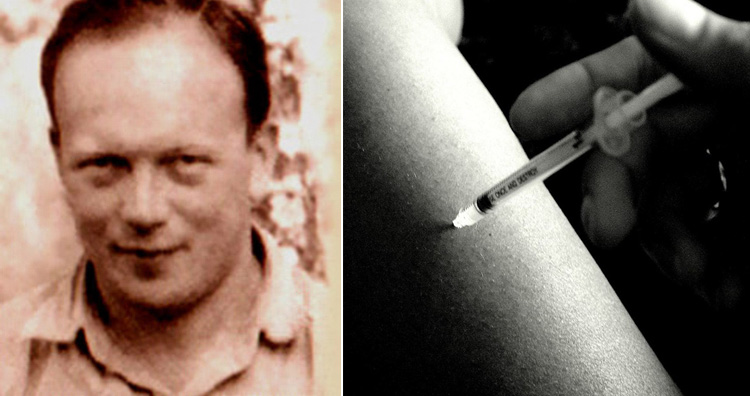
After serving in the Polish army, Lazovsky moved to Rozwadów, where he met his friend, Dr. Stanislav Matulewicz. Matulewicz had developed a method for injecting dead typhus cells into people without side effects, while still testing positive for the disease. Evgeniy took this discovery and began vaccinating Jews in the Rozwadów area. The Germans were horrified by the disease and quarantined the entire town. Stanislav and Evgeniy continued vaccinating other villages in the Rozwadów and Zbydniów areas. Evgeniy saved at least 8,000 Polish Jews from concentration camps by terrifying the Germans with the deadly disease typhus. (source)
6. Neerja Bhanot, a 22-year-old flight attendant, helped hide 41 American passports on board a hijacked plane. She helped passengers escape and died protecting three children from gunfire. Neerja was posthumously awarded medals for bravery in India, Pakistan, and the United States.

Neerja was a young flight attendant on Pan Am Flight 73, en route from India to the United States. She spotted the hijackers on board the plane and immediately alerted the crew. The hijackers escaped through a hatch, while the terrorists remained on board.
Four terrorists targeted Americans on board a plane bound for Cyprus to free their Palestinian brothers. Nirja secretly collected the passports of 41 Americans and hid them so the terrorists couldn't distinguish them. The terrorists' first victim was an American. He was shot in the head and thrown out of the plane. Small bombs began to detonate, and the terrorists opened fire on the remaining passengers. Nirja helped people escape through the emergency exit. Three children were about to exit through the hatch when the terrorists spotted her. Nirja shielded the children and was shot dead, saving their lives.
One of her children later became a pilot because he greatly admired her. Neerja was posthumously awarded medals for bravery in Pakistan, India, and the United States. She became the first and youngest woman to receive the Ashoka Chakra award in India for her bravery. (source)
7. Three men, known as the "Chernobyl Suicide Squad," volunteered for a suicide mission days after the Chernobyl disaster. They waded through water beneath the leaking reactor to open the safety valves and prevent a chain reaction of nuclear explosions. They saved Europa's 50% from total annihilation.

Three Chernobyl Nuclear Power Plant workers, known as the "Suicide Squad," volunteered to descend beneath the reactors to open the valves. The molten core of the reactor was approaching a water source. The confluence of these two sources would have triggered a chain reaction of reactor explosions, destroying the entire power plant. Wearing minimal radiation protection, the men waded through knee-deep water in intense heat to open the valves. They saved Europa from destruction and becoming uninhabitable for 500,000 years. (source)
8. Despite enormous pressure from pharmaceutical companies, Dr. Frances Kelsey refused to approve thalidomide for the treatment of morning sickness in the United States. Her disapproval saved an entire generation of children from death and birth defects.

Dr. Kelsey, one of seven doctors reviewing the drugs for the FDA, rejected approval of thalidomide. The drug caused unknown side effects, particularly those affecting the nervous system. Kelsey requested further studies of the drug's side effects before considering approval.
Pharmaceutical companies pressured Kelsey, arguing that pregnant women needed the drug to treat morning sickness. Other countries, such as Canada and some European countries, approved the drug. Pharmaceutical companies in the US believed it would be an immediate success. They finally accepted her decision when cases of babies born with birth defects emerged in Europe. Babies were born with webbed fingers and toes, or without arms and legs.
Dr. Kelsey's refusal to approve the drug saved an entire generation and thousands of children in America. She became the second woman to receive the Presidential Award for Distinguished Federal Civilian Service. (source)
9. Aki Ra, a former child soldier in Cambodia, risked his life removing and defusing mines with only a knife, a hoe, and a stick. He saved thousands of lives and helped people reclaim valuable land. Aki also adopted children affected by mines and children suffering from polio or HIV.
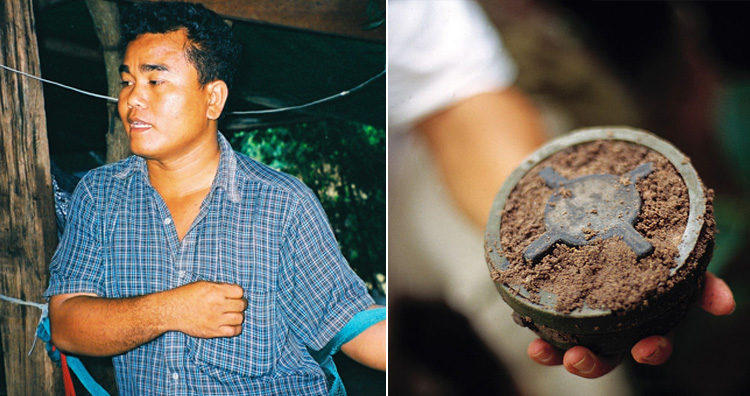
Aki Ra, an orphan, enlisted in the military at a young age. After his military service, Ra dedicated his life to clearing thousands of landmines around his home in Cambodia. Small villages under UN control benefited from his services. The cleared mines he discovered filled Ra's home, which he converted into a museum and charged a $1 admission fee to fund his project and help foster the adoption of young mine victims. During his mine-clearing trips, Ra adopted and rescued 29 young mine victims, who lived in his small Cambodian Museum-Museum-Relief Center.
Ra's activities were suspended in 2001 and 2006, when he was imprisoned for clearing mines without a certificate. This didn't stop the young man, and inspired him to travel to London, where he obtained his certificate. Afterward, Ra was able to legally continue clearing mines in Cambodia. In the first year after receiving his certificate, Ra helped more than 2,400 people return to their homeland. (source)
10. Unbeknownst to her, a poor woman named Henrietta Lacks donated her cells to science. Her cells became the first "immortal cells" to be kept alive for medical use and used for a wide variety of purposes, from creating a polio vaccine to cloning.

Henrietta, born into a poor family in Virginia, suffered from cervical cancer and sought treatment at a hospital in Maryland. Unbeknownst to Henrietta, medical staff took samples of her cancer cells and used them for medical research.
Henrietta's cells, known as HeLa cells, multiplied rapidly and remained viable for a long time. Medical researchers used these cells to make new discoveries and advances in oncology, cloning, and gene mapping. Henrietta's cells helped create the polio vaccine, which saved thousands of lives.
Scientists from all over the world scrambled to obtain her cells. Henrietta's cells became the first cells produced in large quantities and sold worldwide. Demand for her cells grew. After her death in 1951, researchers took additional samples from her body while it lay in the morgue. Unbeknownst to her, Henrietta had contributed to medical research and saved thousands of lives by developing the polio vaccine. (source)