








Every era probably considers itself fairly enlightened. Today, we all seem fairly confident in our understanding of how the world works, but we can still see examples of people consistently believing incredibly stupid things. In the future, it's quite likely that people will write articles about today's world and all the stupid things we once believed, just as we can now look at some of the beliefs of people in the medieval world and wonder how we ever survived as a species.
10. Salamanders can survive fire.

For about 1,500 years, people believed that the humble salamander was somehow protected from fire. This is all the more surprising because, for all those 1,500 years, we can safely assume everyone understood what fire did to living things. Yet, this persistent belief effectively gave birth to salamanders as mythical beasts.
Pliny the Elder insisted that the cool flesh of the salamander could put out the fire , who likely killed several salamanders, who died against their will while trying to prove this. Note that he was simply trying to prove what he had heard from Aristotle.
By the time of Saint Isidore, between 560 and 636, people still believed in this fact about salamanders, and Isidore confirmed it and also suggested that they poisoned the fruit . Saint Augustine believed they lived in fire. Leonardo da Vinci insisted that the little creatures ate fire instead of food. Paracelsus replaced fire with the salamander.
So where does this belief come from? It's thought to be related to the salamander's habit of living in rotten logs. If you were to throw one into a fire, you'd likely see live salamanders scurrying out, giving the impression that they were actually living in the fire.
9. The newlyweds had to kiss over a stack of cakes.

Few events in a person's life are subject to more curious beliefs and rituals than weddings. Even today, people still adhere to such things as the desire to incorporate something old, something new, something borrowed, and something blue. There aren't many reasons for this; it's either tradition or superstition, no matter how you look at it.
In the Middle Ages, one of the many wedding traditions was the creation of cake towers or buns with spices. Think of it as an old-fashioned version of today's tiered cakes. But instead of just looking big and responsible, the newlywed couple had to sit at the top of this tower and kiss each other . If the kiss went off without a hitch, it was good luck for the couple. If the glass fell, well, better luck next time.
8. In medieval Italy, poverty was considered a virtue.

There's a lot of talk about rights in the modern world, but look to the customs of late medieval Italy to see next-level rights in action. At that time, the rich viewed the poor as a means to an end. In this case, the end was paradise. The means was to give them alms so they could pray for the rich and eventually reach heaven.
At that time, the idea of being poor was considered virtuous. Being poor was a difficult test and prepared your soul for good things to come. Along the way, they helped the rich get to Heaven , giving them the opportunity to show their benevolence. Thus, the rich saw no reason to do anything to help the poor in the long term. They didn't even want the poor to leave. They wanted the poor to stay so they could be kind to them, which would grant them eternal salvation.
Eat even a saying , that "the rich help the poor in this world, and the poor help the rich in the world to come," reflecting the belief that one need not necessarily shun one's wealth or uplift the poor in this world, because everything will be balanced in heaven.
7. Medieval Scots believed they were descended from an Egyptian princess.

At some point, everyone begins to question where they came from. This is where myths about origins and religion begin to take shape, and while most of them are well known today, it all had to start somewhere. The people of Scotland once believed that a woman named Scota helped shape Scotland and Ireland around 1400 BC.
According to legend, Scota was the daughter of Egyptian pharaoh named Cingris. There are no records of this pharaoh in Egypt, and it appears to be exclusively Irish and Scottish tradition. Scota married a Babylonian named Niul, and together they had a son named Goidel Glas. It was he who created the Gaelic language and the people known as the Gaels.
In 1360 John of Fordun published history of Scotland , in which it is believed that he simply took Irish tales of Scota and transformed them into something he liked for Scottish history. In his version, Goidel Glas, now renamed Gaitelos, marries Scota. They are exiled to Spain from Egypt, have a son, and then he marries another woman named Scota, the daughter of another pharaoh. Two of their sons conquered Ireland, defeating the Tuatha Dé Danann, whom you might recognize as fairies, and some of their descendants called themselves Scoti, after the word scotia, which evolved into Scots.
6. Fruits and vegetables should be cooked for safety.

For better or worse, much of our modern knowledge of the Middle Ages comes from pop culture. To that end, most people imagine a medieval diet consisting of bread and honey, maybe some hard cheese, and boneless meat, perhaps in a stew.
Medieval people ate fruits and vegetables, but they viewed them differently than we do today. Specifically, they never ate raw fruits and vegetables because it was generally believed that raw fruits and vegetables were cause diseases .
The fruit that grew on trees was better than that grown on the ground because the treetops were close to the sky. Watermelon and strawberries were lowly fruits, more suitable for the poor. Doctors recommended Eat some fruits at the beginning of a meal and others at the end for various pseudo-medical reasons, such as their ability to either stop you from vomiting or help you go to the toilet.
5. Crocodiles cry out of remorse when they eat, hence the crocodile tears.

When you say someone is shedding crocodile tears, you're criticizing them for being insincere, pretending to be concerned but not actually being. This stems from the widespread belief that snakes, and especially crocodiles, shed tears over their prey while eating it. So, while the image suggested the beast was somewhat remorseful about the kill, it was actually still eating something, so the lack of sincerity was noticeable.
In The Voyages and Travels of Sir John Mandeville« this statement was used in 1400 , and this statement can also be found in the letter from 1569 , but it's presented there in a context where it was common enough to require no explanation. The crocodiles cried in false sadness as they ate.
Ironically, crocodiles shed tears when they eat, but the reason may be due to the air passing through their sinuses when they eat, rather than any remorse related to the meal.
4. A magnet can be demagnetized with goat blood

Magnets are pretty cool even today, so you can imagine what people thought about them hundreds of years ago. The ability to move metal with invisible forces must have been pretty close to magical.
If something is magical, it probably means there are magical ways to deal with it. In the case of magnets, it was believed that their power can be neutralized things like diamonds or goat's blood. Garlic was another product suggested by alchemists as a means of demagnetizing them, although a man named William Gilbert had to disprove all of this in 1600, supposedly by demonstrating bloody but fully functional magnets.
3. People believed that witches stole men's penises.
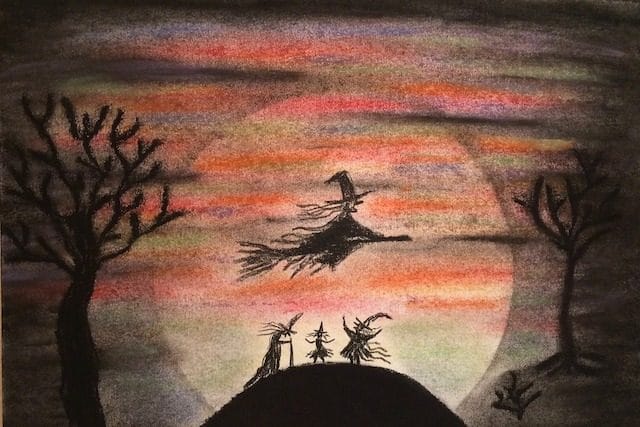
Any beliefs about witches should be taken with a grain of salt, because we assume witches were real. Furthermore, when it came to the fear of witches, some writers went out of their way to invent reasons to fear them, and Heinrich Kramer may have won the cake.
In his 15th-century witch-hunting manual, Malleus Maleficarum, Kramer warned that witches could steal a man's penis. They could even keep it as a pet and feed them grain. He goes on to say that many have witnessed similar events. He also claims that one man, trying to retrieve his stolen penis, was forced to climb a tree and raid a nest containing many penises to choose the one he liked best.
The idea of penis trees permeated the mythology of witches, and in 2000 A fresco depicting numerous witches under such a tree was discovered in Massa Marittima, Italy. Some still claim it's simply a fertility symbol and not associated with witches, but given the history, there's certainly room for debate.
2. For a long time it was believed that lynx urine turned into precious stones.

When we think of big cats, we usually picture lions, tigers, panthers, and perhaps a cheetah. Less remembered is their somewhat smaller, but still fearsome cousin, the lynx. One of the lynx's lesser-known claims of fame is that its urine crystallizes into a precious stone called lingurium . This came from the philosopher Theophrastus around 200 BC or so.
By the medieval period, lingurium had enjoyed a full life in the hands of expert gemstone cutters and gemstone experts. Books were written detailing the stone's physical nature and even its healing properties. Keep in mind that this stone never existed, and none of these people had ever seen it or known anything about it.
Only in the 17th century New authors finally stopped writing about the fictional stone.
1. John Mandeville perpetuated the belief that cotton came from lambs raised on plants.
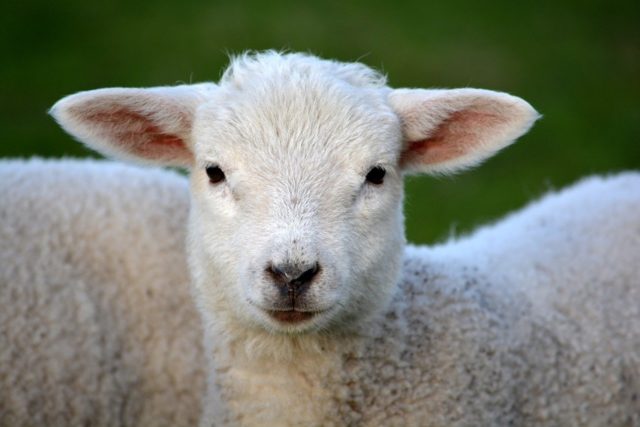
Medieval art often leaves one perplexed when you see how animals and other natural objects are depicted, especially when they are tragically at odds with reality. It makes you wonder how someone could depict something so incorrectly. Unfortunately, many works of art at the time were created by people who had never seen what they were painting and were based on second- or third-hand accounts. And then there are some that were simply random, invented things. That's where it gets tricky. appears Vegetable lamb from Tatarstan .
Cotton was something new to the Western world in John Mandeville's time. For some reason, as he explored (or pretended to explore) a world few in England had even heard of, the man insisted on making everything up. So when news arrived of cotton that looked like wool but came from a plant, Mandeville told the story that it was indeed a small plant with a long stem, at the top of which a tiny flower blossomed. lamb . This understanding of cotton lasted from the 13th to the 17th centuries. Imagine generations of people who believed in tiny sheep growing like flowers, producing fabrics for them.
The little plant lamb didn't just look like a lamb, it was one. It hung from its stalk and ate everything it could reach around the plant, then died when there was no food left. You could catch one and eat it, and the meat was said to taste like fish and the blood like honey. So this wasn't a quick misunderstanding. Mandeville and whoever picked up his fanciful story were sincere in their attempts to simply make up nonsense and make people believe something.