








With the increase in funding for renewable energy and clean technologies in recent years, a number of companies are seeking to utilize innovative technologies and methods to increase clean energy production. Tech and energy startups from around the world are raising funds to test a wide range of technologies aimed at accelerating the deployment of renewable energy capacity and improving the stability of certain energy sources, such as solar power.
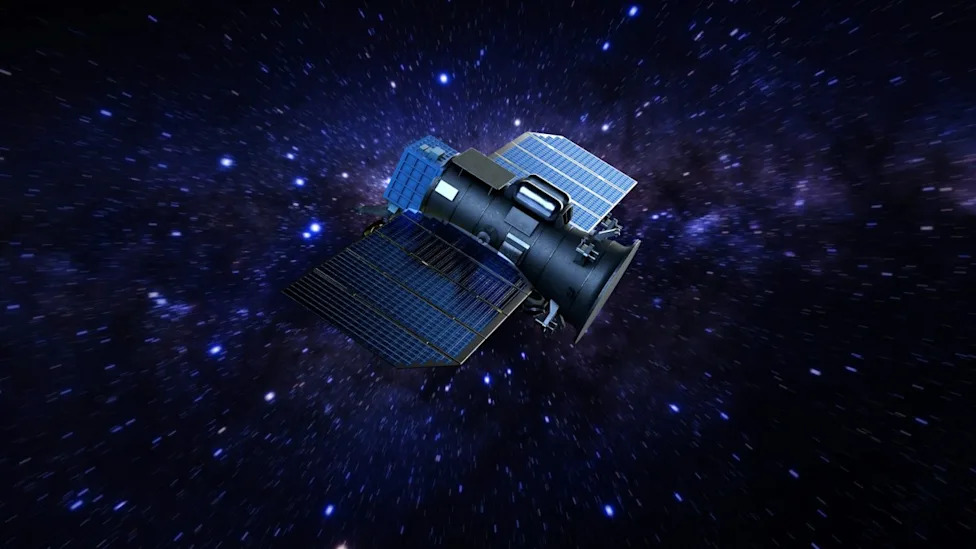
California-based startup Reflect Orbital recently received permission from the US Federal Communications Commission (FCC) to test a controversial satellite equipped with an 18-meter-wide mirror that the company hopes will help power solar power plants and provide nighttime lighting.
In May 2025, the startup raised $20 million in a Series A funding round to accelerate the development of its satellite. Reflect Orbital plans to launch a demonstration satellite, Eärendil-1, into low-Earth orbit by the end of the year. The Federal Communications Commission (FCC) stated that the project could provide "potentially breakthrough technology" that could strengthen U.S. leadership in space.
Once in orbit, the satellite will unveil a massive thin-film reflector, which will act as a mirror to reflect sunlight back to the dark side of the Earth. The startup's goal is to redirect sunlight to areas 5 to 6 kilometers wide "on demand," with adjustable brightness "from the full moon to midday." If successful, Reflect Orbital will sell the reflected sunlight to companies and municipalities for up to $5,000 per hour to illuminate streets without power or power solar power plants at night.
However, not everyone is happy with this decision. Several scientists oppose the move, fearing that the light beams could blind pilots, interfere with astronomical research, and disrupt circadian rhythms, which could negatively impact plant growth, human sleep, and hormone production in humans and other animals. Others argue that the abnormal light could negatively impact the migration of nocturnal species, the seasonal cycles of plants, and the rhythms of marine phytoplankton, which underpin ocean food webs.
Ruhi Dalal, Director of Public Policy for the American Astronomical Society, explained: «It is clear that the activities proposed by Reflect Orbital will have impacts on Earth’s environment, including human health, agriculture, and wildlife, in addition to astronomy.».
The Federal Communications Commission (FCC) received over 1,800 comments regarding Reflect Orbital's satellite. Furthermore, the presidents of four international scientific societies, representing approximately 2,500 researchers from over 30 countries, sent letters to the FCC expressing their concerns. They demanded that the agency conduct a full environmental review and establish limits on the satellites' reflectivity and the overall brightness of the night sky.
President of the European Society of Biological Rhythms, Charalambos Kyriakou, stated: "We're saying: please think before you do this, because it could have global consequences, for example, for food security. Plants need the night. You can't just get rid of it.".
However, the Federal Communications Commission (FCC) stated that outer space is not subject to the same environmental laws as Earth. Meanwhile, Reflect Orbital co-founder and CEO Ben Nowak stated that the pilot project will allow the company to collect data and ensure that the installed shielding can adequately control the light beams they produce. Nowak said, "We are grateful to the FCC for recognizing the importance of testing new technologies in space.".
The startup announced plans to launch another 1,000 satellite mirrors by 2028, and a total of 50,000 by 2035 if the pilot project is successful. The mirrors on the final satellite could be much larger than those on the pilot, reaching up to 55 meters in width. The European Southern Observatory calculated that even a single sunbeam would appear approximately four times brighter than the full moon in the illuminated area.
The startup emphasizes the potential of this technology to provide clean and abundant energy. However, environmentalists are concerned about the burning of rocket fuel to launch satellites into orbit, which will lead to significant carbon dioxide emissions.
Reflect Orbital isn't alone in seeking to expand the potential of solar energy. Elon Musk's SpaceX has proposed launching up to 1 million satellites to create a massive solar-powered orbital computing network to power artificial intelligence (AI) using orbital data centers. SpaceX claims this could reduce power consumption and cooling requirements compared to ground-based data centers. SpaceX claims the satellite network will provide the computing power needed to serve "billions of users worldwide.".
However, the existing Starlink network, comprising nearly 10,000 satellites, has already faced criticism for creating space congestion. In January, Musk attempted to allay concerns, writing on the social media platform X: "Satellites will be so far apart that it will be difficult to see each other. Space is so vast that it's impossible to comprehend.".
The launch of innovative satellites designed to increase solar energy production or provide clean nighttime illumination for Earth could expand our understanding of solar energy in space and provide power or light for a wide range of applications. However, light pollution has long been proven to be harmful to the environment, meaning that if implemented, this technology could pose an extreme risk to human, animal, and plant health.
Felicity Bradstock for Oilprice.com
More top articles from Oilprice.com
-
Iran has rejected Oman's proposal to equally share control over the Strait of Hormuz.
-
The UK regulator is clamping down on attempts to seize land for data centres in the power grid.
-
The cause of the crisis in the oil market is not crude oil, but refined fuel.
Oilprice Intelligence provides you with signals before they become major news. This is the same expert analysis that experienced traders and policy advisors rely on. Get it free twice a week, and you'll always know why the market is moving before anyone else.
Get geopolitical insights, hidden inventory data, and market rumors impacting billions—and we'll send you premium energy analytics worth $389 just for subscribing. Join over 400,000 readers today. Get instant access by clicking here.