








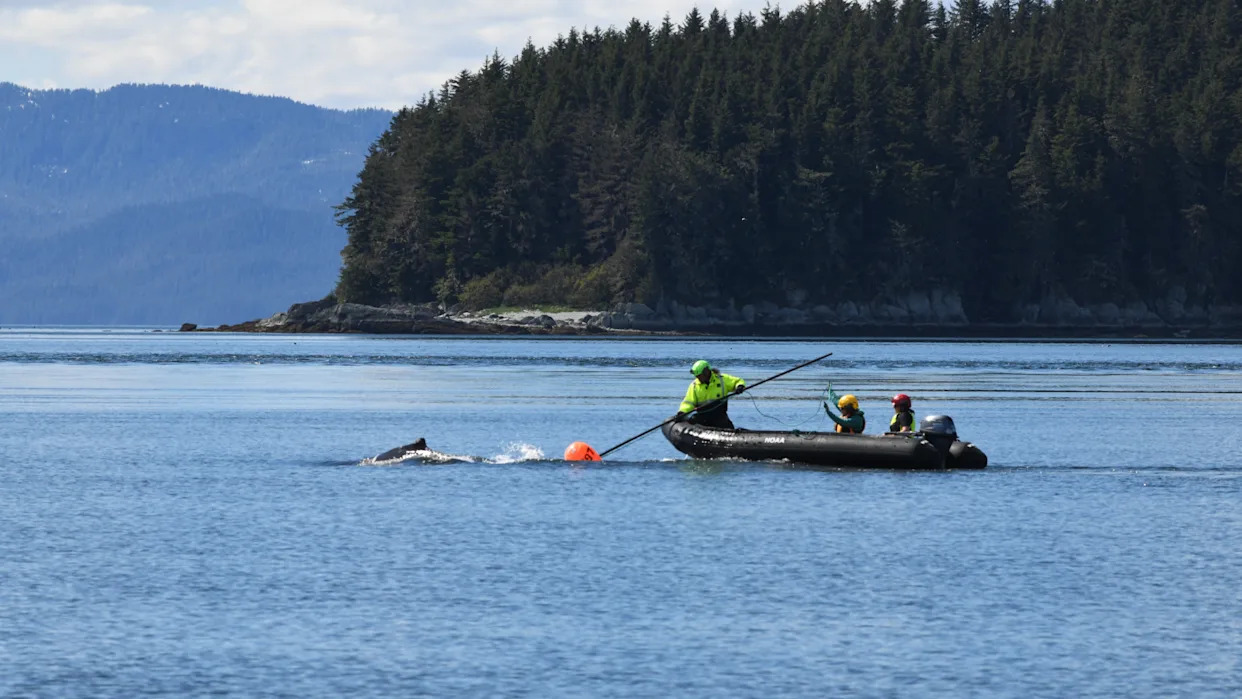
A multi-agency rescue operation resulted in the recovery of a young humpback whale ( Megaptera novaeangliae ), entangled in Endicott Arm Strait in Alaska, was successfully freed. Endicott Arm is a narrow fjord located approximately 80 kilometers southeast of Juneau. Despite its remoteness, it is a major destination for cruise ships and commercial fishing vessels, posing a threat to whales and other marine life.
According to a NOAA statement on June 24, on the evening of May 10, several sailors spotted a young whale entangled in nets and reported it to the NOAA Fisheries Alaska Marine Mammal Stranding Network's 24-hour hotline. The whale was caught in the lines of two commercial Tanner crab pots. Since each pot weighs approximately 800 pounds, they effectively acted as anchors, preventing the animal from moving.
Alerting mariners allowed regional coordinators to develop a timely response plan. "We established a network of on-water observers—vessel crews coordinated real-time updates and relayed them to us," said NOAA marine mammal specialist Susie Teerlink in a statement. "This communication was critical. It allowed us to understand the nature of the entanglement, helped us develop a safe response plan, and gave us confidence that we could locate the whale.".
A response team consisting of biologists from NOAA Fisheries, the Alaska Department of Fish and Game's Marine Mammal Program, and local partners from Alaska Sea to Shore was mobilized the following day. They worked for over five hours to make four precise cuts, freeing the whale from the traps and most of the entangled lines.
«"Cutting lines off an animal this size can be dangerous," said John Moran, a NOAA fisheries scientist and experienced emergency response specialist on the team. "We use long poles equipped with special knives to increase our reach. This allows us to cut lines while reducing the risk of injury from a 40-ton animal.".
Rescuers hope that the remaining body parts will eventually separate from the whale.
Entanglement is a serious problem in Alaska. Since 1998, more than 140 confirmed cases of large whales becoming entangled in nets have been recorded. The number is likely much higher, as many cases go unreported. Unable to move, the animals can drown or starve, develop life-threatening infections, or be struck by ships.
«"We are incredibly grateful to the whale watching community and everyone who reported the entangled whale to the NOAA Fisheries hotline," said Sadie Wright, NOAA Fisheries Alaska Region Large Whale Entanglement Response Coordinator. "The information provided by the public allowed our response team to prepare and safely respond to this life-threatening entanglement, resulting in a successful outcome.".