








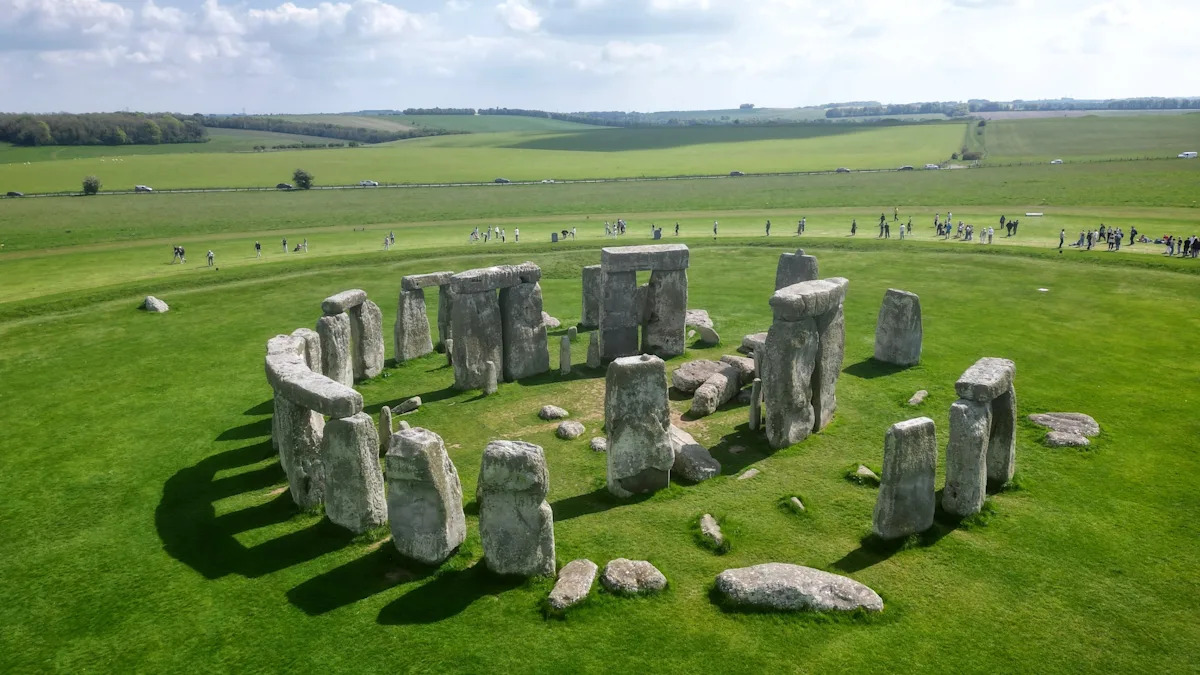
Stonehenge is much more than just a monumental feat of ancient engineering; it is also a logistical marvel. Several generations of Neolithic architects relied on teamwork and ingenious construction methods to precisely position each of the giant megaliths approximately 5,000 years ago. The structure is composed of two main types of stone: sarcens and bluestones. Paleoarchaeologists previously located most of the sarcens to be approximately 24 kilometers from present-day Marlborough, England, while many of the bluestones were brought from Wales.
However, the famous Altar Stone raises far more questions. The central six-ton sandstone megalith likely came from a region in Scotland located approximately 400 miles away. How a prehistoric society managed to transport this boulder such a distance without sophisticated tools or transportation methods has remained a mystery to researchers for years.
Many researchers have speculated that melting Ice Age glaciers likely passively moved the Altar Stone closer to Salisbury Plain in southern England around 2500 BC, shortening the transportation distance for Stonehenge's builders. But in 2024, a team of researchers from Curtin University used chemical analysis to determine that glaciers were not the only factor influencing the megalith's movement. Now, the same team has combined ice sheet modeling and mineral grain dating to more accurately pinpoint the Altar Stone's original location. Their findings, published today in Journal of Quaternary Science , once again highlight the enormous role of man in the movement of this central element at Stonehenge.
«"Rather than being transported naturally by ice, the available evidence points to deliberate, carefully planned movement across a complex and diverse landscape," said Anthony Clark, a geochemist and co-author of the study, in a statement.
Although glaciers may have transported many large stones as far south as Dogger Bank in the North Sea, Clark explained that geological modeling has shown that "no viable glacial pathways" ever connected the Altar Stone's region of origin to Stonehenge. This further underscores the necessity of Neolithic communities to transport the stone to its final location.
«"Transporting a rock of this size over such a long distance would require planning, coordination and a deep understanding of the landscape, not to mention a huge amount of determination," he added.
While the exact methods remain a mystery, Clark and his colleagues believe the Altar Stone was almost certainly moved in stages, possibly using both land and river routes.
«"The stone would still have to be moved hundreds of kilometers by people," Clark concluded.